first revealed in spy photos a bronze A recent archaeological discovery has unveiled the remains of a Bronze Age city, Semiyarka, hidden beneath the Kazakh Steppe, revealing insights into ancient urban life and trade.
first revealed in spy photos a bronze
Unearthing Semiyarka
Today, the remnants of the ancient city of Semiyarka consist of low earthen mounds and scattered artifacts, nearly obscured by the waving grasses of the Kazakh Steppe. This vast expanse of grassland stretches across northern Kazakhstan and into Russia, serving as a backdrop for a significant archaeological find. Recent surveys and excavations have illuminated the fact that 3,500 years ago, this seemingly empty plain was actually a bustling city, rich in culture and commerce.
Archaeologists have uncovered evidence suggesting that Semiyarka was not merely a settlement but a thriving urban center with a robust metalworking industry. It is believed that nomadic herders and traders interacted with settled metalworkers and merchants, creating a dynamic community that played a crucial role in the region’s trade networks.
Mapping the City
Led by University College of London archaeologist Miljana Radivojevic, a team of researchers has employed advanced techniques such as drone mapping and geophysical surveys, including ground-penetrating radar, to trace the layout of this 140-hectare city. These modern tools have allowed archaeologists to visualize the city’s structure without extensive excavation, revealing a complex urban landscape.
City Layout and Features
The Bronze Age city of Semiyarka once featured rows of houses constructed on earthworks, a large central building, and a neighborhood of workshops where artisans engaged in the smelting and casting of bronze. The strategic location of Semiyarka, perched on a windswept promontory, provided a commanding view of a narrow point in the Irtysh River valley. This vantage point may have allowed the city to exert control over movement along the river and the valley bottom, enhancing its significance as a trade hub.
According to Radivojevic and her colleagues, the city’s layout indicates a well-planned urban environment, with distinct areas designated for residential, commercial, and industrial activities. The presence of workshops suggests that Semiyarka was not only a center for living but also a place where essential goods were produced, further solidifying its role in regional trade.
The Significance of Metalworking
The discovery of metalworking facilities within Semiyarka highlights the technological advancements of the time. During the Bronze Age, metallurgy was a critical skill that enabled societies to create tools, weapons, and decorative items. The ability to smelt and cast bronze would have given the inhabitants of Semiyarka a significant advantage, both in terms of trade and defense.
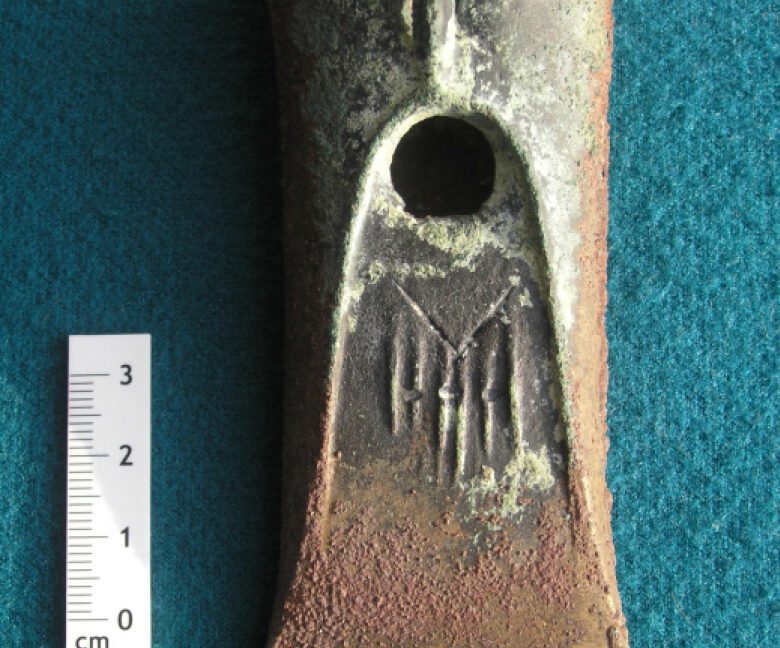
Artifacts recovered from the site, including tools and remnants of metalworking processes, provide valuable insights into the techniques employed by ancient artisans. The presence of these workshops indicates that Semiyarka was likely a center for innovation, where new methods and designs could be developed and shared among craftsmen.
Cultural Interactions
The interactions between nomadic herders and settled metalworkers in Semiyarka reflect a broader trend in ancient societies where different cultures and lifestyles converged. The city likely served as a meeting point for various groups, facilitating the exchange of goods, ideas, and technologies. This cultural melting pot would have contributed to the development of a unique identity for Semiyarka, distinct from other contemporary settlements.
Moreover, the strategic location of the city along trade routes would have attracted merchants and travelers from distant regions, further enriching the cultural tapestry of Semiyarka. The exchange of goods such as livestock, textiles, and metal products would have played a crucial role in the economy of the city, fostering relationships that extended beyond its immediate vicinity.
Implications of the Discovery
The discovery of Semiyarka has far-reaching implications for our understanding of Bronze Age societies in Central Asia. It challenges previous notions about the organization and complexity of urban life during this period. The evidence of a structured city layout, specialized workshops, and active trade networks suggests that the inhabitants of Semiyarka were more sophisticated than previously thought.
This finding also raises questions about the extent of urbanization in the region. While many scholars have focused on the development of large city-states in other parts of the world, Semiyarka demonstrates that smaller urban centers also played a vital role in the socio-economic landscape of ancient societies. The existence of such cities indicates a diverse range of responses to the challenges and opportunities presented by the environment and available resources.
Reactions from the Archaeological Community
The archaeological community has responded enthusiastically to the discovery of Semiyarka. Experts in the field have expressed excitement about the potential for further research and exploration in the region. The use of modern technology in mapping and surveying has been particularly praised, as it allows for a more comprehensive understanding of ancient urban environments without the need for extensive excavation.
Many archaeologists believe that the findings at Semiyarka could serve as a catalyst for future studies of Bronze Age settlements across Central Asia. The methodologies employed in this project may inspire similar approaches in other archaeological endeavors, leading to a more nuanced understanding of ancient societies.
Future Research Directions
As research continues at Semiyarka, several avenues for future exploration have emerged. Further excavations could yield additional artifacts and structural remains, providing deeper insights into the daily lives of the city’s inhabitants. Additionally, interdisciplinary studies involving historians, anthropologists, and geologists could enhance our understanding of the broader context in which Semiyarka existed.
Moreover, the ongoing analysis of the artifacts recovered from the site may reveal more about the trade networks that connected Semiyarka to other regions. By examining the composition of metals and other materials, researchers can trace the origins of goods and identify the relationships between different cultures.
Conclusion
The discovery of Semiyarka represents a significant milestone in the study of Bronze Age civilizations in Central Asia. As archaeologists continue to uncover the layers of history embedded in the Kazakh Steppe, the story of this ancient city will undoubtedly contribute to a richer understanding of human development and cultural exchange during a pivotal era.
In a world where the remnants of the past often lie hidden beneath the surface, the emergence of Semiyarka serves as a reminder of the complexities of ancient urban life and the enduring legacy of those who once inhabited this vibrant city.
Source: Original report
Was this helpful?
Explore more: More General Technology Tech News Blog
Last Modified: November 21, 2025 at 9:36 pm
14 views