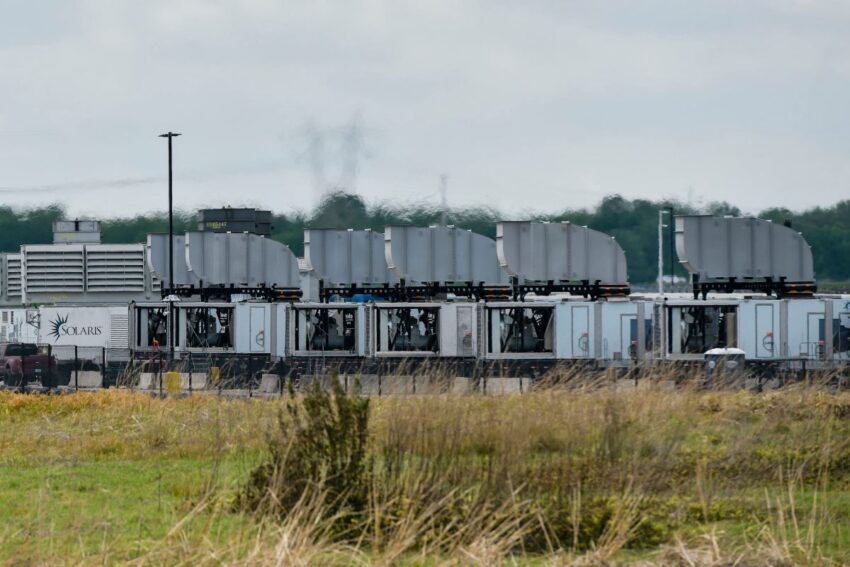
Environmental activist Erin Brockovich has launched a new campaign aimed at one of the fastest-growing and least visible parts of the AI boom: data center construction and its impact on nearby communities. Her latest effort is a public website that maps data centers across the United States and, in her view, pushes back against the secrecy that often surrounds where these projects are built and how they affect residents.
A map built from community reports
Brockovich, who became widely known after being portrayed by Julia Roberts in the film dramatizing her legal battle against Pacific Gas & Electric, recently introduced the website as a “work in progress.” The map includes data centers reported by members of surrounding communities, rather than relying solely on company announcements or official filings.
In a Substack post, Brockovich said she began soliciting reports in April. She said the response was immediate and sizable: nearly 4,000 submissions arrived in the first month alone. Those reports, she wrote, pointed to a recurring theme that cut across many of the complaints.
“The single most common concern — more than noise, more than water usage, more than rising utility bills — is the one word that keeps appearing in submission after submission: transparency,” she wrote.
Why transparency is the core issue
Brockovich’s criticism is not focused on data centers as a category, nor on artificial intelligence broadly. Instead, she argues that the current development pattern leaves communities out of the loop. According to her post, the concern is the way some projects move forward before local residents fully understand what is happening around them.
She described a pattern in which projects are announced only after permits have already been secured, developers do not return calls, and local officials may have signed nondisclosure agreements before neighbors even knew a project was under consideration. In her telling, those practices have created a trust problem as much as a planning problem.
That framing matters because data centers are increasingly central to the infrastructure behind cloud computing and AI, but they are often presented to the public as technical necessities rather than as large industrial facilities that can have local consequences. Brockovich’s map is an attempt to make those consequences more visible to the people living near them.
What the website is meant to do
The new site appears designed to gather and organize information that might otherwise be scattered across individual complaints, local rumors, or isolated coverage. By building a map based in part on resident reports, Brockovich is effectively creating a public reference point for people who believe a facility near them was developed without enough disclosure or community engagement.
The project is still incomplete, and Brockovich was careful not to present it as a finished database. Her description of it as a “work in progress” suggests that the map is intended to grow over time as more people submit information and as additional facilities are identified. The initial volume of reports, however, indicates that the issue resonates well beyond a few isolated neighborhoods.
Complaints go beyond environmental concerns
The public conversation around data centers often centers on electricity demand, water use, and land consumption. Brockovich acknowledged those issues, but her own description makes clear that the complaints she is receiving are broader. Residents are also worried about the day-to-day effects of living near construction and industrial-scale computing facilities, including noise and utility bills.
Still, her Substack post emphasized that transparency outranked those other concerns in the submissions she received. That is notable because it suggests many communities are not only reacting to impacts after the fact, but are also frustrated by the process that allowed the projects to arrive with so little public explanation.
In that sense, Brockovich’s campaign is as much about public process as it is about environmental outcomes. The map is meant to surface questions such as:
- Where are data centers being built?
- When were local communities informed?
- Who is responsible for answering resident questions?
- What information, if any, was withheld through confidentiality agreements?
A familiar role for Brockovich
Brockovich’s entry into the data center debate fits a long pattern in her career: taking up cases where residents believe they are being kept in the dark about potentially harmful industrial activity. Her name remains strongly associated with public scrutiny of corporate conduct because of her role in exposing the PG&E water contamination case that later became a cultural touchstone.
That history gives her current effort a level of visibility that many grassroots environmental campaigns would not have. It also gives the data center debate a more recognizable face at a moment when the industry is expanding quickly alongside the broader AI market. While she is not presenting herself as anti-technology, her involvement may help bring a new audience to questions that have often been discussed mainly by planners, utilities, and local officials.
The bigger policy backdrop
Data centers have become a major policy topic because they sit at the intersection of technology, energy, and local governance. Their growth can bring investment and jobs, but it can also raise difficult questions for communities about infrastructure strain, environmental tradeoffs, and whether local residents have meaningful input before projects are approved.
Brockovich’s map enters that debate at a time when the scale of data center development is drawing more scrutiny. The issue is not only how much power and water these facilities use, but also how decisions are made and communicated. By drawing attention to secrecy itself, Brockovich is highlighting a procedural concern that is easy to overlook when the focus stays only on megawatts and square footage.
The emphasis on nondisclosure agreements is particularly pointed. In her account, those agreements can prevent local officials from discussing proposed projects before residents know anything about them. Whether that practice is defensible in a given case may vary, but Brockovich is arguing that the effect is the same: communities are left to learn about major changes after the most important decisions are already in motion.
What happens next
For now, the website serves as both a reporting tool and a statement of intent. It invites people affected by data centers to share their experiences, while also signaling that Brockovich intends to keep pressing the transparency issue publicly. The nearly 4,000 submissions she said she received in April suggest she may already have enough material to sustain that effort for some time.
Whether the project leads to changes in how data centers are announced or approved remains to be seen. But Brockovich has already succeeded in reframing the conversation around more than emissions, water or energy consumption. Her argument is that communities deserve to know what is being built near them, who is making the decisions, and why those decisions are sometimes hidden until it is too late to weigh in.
For a technology sector increasingly dependent on large-scale infrastructure, that could become an uncomfortable question. For residents living near proposed or existing facilities, Brockovich is betting it is the most important one.
Source: Original report
Was this helpful?
Explore more: DevOps Services More Cloud & DevOps Tech News
Last Modified: July 7, 2026 at 9:20 pm
4 views