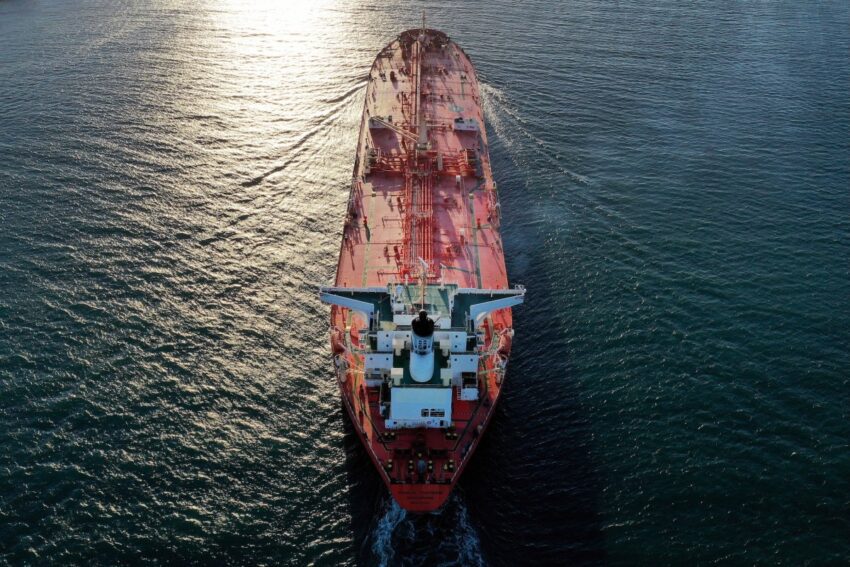
U.S. officials are investigating whether Iranian hackers were behind as many as 50 recent cyberattacks on shipping vessels, according to a Wall Street Journal report cited by TechCrunch. The incidents allegedly targeted oil tankers, liquefied gas carriers and ships transporting other explosive chemicals as they moved through Asia and Europe, raising concerns that cyber intrusions into maritime systems could be used to disrupt shipping routes or create safety risks at port.
What the report says about the tanker hacks
The Wall Street Journal report says the campaign may have stretched across dozens of vessels in recent weeks, making it one of the more unusual maritime cyber incidents to surface publicly this year. In at least some cases, the ships involved were carrying cargoes that would make any operational disruption especially sensitive, including oil, liquefied gas and other hazardous materials.
Among the most notable cases, several oil tankers headed toward the U.S. coast in August reportedly had their navigation systems breached. That prompted cybersecurity teams from the FBI and the Coast Guard to board the vessels, according to the report. The apparent need for physical intervention underscores how cyber incidents at sea can quickly become matters of national security and transportation safety.
The officials cited in the report are still trying to determine whether the attacks were meant to do more than interfere with ship operations. The suspected goals include sowing fear among shippers, disrupting routes, or, in a worst-case scenario, causing an explosion at a port. The report notes that ships are designed with backup controls if automated systems are hacked or fail, which can limit the impact of a successful intrusion.
Why Fortinet routers are part of the investigation
Investigators believe the attackers may have exploited a vulnerability nicknamed FortiBleed, which can allow intruders to break into networks by compromising vulnerable Fortinet-made routers. That detail matters because these devices are commonly used to secure or connect parts of a network, including in environments where remote access is critical.
A joint FBI and Coast Guard security alert issued in September warned that Fortinet routers are used on shipping vessels. That advisory now appears relevant to the current investigation, since a weakness in a widely deployed networking product could provide a practical path into shipboard systems. The report does not say whether every one of the suspected attacks used the same method, but it suggests the FortiBleed bug is one avenue investigators are examining.
For maritime operators, a router compromise can be especially concerning because a ship’s connected systems may span navigation, communications, crew access and other operational functions. Even where core safety systems have isolation or fallback measures, an intrusion can still create confusion, delay decision-making and force expensive manual intervention.
Iran and the broader cyber conflict
The report places the suspected shipping campaign in the context of Iran’s broader retaliation since the start of the U.S./Israel-led war earlier this year, which killed the country’s supreme leader. According to the source material, many of Iran’s responses have come in the form of cyberattacks rather than conventional military action.
U.S. officials have already blamed Iran for hacks targeting hundreds of American water providers and U.S. medical tech companies. That history is helping shape the current investigation, with officials reportedly considering whether the tanker incidents are part of the same pattern of pressure and retaliation. If so, the shipping attacks would represent an escalation in target selection, moving beyond domestic infrastructure and into international transportation.
Shipping is a particularly sensitive target because it sits at the intersection of commerce, energy and logistics. Oil tankers and liquefied gas carriers help move essential commodities across global supply chains, so even short-lived disruptions can ripple through markets and operations. That makes cyberattacks on vessels more than a technical issue; they can affect trade, port safety and geopolitical risk.
Why attacks on ships are hard to dismiss
Cybersecurity incidents at sea can be difficult to assess from the outside. Ships travel across jurisdictions, rely on layered systems and often operate with a mix of older and newer technology. As a result, a successful intrusion may not look dramatic in public, even when it forces crews or authorities to step in.
What makes this report notable is not just the number of alleged victims, but also the type of target. Tankers carrying hazardous cargo present an obvious incentive for attackers seeking leverage, intimidation or broader disruption. Even if backup controls prevent catastrophe, the possibility of forcing a ship to stop, divert or require inspection can still be strategically valuable.
The fact that some vessels traveling toward the U.S. coast were involved raises the stakes further. U.S. authorities reportedly boarded those ships after the navigation systems were breached, suggesting a response that went beyond routine cyber monitoring and into direct physical inspection. That kind of response can be costly and disruptive, but it can also be necessary when maritime systems are suspected to be compromised.
What we know, and what remains unclear
Several important questions remain unanswered. The report does not confirm a single actor, method or motive, and the FBI has not publicly provided an updated figure. A spokesperson for the FBI did not respond to a request for comment about the shipping hacks or whether the bureau has a more precise count.
That means the current picture is still provisional. The apparent scale of the incidents comes from a newspaper report based on officials familiar with the matter, not from a formal public disclosure by the government. As with many cyber investigations, details may change as investigators separate confirmed intrusions from attempted attacks or false leads.
- The alleged campaign involves as many as 50 cyberattacks, according to the Wall Street Journal report.
- Targets included oil tankers, liquefied gas carriers and other ships carrying explosive chemicals.
- Several oil tankers near the U.S. coast in August reportedly had navigation systems breached.
- FBI and Coast Guard cybersecurity teams boarded some vessels in response.
- Investigators are reportedly considering whether the FortiBleed vulnerability was used.
- The FBI did not provide comment or confirm a more accurate count.
If the reporting proves accurate, the case would add another maritime chapter to the growing list of cyber operations tied to state conflict. It would also reinforce a lesson that industry and government have repeated for years: networks that support critical infrastructure are only as resilient as the weakest device on the edge, and in shipping, that edge can be hundreds of miles from shore.
Source: Original report
Was this helpful?
Explore more: Application Audit & Review More Cybersecurity Tech News
Last Modified: November 25, 2026 at 10:32 pm
0 views