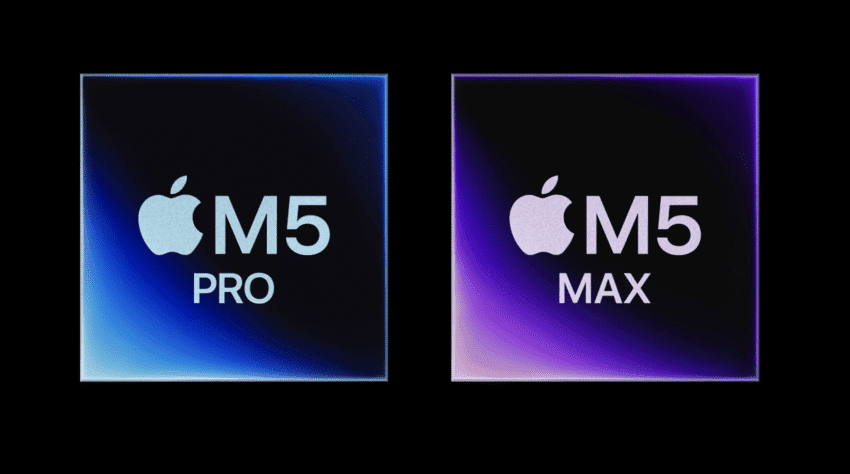
apple unveils m5 pro and m5 max Apple has introduced its latest M5 Pro and M5 Max chips, showcasing a significant leap in performance and efficiency through the innovative Fusion Architecture.
apple unveils m5 pro and m5 max
Overview of the M5 Pro and M5 Max Chips
Apple’s M5 Pro and M5 Max chips represent a pivotal advancement in the company’s silicon technology, designed to enhance the performance of its Mac lineup. These chips are built on the new Fusion Architecture, which integrates two separate dies into a single, high-performance system on a chip (SoC). This architectural innovation aims to deliver superior processing power while maintaining energy efficiency.
Fusion Architecture Explained
The Fusion Architecture is a groundbreaking design that combines two distinct chip dies into one cohesive unit. This approach allows for improved communication between the cores, resulting in faster processing speeds and enhanced performance for demanding applications. By merging these dies, Apple has effectively created a more powerful chip that can handle complex tasks without the need for additional power consumption.
One of the key benefits of the Fusion Architecture is its ability to optimize resource allocation. The architecture intelligently manages workloads, distributing tasks between the two dies based on their specific capabilities. This means that users can expect smoother multitasking and faster application launches, particularly when running resource-intensive software such as video editing tools or 3D rendering applications.
Performance Enhancements
The M5 Pro and M5 Max chips are designed to deliver substantial performance improvements over their predecessors. Apple claims that the M5 Pro offers up to 20% faster CPU performance and 30% faster GPU performance compared to the M4 Pro. Meanwhile, the M5 Max is positioned as the flagship chip, boasting up to 30% faster CPU performance and an impressive 40% increase in GPU performance compared to the M4 Max.
These enhancements are particularly relevant for professionals in fields such as graphic design, video production, and software development, where processing power is crucial. The M5 Max, with its advanced GPU capabilities, is expected to excel in rendering high-resolution graphics and handling complex simulations, making it an attractive option for creative professionals.
Energy Efficiency and Thermal Management
In addition to performance gains, Apple has prioritized energy efficiency in the design of the M5 Pro and M5 Max chips. The Fusion Architecture allows for better thermal management, which is essential for maintaining performance during extended workloads. By optimizing power consumption, Apple aims to extend battery life in devices powered by these new chips, a critical factor for mobile users.
Apple has also implemented advanced cooling technologies to ensure that the chips operate within optimal temperature ranges. This is particularly important for the M5 Max, which is designed to handle intensive tasks without overheating. The combination of efficient power management and effective thermal solutions positions the M5 series as a robust choice for users who require sustained performance over long periods.
Applications and Use Cases
The introduction of the M5 Pro and M5 Max chips opens up a range of possibilities for various applications. From creative professionals to software developers, the enhanced capabilities of these chips are set to transform workflows across multiple industries.
Creative Professionals
For graphic designers, video editors, and animators, the M5 Max chip offers unparalleled performance for rendering high-quality graphics and processing large video files. Applications like Final Cut Pro and Adobe Creative Suite are expected to run more smoothly, allowing for faster edits and real-time previews. The increased GPU performance will enable creatives to work with more layers and effects without experiencing lag, significantly improving productivity.
Software Development
Software developers will also benefit from the M5 Pro’s enhanced processing capabilities. The chip’s ability to handle complex computations and simulations will streamline development processes, particularly for applications that require extensive testing and debugging. Additionally, the improved performance will facilitate faster compilation times, allowing developers to iterate more quickly on their projects.
Gaming and Entertainment
The gaming industry stands to gain significantly from the advancements in the M5 Max chip. With its powerful GPU, the chip is expected to deliver high frame rates and stunning graphics in the latest gaming titles. This positions Apple as a more competitive player in the gaming market, appealing to gamers who seek high-performance devices for their gaming needs.
Market Implications
The launch of the M5 Pro and M5 Max chips is likely to have a considerable impact on the competitive landscape of the semiconductor industry. As Apple continues to innovate in chip design, it raises the bar for competitors such as Intel and AMD, who have traditionally dominated the market for high-performance processors.
Competitive Landscape
Intel and AMD are under increasing pressure to respond to Apple’s advancements. The introduction of the M5 series chips may prompt these companies to accelerate their own research and development efforts to maintain their market share. As Apple continues to refine its silicon technology, it could lead to a shift in consumer preferences, with more users gravitating towards Apple products for their performance capabilities.
Consumer Reactions
Initial reactions from consumers and industry analysts have been largely positive. Many are excited about the potential performance improvements and energy efficiency that the M5 Pro and M5 Max chips promise. Early benchmarks and performance tests are eagerly anticipated, as they will provide a clearer picture of how these chips stack up against existing offerings in the market.
Future Developments
Looking ahead, the introduction of the M5 Pro and M5 Max chips may signal a broader trend in the tech industry towards integrated chip designs. As companies seek to enhance performance while minimizing power consumption, the Fusion Architecture could become a model for future chip development.
Moreover, Apple’s commitment to in-house silicon development suggests that the company will continue to push the envelope in terms of performance and efficiency. Future iterations of the M series chips are likely to build on the foundation laid by the M5 series, potentially incorporating even more advanced features and capabilities.
Conclusion
The unveiling of the M5 Pro and M5 Max chips marks a significant milestone in Apple’s journey toward silicon independence. With the innovative Fusion Architecture at its core, these chips promise to deliver exceptional performance and efficiency, catering to a wide range of professional and consumer needs. As Apple continues to refine its chip technology, the implications for the broader tech landscape are profound, potentially reshaping the competitive dynamics of the semiconductor industry.
Source: Original report
Was this helpful?
Explore more: More Hardware & Devices Tech News Blog
Last Modified: March 3, 2026 at 8:42 pm
20 views