another jeff bezos company has announced plans Blue Origin, the space company founded by Jeff Bezos, has unveiled ambitious plans for a new satellite megaconstellation named TeraWave, aiming to deliver unprecedented data speeds globally.
another jeff bezos company has announced plans
Overview of TeraWave
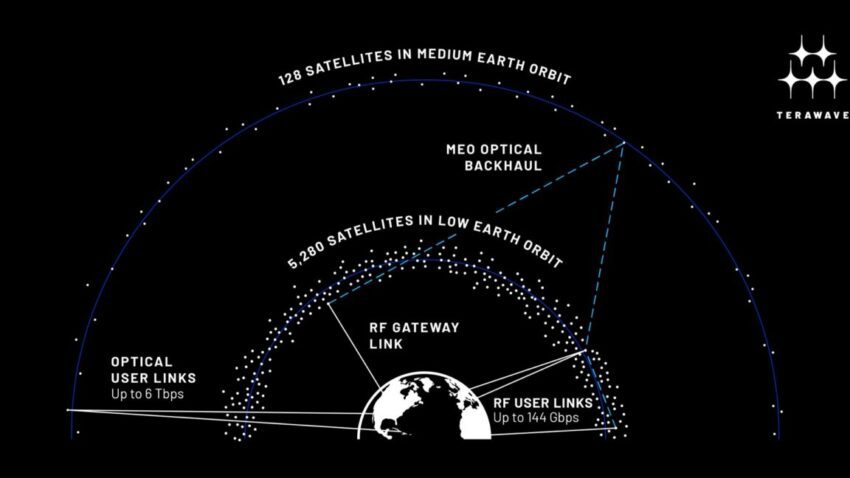
On Wednesday, Blue Origin announced its intention to develop TeraWave, a megaconstellation designed to provide data speeds of up to 6 terabits per second (Tbps) anywhere on Earth. This initiative marks the company’s entry into the competitive arena of satellite internet services, a sector that has seen significant investments and innovations in recent years.
Technical Specifications
The TeraWave constellation will comprise a total of 5,408 satellites, strategically positioned in both low-Earth orbit (LEO) and medium-Earth orbit (MEO). The majority of these satellites will operate in LEO, where they will leverage radio spectrum to deliver data speeds of up to 144 gigabits per second (Gbps). Meanwhile, the satellites in MEO will utilize optical links to achieve higher data rates, enhancing the overall performance of the network.
Design and Deployment Strategy
The design of TeraWave emphasizes optical interconnectivity among satellites, which is expected to facilitate faster data transmission and lower latency. This approach is in line with current trends in satellite technology, where optical communication is increasingly favored for its efficiency and speed. The deployment of such a large number of satellites will require significant logistical planning and coordination, as well as advancements in launch capabilities.
Market Context and Competition
The announcement of TeraWave comes at a time when the satellite internet market is rapidly evolving. Companies like SpaceX with its Starlink project, Amazon’s Project Kuiper, and OneWeb have already established a foothold in this sector, providing high-speed internet services to underserved and remote areas. Blue Origin’s entry into this market signals a growing recognition of the importance of satellite-based internet solutions in addressing global connectivity challenges.
Comparative Analysis with Competitors
SpaceX’s Starlink has gained significant traction, with thousands of satellites already in orbit and a growing customer base. Starlink’s focus on LEO satellites allows it to offer low-latency internet services, which is crucial for applications such as online gaming and video conferencing. In contrast, Blue Origin’s TeraWave will combine both LEO and MEO satellites, potentially offering a unique advantage in terms of coverage and data rates.
Amazon’s Project Kuiper, which aims to launch a constellation of 3,236 satellites, is also a key player in this space. While Kuiper has yet to launch any satellites, it has secured significant funding and partnerships to support its development. The competition among these companies is expected to drive innovation and lower costs for consumers, ultimately benefiting end-users.
Implications for Global Connectivity
The development of TeraWave has significant implications for global connectivity. With the potential to deliver high-speed internet to remote and underserved regions, this megaconstellation could help bridge the digital divide that exists in many parts of the world. Access to reliable internet services is increasingly seen as a fundamental necessity, impacting education, healthcare, and economic opportunities.
Potential Benefits
- Enhanced Connectivity: TeraWave could provide internet access to areas that currently lack reliable connectivity, enabling educational and economic opportunities.
- Improved Data Speeds: With speeds of up to 6 Tbps, users could experience significantly faster internet, benefiting both consumers and businesses.
- Support for Emerging Technologies: High-speed internet is essential for the growth of technologies such as IoT, telemedicine, and remote work solutions.
Challenges and Considerations
Despite the promising potential of TeraWave, several challenges must be addressed. The sheer scale of the project raises questions about the environmental impact of launching thousands of satellites into orbit. Concerns about space debris and the long-term sustainability of satellite constellations are critical issues that need to be considered.
Moreover, the technical challenges associated with deploying and maintaining such a large constellation cannot be underestimated. Ensuring reliable communication between satellites, managing orbital slots, and addressing potential interference with existing satellite systems are all factors that will require careful planning and execution.
Stakeholder Reactions
The announcement of TeraWave has elicited a range of reactions from industry stakeholders, analysts, and potential customers. Many view Blue Origin’s entry into the satellite internet market as a positive development, fostering competition and innovation.
Industry Expert Opinions
Industry experts have expressed optimism about the potential of TeraWave to enhance global connectivity. “The more players we have in the satellite internet space, the better it is for consumers,” said Dr. Emily Chen, a telecommunications analyst. “Competition drives innovation and can lead to lower prices and better services.”
However, some experts have also raised concerns about the feasibility of such a large-scale project. “While the technology is promising, the logistics of launching and maintaining over 5,000 satellites is a monumental task,” noted Dr. Mark Thompson, an aerospace engineer. “It will be interesting to see how Blue Origin addresses these challenges.”
Public Interest and Anticipation
Public interest in TeraWave is also high, particularly among communities that have long struggled with inadequate internet access. Many potential users are eager to see how this new service could improve their connectivity options. “If TeraWave can deliver on its promises, it could change the game for people in rural areas,” said Sarah Johnson, a resident of a remote community.
Future Prospects
As Blue Origin moves forward with the development of TeraWave, the company will need to navigate a complex landscape of regulatory approvals, technological challenges, and competition. The success of this megaconstellation will depend on its ability to deliver reliable, high-speed internet services while addressing the environmental and logistical concerns associated with satellite deployment.
Regulatory Landscape
In the United States and internationally, regulatory bodies will play a crucial role in overseeing the deployment of TeraWave. Compliance with regulations regarding frequency allocation, orbital slots, and environmental impact assessments will be essential for the project’s success. Blue Origin will need to work closely with agencies such as the Federal Communications Commission (FCC) and the International Telecommunication Union (ITU) to ensure that TeraWave meets all necessary requirements.
Technological Innovations
Technological advancements will also be critical in realizing the full potential of TeraWave. Innovations in satellite design, launch technology, and ground infrastructure will be necessary to support the ambitious goals set forth by Blue Origin. The company may need to collaborate with other technology firms and research institutions to accelerate the development of the required technologies.
Conclusion
The announcement of Blue Origin’s TeraWave megaconstellation represents a significant step forward in the quest for global connectivity. With its ambitious plans to deliver high-speed internet to users around the world, TeraWave has the potential to transform the landscape of satellite internet services. However, the challenges associated with such a large-scale project cannot be overlooked. As Blue Origin embarks on this journey, the industry and consumers alike will be watching closely to see how this initiative unfolds.
Source: Original report
Was this helpful?
Explore more: DevOps Services More Cloud & DevOps Tech News
Last Modified: January 22, 2026 at 5:42 am
19 views