ancient mars was warm and wet not A recent study has revealed that ancient Mars was warm and wet billions of years ago, challenging the long-held belief that this period was predominantly cold and icy.
ancient mars was warm and wet not
New Insights into Mars’ Climate History
The findings from this study have significant implications for our understanding of Mars as a potential habitat for life. For decades, scientists have been captivated by the question of whether life ever existed on the Red Planet, and this new research adds a critical piece to that puzzle. The study focuses on a specific time in Mars’ geological history known as the Noachian epoch, which lasted from approximately 4.1 to 3.7 billion years ago.
The Noachian Epoch: A Critical Period
The Noachian epoch is a crucial period in Mars’ geological timeline, characterized by a range of geological and climatic conditions that may have been conducive to life. This epoch is situated within a broader context of solar system history known as the Late Heavy Bombardment (LHB), a time marked by intense meteorite impacts across various celestial bodies, including the Moon and Earth.
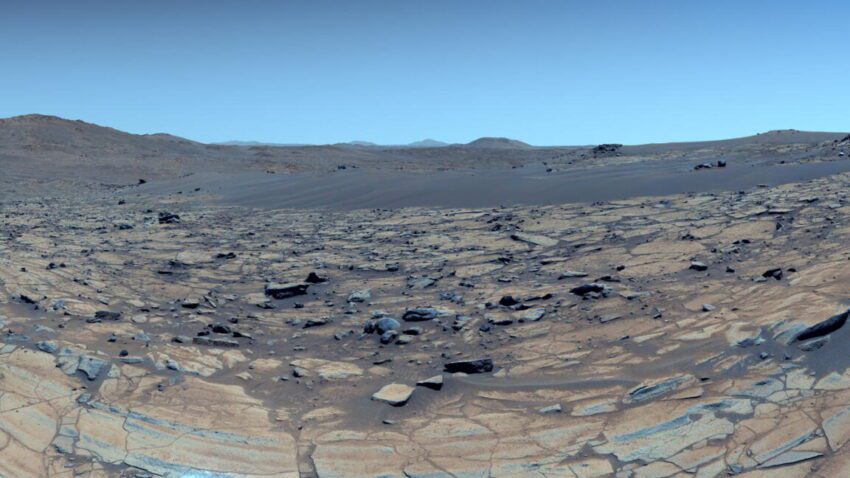
During the Noachian epoch, Mars experienced significant geological activity, including volcanic eruptions and the formation of river valleys and lake beds. These features suggest that liquid water was present on the planet’s surface, a key ingredient for life as we know it. The study’s findings indicate that rather than being a frigid desert, ancient Mars may have had a climate that allowed for warmer temperatures and the presence of liquid water.
Contrasting Theories: Cold and Icy vs. Warm and Wet
For many years, the prevailing theory among scientists was that Mars during the Noachian epoch was predominantly cold and icy. This perspective was largely based on the planet’s current arid conditions and the presence of polar ice caps. However, the new study challenges this notion by presenting evidence that suggests a much warmer and wetter environment.
Researchers utilized data from various Mars missions, including the Mars Reconnaissance Orbiter and the Curiosity rover, to analyze geological features and mineral compositions. The findings indicate that certain minerals, such as clays and sulfates, formed in the presence of liquid water, supporting the idea that ancient Mars had a more hospitable climate.
Implications for the Search for Life
The implications of this research extend beyond academic curiosity; they directly influence the ongoing search for extraterrestrial life. If ancient Mars was indeed warm and wet, it raises the possibility that microbial life could have developed during the Noachian epoch. This possibility is particularly intriguing given that Earth was also experiencing significant biological evolution during this time.
Understanding Mars’ climate history is essential for future exploration missions. NASA’s Perseverance rover, currently exploring the Jezero Crater, is tasked with searching for signs of past life and collecting samples that may one day be returned to Earth. The findings from this study could inform the rover’s mission objectives and help scientists identify the most promising locations for further investigation.
Geological Evidence Supporting a Warmer Mars
The study presents several lines of geological evidence that support the hypothesis of a warm and wet ancient Mars. One of the key pieces of evidence is the presence of ancient river valleys and lake beds, which suggest that liquid water was once abundant on the planet’s surface. These features are consistent with a climate that allowed for the existence of liquid water, rather than a cold and icy environment.
Additionally, the analysis of mineral deposits indicates that certain clays and sulfates formed in conditions that require liquid water. The presence of these minerals suggests that Mars experienced prolonged periods of wet conditions, which would have been essential for any potential biological processes.
Understanding the Late Heavy Bombardment
The Late Heavy Bombardment (LHB) is a significant event in the history of the solar system, occurring around 4.1 to 3.8 billion years ago. During this time, the inner planets, including Mars, were subjected to a barrage of meteorite impacts. The study’s authors suggest that the impacts during the LHB may have played a role in shaping Mars’ climate and geological features.
While the LHB is often associated with destruction, it may have also contributed to the creation of conditions favorable for life. The impacts could have released water trapped in the planet’s crust, contributing to the formation of lakes and rivers. This perspective adds a layer of complexity to our understanding of Mars’ early environment, suggesting that even catastrophic events can lead to the emergence of habitable conditions.
Reactions from the Scientific Community
The study has garnered attention from the scientific community, with many researchers expressing enthusiasm about the implications of the findings. Dr. Sarah Johnson, a planetary scientist at NASA, stated, “This research opens up new avenues for exploring the potential for life on Mars. If we can confirm the presence of liquid water during the Noachian epoch, it fundamentally changes our understanding of the planet’s history.”
Other scientists have echoed these sentiments, emphasizing the importance of continued exploration and research. Dr. Michael Smith, an astrobiologist, remarked, “The idea that Mars was once warm and wet is a game-changer. It encourages us to look for signs of life in places we may have previously dismissed.”
Future Exploration and Research Directions
The findings from this study underscore the need for ongoing exploration of Mars. Future missions, such as NASA’s Artemis program, aim to return samples from the Moon and eventually send humans to Mars. These missions will provide valuable opportunities to investigate Mars’ geology and climate further.
In addition to rover missions, scientists are also exploring the potential for lander missions that could analyze soil samples and search for organic compounds. The data gathered from these missions will be crucial in determining whether Mars was truly habitable and if life ever existed on the planet.
Conclusion: A New Era of Mars Research
The recent study challenging the notion of a cold and icy ancient Mars represents a significant advancement in our understanding of the planet’s climate history. By presenting evidence of a warm and wet environment during the Noachian epoch, researchers have opened new avenues for exploring the potential for life on Mars.
As we continue to investigate the Red Planet, the implications of this research will guide future missions and shape our understanding of Mars as a potential habitat for life. The quest to uncover the mysteries of Mars is far from over, and each new discovery brings us closer to answering the age-old question: did life ever exist on Mars?
Source: Original report
Was this helpful?
Explore more: More General Technology Tech News Blog
Last Modified: February 16, 2026 at 1:37 pm
16 views