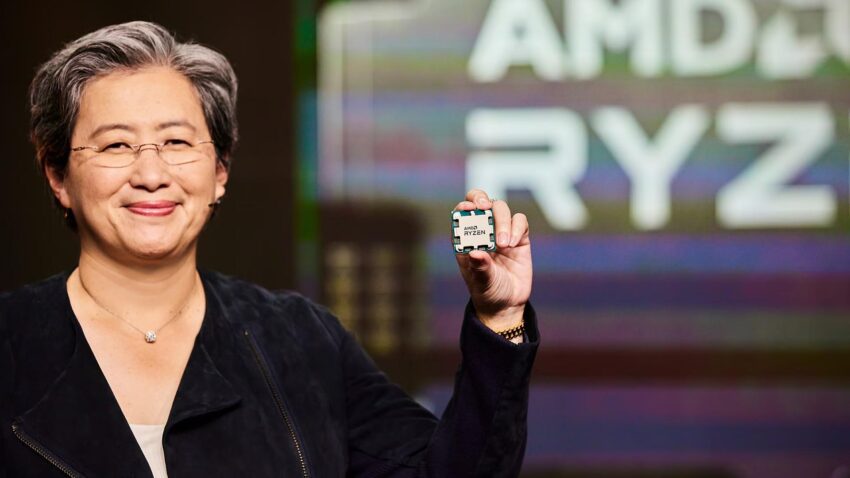
AMD is using Computex 2026 to make a surprisingly practical sales pitch: instead of pushing only the newest hardware, it is telling desktop PC buyers that some of its older platforms remain good enough to keep around. The company is promising AM5 motherboard support for new Ryzen processors through 2029, while also reviving an AM4-era favorite and introducing a new, lower-cost X3D chip for gamers who want to stay in AMD’s ecosystem without jumping to the most expensive parts.
AM5 is getting a longer runway
The biggest announcement is AMD’s commitment to keep supporting its AM5 desktop motherboard socket with new Ryzen processors through 2029. In practical terms, that means many users who buy into AM5 now may be able to keep upgrading CPUs for years without replacing the motherboard, potentially stretching that path to the end of the decade.
That promise matters because motherboard longevity has become a major part of the value proposition for desktop builders. In a market where new platforms often mean a full-platform refresh, AMD is leaning into continuity as a feature. For buyers who worry about being forced into an expensive upgrade cycle, the message is simple: keep the board, swap the chip.
AM4 gets one more turn
Even owners of the older AM4 socket are being offered one more reason to hang on. AMD is relaunching a “10th Anniversary” edition of the Ryzen 7 5800X3D to mark the 10th anniversary of the AM4 platform. The chip will cost $349 and is scheduled to arrive on June 25.
That re-release is notable because the 5800X3D has long been regarded as one of the strongest final upgrades for AM4 gaming systems. By bringing it back in anniversary form, AMD is effectively giving long-time AM4 users one more premium option before the platform’s runway finally ends.
A new old chip for AM5 builders
AMD is also launching a new Ryzen 7 7700X3D for $330, aimed at buyers who are moving to AM5 or already building on it but do not want to pay top-tier prices. Based on the company’s positioning, it appears to be a binned version of the existing Ryzen 7 7800X3D.
AMD says the 7700X3D is “only slightly slower” on paper than the 7800X3D, which suggests the company is trying to preserve much of the gaming performance that made the original such a standout while trimming the price. The 7800X3D itself launched in 2023, with the 9000-series successor arriving in late 2024, but AMD is clearly still comfortable selling an older-generation chip if the performance-to-price mix remains attractive.
That approach fits a broader trend in PC hardware: in many use cases, the best value does not always come from the newest model. AMD appears willing to acknowledge that directly, especially in gaming, where the company has had success with its X3D lineup.
Why older chips still matter
- Price: Older or binned parts can land at lower price points than flagship models.
- Performance: Chips like the 7800X3D proved that a previous generation can still deliver excellent gaming results.
- Efficiency: The source notes that Tom Warren’s 2025 comparison showed the 7800X3D using much less power than newer high-end options.
- Longevity: AM5 support through 2029 gives builders a longer upgrade path on the same motherboard.
Radeon RX 9070 GRE leaves China
AMD’s platform message is not limited to CPUs. In the GPU space, the company is bringing the Radeon RX 9070 GRE outside China, including to the US, starting June 1 at $549.
That price puts the card in a complicated position. $549 was originally expected to be the starting point for the more powerful RX 9070, not the cut-down GRE version. The GRE model trails the RTX 5070, according to the source material, so the new US pricing is not exactly a bargain in the abstract.
Still, AMD’s broader market context matters here. The source notes that the RX 9070 never stayed at the originally suggested $549 level for long. It briefly launched at that number during a GPU shortage, but once conditions normalized, the price settled closer to $599 or even $620. Against that backdrop, a $549 GRE card is at least somewhat less punishing than the post-shortage reality of the original RX 9070.
AMD’s timing is no accident
The company’s announcements arrive as the PC industry continues to deal with rising component prices, especially for memory. The source material describes the situation as “RAMageddon,” and AMD’s pitch lands squarely in that environment: if hardware is getting more expensive, then squeezing more life out of existing platforms becomes a more attractive story.
For desktop gamers, the combination of long AM5 support, a refreshed AM4 option, and a lower-cost X3D chip sends a clear message. AMD is not just selling performance; it is selling the idea that the best upgrade might be the one that avoids a full rebuild.
That is a smart angle in a year when flashy launches may be less persuasive than a straightforward promise of longevity. Whether buyers respond will depend on how the new parts actually perform and how pricing settles in the months ahead, but the strategy itself is easy to understand: if your old tech is still good, AMD wants you to keep using it.
Source: Original report
Was this helpful?
Last Modified: July 7, 2026 at 9:44 pm
2 views