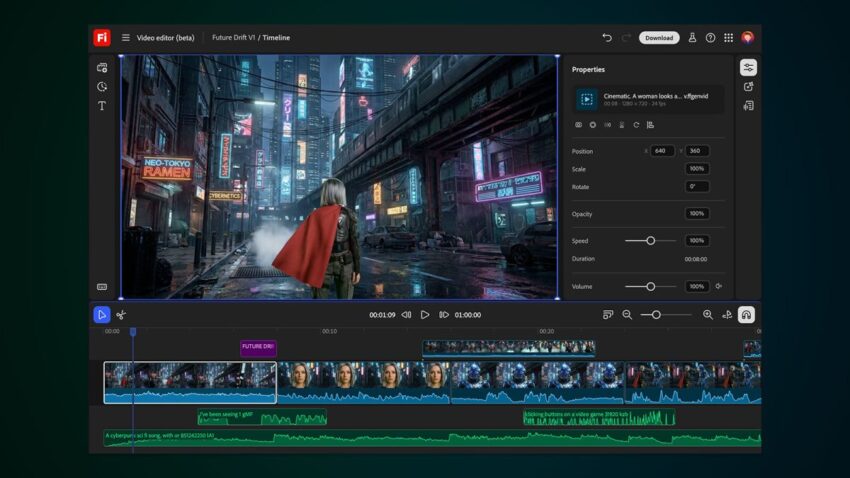
adobe firefly now supports prompt-based video editing Adobe has announced significant updates to its AI video-generation application, Firefly, introducing a new video editor that enables precise prompt-based edits and expanding its capabilities with additional third-party models.
adobe firefly now supports prompt-based video editing
Overview of Adobe Firefly
Adobe Firefly, launched as part of Adobe’s suite of creative tools, leverages artificial intelligence to assist users in generating and editing video content. The application is designed to streamline the creative process, allowing users to produce high-quality videos with minimal technical expertise. With the latest update, Firefly aims to enhance user experience by integrating more advanced features that cater to both novice and professional creators.
New Features in Firefly
Prompt-Based Video Editing
The standout feature of the recent update is the introduction of prompt-based video editing. This functionality allows users to input specific text prompts that guide the editing process, making it easier to achieve desired outcomes without extensive manual adjustments. For instance, a user could type a prompt such as “add a sunset scene” or “insert a dramatic transition,” and Firefly will automatically generate the corresponding edits.
This feature is particularly beneficial for content creators who may not have a deep understanding of video editing software but still wish to produce professional-looking videos. By utilizing natural language processing, Firefly interprets user prompts and applies relevant edits, significantly reducing the time and effort required to create engaging video content.
Integration of Third-Party Models
In addition to the new editing capabilities, Adobe has expanded Firefly’s functionality by incorporating third-party models for both image and video generation. Notable additions include Black Forest Labs’ FLUX.2 and Topaz Astra. These models enhance Firefly’s ability to generate high-quality visuals and effects, providing users with a broader range of creative options.
FLUX.2, developed by Black Forest Labs, is known for its advanced capabilities in generating dynamic visuals and effects that can be seamlessly integrated into video projects. Meanwhile, Topaz Astra offers tools for enhancing image quality and applying sophisticated filters, which can elevate the overall aesthetic of the videos produced using Firefly.
Implications for Content Creators
The updates to Adobe Firefly come at a time when the demand for video content is surging across various platforms, including social media, marketing, and entertainment. As businesses and individuals seek to create compelling visual narratives, tools that simplify the editing process are increasingly valuable.
Accessibility for Non-Professionals
One of the most significant implications of the new prompt-based editing feature is its potential to democratize video production. By lowering the barrier to entry for non-professionals, Adobe is enabling a wider audience to engage in video creation. This could lead to a surge in user-generated content, as more individuals feel empowered to express their creativity through video.
Enhancing Professional Workflows
For professional content creators, the integration of advanced third-party models can streamline workflows and enhance the quality of output. The ability to quickly apply sophisticated effects and edits based on simple prompts allows professionals to focus more on storytelling and less on technical execution. This efficiency can be particularly advantageous in fast-paced environments where time is of the essence.
Stakeholder Reactions
The response from the creative community regarding Adobe’s updates has been largely positive. Many content creators and industry professionals have expressed excitement about the potential of prompt-based editing to simplify their workflows. Social media platforms have also seen discussions around how these new features could influence content creation trends.
Feedback from Users
Early adopters of the updated Firefly have shared their experiences, highlighting the ease of use and the quality of the generated edits. Users have noted that the prompt-based feature allows for a more intuitive editing experience, enabling them to focus on their creative vision rather than getting bogged down by technical details.
Industry Experts Weigh In
Industry experts have also weighed in on the implications of Adobe’s updates. Many believe that the advancements in AI-driven video editing tools will lead to a shift in how content is produced. As these tools become more sophisticated, the line between amateur and professional content may blur, resulting in a more diverse range of video styles and narratives.
Comparative Analysis with Competitors
Adobe Firefly’s new features position it competitively within the landscape of AI video editing tools. Other platforms, such as Canva and InVideo, have also introduced AI-driven features aimed at simplifying video creation. However, Firefly’s unique combination of prompt-based editing and integration of third-party models sets it apart.
Strengths of Adobe Firefly
- Advanced AI Capabilities: Firefly’s use of AI for prompt interpretation and video generation is among the most advanced in the industry.
- Seamless Integration: The incorporation of third-party models allows for a richer creative experience, offering users a wider array of tools and effects.
- User-Friendly Interface: The intuitive design of Firefly makes it accessible to users of all skill levels, promoting inclusivity in video creation.
Challenges Ahead
Despite its strengths, Adobe Firefly faces challenges in maintaining its competitive edge. As AI technology continues to evolve, other platforms may introduce similar features, potentially diluting Firefly’s unique offerings. Additionally, user expectations will continue to rise as they become accustomed to the capabilities of AI-driven tools.
Future Directions for Adobe Firefly
Looking ahead, Adobe is likely to continue refining Firefly’s features based on user feedback and technological advancements. Potential future updates could include enhanced collaboration tools for teams, improved integration with other Adobe products, and further expansion of third-party model partnerships.
Potential for Collaboration
As the creative industry increasingly embraces collaborative projects, Adobe may explore features that facilitate teamwork within Firefly. This could include real-time editing capabilities, shared project spaces, and integrated communication tools to streamline the collaborative process.
Expanding Third-Party Partnerships
Adobe’s strategy of integrating third-party models has proven beneficial, and further partnerships could enhance Firefly’s offerings. Collaborating with emerging AI developers and established creative tools could provide users with even more resources to elevate their video projects.
Conclusion
Adobe Firefly’s latest updates mark a significant step forward in the realm of AI-driven video editing. By introducing prompt-based editing and expanding its capabilities with third-party models, Adobe is positioning Firefly as a leading tool for both amateur and professional content creators. As the demand for video content continues to grow, Firefly’s innovations are likely to play a crucial role in shaping the future of video production.
Source: Original report
Was this helpful?
Last Modified: December 16, 2025 at 8:38 pm
0 views