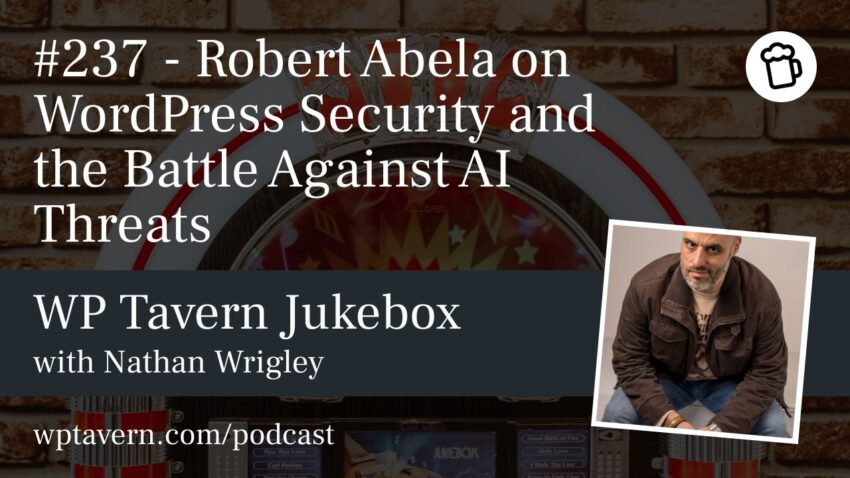
WordPress security in 2026 looks less like a single technical problem and more like a mix of preparedness, user behavior, and a rapidly shifting threat landscape shaped by AI. In a new WP Tavern podcast episode, Melapress founder Robert Abela discussed the company’s 2026 WordPress Security Survey, which found that more than two-thirds of respondents had experienced at least one security incident in the past year, while many still lacked recovery plans or basic team training.
What the 2026 WordPress Security Survey found
The survey, now in its fourth or fifth year, drew 219 respondents this time around, according to Abela, after the results were cleaned to remove duplicates and incomplete entries. Responses came from a broader mix of the WordPress ecosystem than in earlier years, including agency staff, developers, designers, enterprise teams, and product owners.
That wider participation matters, because the findings suggest security anxiety is widespread, but the response to that anxiety remains inconsistent. Across all respondents, 78.5% said they were concerned about WordPress security, while 67.7% reported at least one known incident over the previous year. A smaller but still worrying 13.2% said they had been targeted repeatedly, with more than five incidents each.
Key figures from the survey
- 219 respondents after validation and cleanup
- 78.5% said they were concerned about WordPress security
- 67.7% reported at least one security incident in the past year
- 13.2% of affected respondents experienced more than five incidents
- 27.9% had a breach recovery plan
- 26% provided team security training
Why the risks feel so real for WordPress users
Abela said the survey’s concern levels have stayed broadly steady over recent years, even as the threat environment has changed. He argued that people who understand the technical side of WordPress, including sessions, cookies, and authentication basics, often feel more in control and therefore less anxious than less technical users.
That distinction helps explain one of the survey’s more striking findings: concern is high, but action often lags behind. Many respondents know something could go wrong, especially with AI accelerating both attack methods and defensive tools, yet they still have not built the kind of recovery process that would limit the damage.
The survey also showed that the kinds of problems people fear depend heavily on the kind of site they run. Overall, the biggest concern was website downtime at 55.8%, followed closely by defacement and reputational damage at 54.2%. Data theft or loss came next at 46.4%.
What site owners fear most
- Website downtime: 55.8%
- Defacement and reputational damage: 54.2%
- Data theft or loss: 46.4%
Abela noted that the broad totals hide important differences. News and content sites tend to worry most about availability and defacement, because being online is central to their value. E-commerce and membership sites, by contrast, are more likely to focus on financial loss, privacy, and compliance obligations because they handle more sensitive customer data.
Preparedness still trails concern
One of the clearest messages from the conversation is that awareness does not automatically become readiness. Only 27.9% of respondents said they had a breach recovery plan, and just 26% said they provided security training for their teams.
That gap is especially pronounced among smaller websites and freelancers, according to Abela. Enterprise and branded sites are more likely to have logs, firewalls, and response procedures in place, partly because they face more formal compliance requirements and often have dedicated security staff. Smaller sites, meanwhile, frequently operate with little beyond backups and hope.
Abela compared that to insurance: it is easy to see as unnecessary until the moment it becomes essential. The same logic applies to WordPress security controls. A recovery plan, logging, and training may feel like overhead when nothing has gone wrong, but they can determine whether an incident becomes a brief interruption or a long-running business problem.
Most incidents are detected after the damage starts
The survey also asked how respondents typically discovered a security issue. In many cases, detection was retroactive. The largest share, 42.6%, said they learned about an issue through unusual website behavior noticed by staff or customers. Another 38.4% said logs revealed the problem.
Abela pointed out that logs can play both a reactive and a near-real-time role, depending on how they are used. Some teams only review them after something looks wrong, while others have alerts set up to flag suspicious logins or unusual activity immediately. Still, the pattern is clear: many WordPress site owners find out about problems after they have already happened.
- 42.6% detected issues through website behavior
- 38.4% discovered incidents through logs
- 35.6% were notified by their web host
- 30% were alerted by malware scanners
That reactive pattern matters because the fallout is often broader than a simple outage. The survey found that incidents most commonly led to downtime, but also to reputational harm, search engine ranking losses, damaged client trust, and in some cases lost revenue. Abela said the effects can be especially severe for businesses where every hour of downtime translates directly into lost sales.
Why AI is changing the WordPress security conversation
The episode also turned to the role of AI in security, a topic that has become more urgent in recent months as vulnerability reporting and AI-assisted attacks have accelerated. Abela rejected the idea that AI itself is “winning” the race. Instead, he said the real issue is that malicious actors can now use AI to move faster and probe more widely.
At the same time, defenders are adopting the same tools. Abela said his team now uses AI to test code and look for issues during the development cycle and before releases. He described that shift as part of a broader reality: security teams need to use the same class of tools as attackers if they want to stay ahead.
He also said many reported vulnerabilities are not instantly exploitable in the wild, but that can change quickly as tooling improves. Something hard to exploit today could become trivial six months from now, which is why monitoring and proactive analysis matter even when a flaw does not appear immediately severe.
What the survey suggests WordPress users should do next
Despite the anxiety reflected in the survey, Abela’s main recommendation was not simply to buy more tools. Instead, he argued for a more balanced approach that covers prevention, detection, and recovery across the whole lifecycle of a site.
That means hardening where possible, using monitoring and logging effectively, training users, and having a recovery plan ready before an incident occurs. It also means recognizing that there is no perfect defense, especially as AI lowers the barrier for both attacks and testing.
For smaller teams, the practical takeaway is simple: do not wait for an incident to justify the work. The data in the survey suggests that many WordPress users already know the risks. The next step is translating that awareness into routines, systems, and responses that reduce the impact when something does go wrong.
Source: Original report
Was this helpful?
Explore more: WordPress Troubleshooting More WordPress & CMS Tech News
Last Modified: October 14, 2026 at 10:32 pm
0 views