Cyberattacks on U.S. water utilities over the past few weeks have raised fresh alarms about the security of critical infrastructure, especially after officials and cybersecurity researchers linked the incidents to tactics consistent with Iranian hacking activity. The full picture is still emerging, but the reported scope — with attacks in roughly a dozen states — has made the campaign stand out from the more typical isolated intrusions that often target the sector.
What we know about the alleged Iranian hacks on US water utilities
The United States has more than 150,000 water systems, many of them run by small local operators. That fragmentation can make it harder for attackers to hit multiple targets at once, but it also means some utilities may lack the budget, staff, or cybersecurity expertise to defend themselves well. In this case, that combination appears to have created an opening for attackers looking for exposed systems connected to the internet.
Cybersecurity experts have long warned that Iranian hackers often focus on “low-hanging fruit” in opportunistic attacks. If the current wave is indeed tied to Iran, it would suggest a broader and more coordinated effort than the sector usually sees.
Where the incidents have been reported
The first major disclosure came on July 28, when Minnesota authorities said water treatment plants in more than 30 communities had been hit by coordinated cyberattacks. Two days later, the FBI said water and wastewater utility companies in “at least seven states” had reported incidents, and that in some cases the attacks “degraded water operations.”
Since then, reported incidents have also surfaced in Arkansas, Georgia, New Jersey, and Michigan, alongside the Minnesota cases. The timeline suggests the campaign may have been broader than first understood, with different utilities experiencing different levels of disruption.
- Minnesota: attacks on water treatment plants in more than 30 communities
- Arkansas: reported hack against a water facility
- Georgia: reported hack against a water facility
- New Jersey: reported hack against a water facility
- Michigan: reported hack against a water facility
Who is believed to be behind the attacks?
Officially, the U.S. government has not publicly named a culprit. But the leading suspect is the Iranian government, and in particular the Islamic Revolutionary Guard Corps, or IRGC, according to reports citing U.S. intelligence officials.
The case for that attribution grew after the U.S. Cybersecurity and Infrastructure Security Agency, or CISA, warned in April that Iranian hackers were targeting internet-connected devices in water systems and the energy sector. CISA updated that warning shortly before the Minnesota attacks became public.
After the first wave was disclosed, President Donald Trump said he did not think “there was an Iranian cyberattack,” instead blaming Minnesota. That statement came after Wired reported that WaterISAC, a nonprofit that shares cybersecurity information across the water sector, told members the attacks “aligned” with the Iranian campaign CISA had warned about.
Earlier this week, The Washington Post reported that U.S. intelligence agencies “are confident” Iran was responsible, but have not made that attribution public. According to the paper’s sources, officials have not settled on which IRGC unit was involved and may also be reluctant to openly contradict Trump’s comments.
Why water utilities are vulnerable
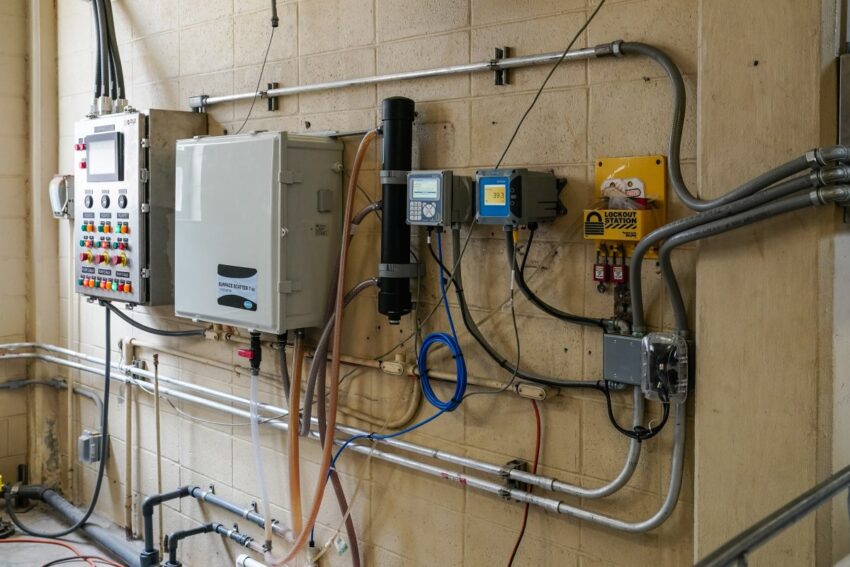
Some operational technology systems used by utilities are exposed to the internet, which can make them easy for attackers to find. That does not mean every exposed device can be seized remotely, but it does increase the risk that attackers can probe weak points or exploit poor configuration.
Security firm Forescout said earlier this month that it found more than 2,800 controllers in U.S. water systems exposed online. That figure helps explain why utilities have become a recurring target: even when the sector is highly distributed, digital exposure can still create a large attack surface.
Water systems also face a persistent resource problem. Many are operated by local or regional organizations that may not have dedicated cybersecurity teams, making patching, monitoring, and incident response harder than in larger enterprises.
What the attacks have done so far
In several cases, the incidents caused disruption rather than catastrophic damage. The FBI said some of the attacks led to loss of pressure, which could potentially allow untreated groundwater to seep into pipes and in some cases cause flooding.
In Braham, Minnesota, one of the first towns to report an incident, the water plant was taken offline for a few hours and residents were asked to conserve water. Maple Plain, also in Minnesota, briefly declared a state of emergency. In a county outside Atlanta, Georgia, residents were told for a short time to boil water as a precaution.
Those events were limited in duration, but they showed that even short-lived cyber incidents can affect day-to-day public services. For a basic utility like water, any disruption can quickly become a public concern.
The larger concern: pressure, fear and escalation
The most immediate harm may be psychological. The attacks have drawn heavy local and national coverage, prompting concern about whether water is safe to drink and whether other utilities could be next.
That uncertainty may be part of the point if the campaign is indeed state-backed. Beyond any operational disruption, the attacks could be aimed at creating fear, spreading doubt, and showing that critical services remain vulnerable.
For now, the picture is still incomplete. The attacks appear to be real, the effects in some cases are documented, and the Iranian connection is plausible enough that U.S. officials and sector groups have taken it seriously. What remains unresolved is the formal attribution — and whether this marks a one-off campaign or the start of a more aggressive phase against U.S. infrastructure.
Source: Original report
Was this helpful?
Explore more: Application Audit & Review More Cybersecurity Tech News
Last Modified: August 15, 2026 at 1:52 am
14 views