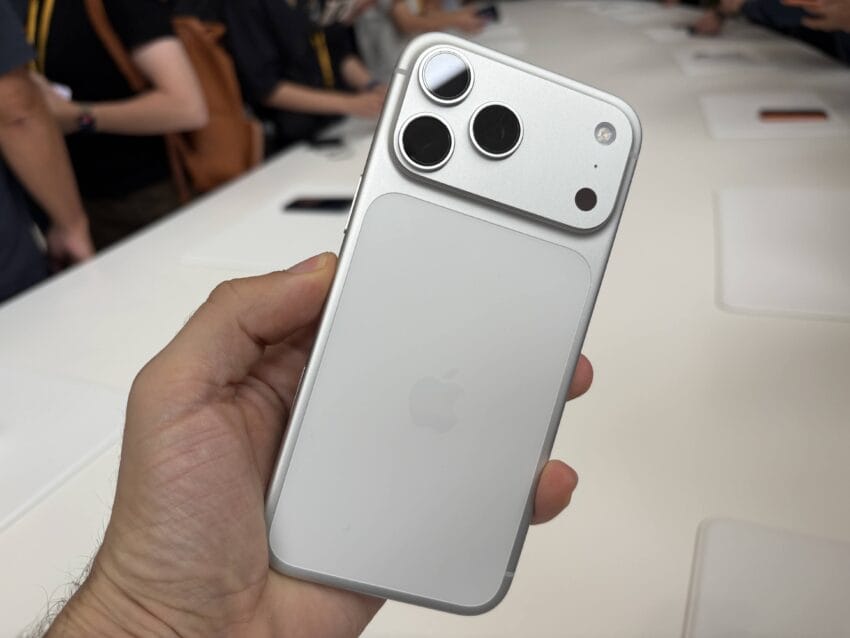
why does apple think three lenses are Apple’s latest marketing claims regarding the camera capabilities of its iPhone 17 Pro and iPhone Air have raised eyebrows, particularly the assertion that three lenses can equate to eight pro lenses.
why does apple think three lenses are
Understanding Apple’s Camera Claims
Apple has a long-standing tradition of making bold statements about the camera technology in its iPhones. The latest iteration, the iPhone 17 Pro, is no exception. Apple claims that its three rear cameras are equivalent to “eight pro lenses in your pocket.” This statement invites scrutiny and raises questions about what it truly means for consumers.
Breaking Down the Camera Specifications
To understand Apple’s claims, it’s essential to look at the specifications of the cameras involved. The iPhone Air features a single rear camera, a 48-megapixel sensor paired with a 26mm-equivalent f/1.6 lens. This configuration is similar to the main camera found in the standard iPhone 17, which also includes a second 0.5x ultrawide camera.
On the other hand, the iPhone 17 Pro and Pro Max boast a more sophisticated camera system. They feature a 48MP sensor as well, but with a 24mm-equivalent f/1.78 lens. This slight difference in focal length and aperture can have significant implications for image quality and versatility.
What Makes a Lens “Pro”?
The term “pro lens” typically refers to lenses that offer superior optical quality, versatility, and performance in various shooting conditions. Professional photographers often rely on multiple lenses to achieve different effects, such as wide-angle shots, macro photography, and low-light performance. Apple’s assertion that three lenses can provide the equivalent of eight pro lenses raises questions about how the company is defining this equivalence.
The Technology Behind Computational Photography
One of the key factors that enable Apple to make such claims is its advanced computational photography technology. This technology uses algorithms to enhance images captured by the camera sensors, allowing for features like Night Mode, Smart HDR, and Portrait Mode. These features can significantly improve the quality of photos, making them appear as though they were taken with more advanced equipment.
For instance, the iPhone 17 Pro’s three lenses—standard, ultrawide, and telephoto—work in conjunction with computational photography to create a more versatile shooting experience. When Apple claims that these three lenses can mimic the capabilities of eight lenses, it likely refers to the various combinations of focal lengths and effects that can be achieved through software processing.
Lens Combinations and Digital Cropping
Another aspect to consider is digital cropping. By capturing images at a high resolution, the iPhone can crop into the image without losing significant detail. This allows for a simulated zoom effect, which can make it seem as though the camera has more lenses than it physically does. For example, the iPhone 17 Pro can take a wide shot and then crop into it to create a tighter composition, effectively mimicking the capabilities of a telephoto lens.
However, this raises questions about the authenticity of the images produced. While digital cropping can yield impressive results, it may not always match the quality of images taken with dedicated telephoto lenses. Professional photographers often prefer optical zoom for its superior image quality, particularly in challenging lighting conditions.
Market Implications and Consumer Perception
Apple’s marketing strategy relies heavily on the perception of quality and innovation. By positioning the iPhone 17 Pro as a device that can replace multiple pro lenses, Apple aims to attract both amateur and professional photographers. This strategy could potentially influence purchasing decisions, especially among consumers who may not fully understand the technical differences between optical and digital zoom.
Moreover, the emphasis on computational photography aligns with broader trends in the smartphone industry. As manufacturers continue to enhance camera capabilities, the line between professional and consumer-grade photography is becoming increasingly blurred. This trend raises important questions about the future of photography and the role of traditional cameras in a world dominated by smartphones.
Stakeholder Reactions
The reaction from industry experts and consumers has been mixed. Some praise Apple’s innovative approach to photography, highlighting the convenience of having multiple lens capabilities in a single device. Others express skepticism, arguing that the marketing claims may overstate the actual performance of the camera system.
Professional photographers, in particular, have voiced concerns about the implications of such marketing tactics. Many believe that while smartphones can produce high-quality images, they cannot fully replace dedicated camera systems. The nuances of professional photography—such as depth of field, lens distortion, and low-light performance—are often best captured with specialized equipment.
Comparative Analysis with Competitors
Apple is not alone in making bold claims about camera capabilities. Competitors like Samsung and Google have also marketed their smartphones as having advanced photography features. Samsung’s Galaxy series, for example, boasts multiple lenses and advanced software capabilities, while Google has gained a reputation for its computational photography prowess through its Pixel line.
As the competition heats up, companies are increasingly focused on differentiating their products through camera technology. This has led to a race to innovate, with each manufacturer striving to offer unique features that appeal to consumers. However, as the market becomes saturated, the challenge lies in ensuring that marketing claims align with actual performance.
Consumer Education and Awareness
Given the complexity of camera technology, consumer education is crucial. Many potential buyers may not fully understand the implications of Apple’s claims about lens equivalence. As a result, it is essential for both manufacturers and retailers to provide clear and accurate information about the capabilities of their products.
Workshops, tutorials, and online resources can help consumers make informed decisions about their photography needs. By understanding the differences between optical and digital zoom, as well as the benefits of computational photography, consumers can better appreciate the value of the devices they choose.
Conclusion: The Future of Smartphone Photography
As Apple continues to push the boundaries of smartphone photography, the implications of its marketing claims will resonate throughout the industry. The assertion that three lenses can equate to eight pro lenses reflects a broader trend toward computational photography and the blending of consumer and professional photography.
While the iPhone 17 Pro and iPhone Air offer impressive camera capabilities, it is essential for consumers to critically evaluate these claims and understand the technology behind them. As the smartphone market evolves, the conversation around photography will undoubtedly continue, shaping the future of how we capture and share our experiences.
Source: Original report
Was this helpful?
Last Modified: September 11, 2025 at 7:42 pm
11 views