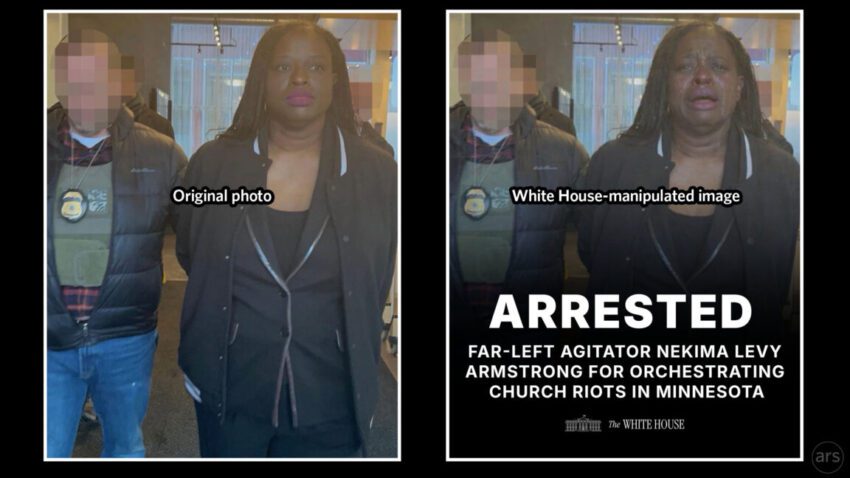
white house alters arrest photo of ice The White House has stirred controversy by posting a manipulated image of a civil rights attorney following her arrest during a protest.
white house alters arrest photo of ice
Background of the Incident
Nekima Levy Armstrong, a prominent civil rights attorney from Minnesota, was arrested while protesting in a church that is reportedly affiliated with an Immigration and Customs Enforcement (ICE) official. This incident occurred amidst heightened tensions surrounding immigration policies and the role of ICE in various communities across the United States. Armstrong has been a vocal critic of ICE and has actively participated in protests against the agency’s practices, advocating for the rights of immigrants and marginalized groups.
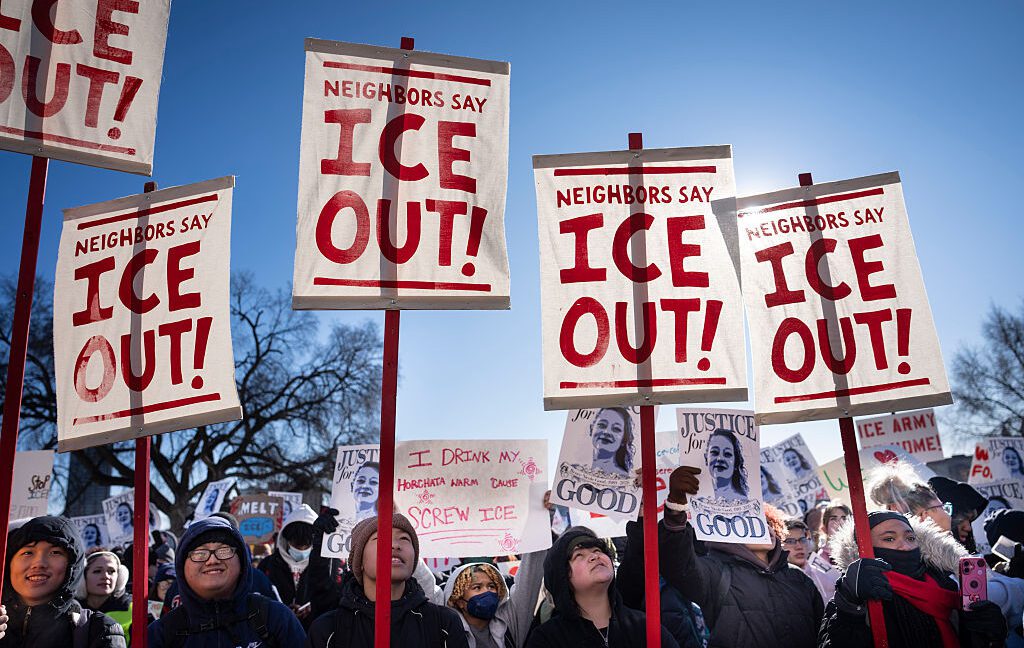
The protest in question was organized to challenge ICE’s presence in communities, particularly in places of worship, which many activists argue should be sanctuaries for individuals seeking refuge from deportation. The church setting added a layer of complexity to the protest, as it raised questions about the intersection of faith, community, and immigration enforcement.
The Altered Photo Incident
On the morning following Armstrong’s arrest, Secretary of Homeland Security Kristi Noem shared what appeared to be the original photo of Armstrong being led away by law enforcement. This image captured the moment of her arrest but did not convey any emotional manipulation. However, shortly thereafter, the official White House account on X (formerly Twitter) posted an altered version of the photo. In this edited image, Armstrong’s face was modified to depict her as crying, which starkly contrasted with her actual demeanor during the arrest.
The decision to share this altered image has drawn significant backlash from various stakeholders, including civil rights organizations and political commentators. Critics argue that the manipulation of the photo serves to undermine Armstrong’s credibility and the seriousness of her activism. By portraying her in a vulnerable light, the White House appears to be attempting to delegitimize her stance against ICE and the broader movement advocating for immigrant rights.
Reactions from Civil Rights Leaders
In response to the altered image, NAACP President and CEO Derrick Johnson issued a statement condemning the White House’s actions. He emphasized that the edited photo misrepresented Armstrong’s true demeanor during the protest, stating, “The White House shared an AI-edited photo of Nekima, depicting her in tears and scared when, in actuality, she was poised, determined, and unafraid.” Johnson’s remarks highlight the potential dangers of using manipulated imagery in political discourse, particularly when it involves individuals advocating for social justice.
Other civil rights advocates echoed Johnson’s sentiments, expressing concern that the White House’s actions could set a troubling precedent for how public figures and activists are portrayed in the media. The use of altered images can distort public perception and contribute to a narrative that undermines the legitimacy of social movements. In a time when misinformation and disinformation are rampant, the ethical implications of such actions cannot be overstated.
The Implications of Manipulated Imagery
The use of manipulated images in political contexts raises significant ethical questions. In an age where digital editing tools are readily available, the potential for misuse is high. Altered images can easily spread misinformation, leading to public confusion and mistrust. This incident serves as a reminder of the power of visual media in shaping narratives and influencing public opinion.
Furthermore, the manipulation of Armstrong’s image can have broader implications for the civil rights movement. By portraying activists in a negative light, those in power may seek to diminish their influence and undermine their efforts. This tactic can discourage individuals from speaking out against injustices, fearing misrepresentation or backlash. The chilling effect on activism is a critical concern, as it can stifle essential conversations about social justice and equity.
The Role of Social Media in Political Discourse
Social media platforms like X have become central to political discourse, allowing for rapid dissemination of information and imagery. However, this immediacy also comes with challenges, particularly regarding the accuracy and authenticity of shared content. The White House’s decision to post an altered image highlights the potential for social media to be used as a tool for propaganda rather than a platform for honest dialogue.
As users navigate the complexities of social media, it becomes increasingly important for them to critically evaluate the content they encounter. The incident involving Armstrong’s photo underscores the need for media literacy and the ability to discern between authentic and manipulated imagery. This is particularly crucial in a political landscape where misinformation can have real-world consequences.
Stakeholder Reactions and Broader Context
The reaction to the altered photo has not been limited to civil rights organizations. Political commentators and analysts have weighed in on the implications of the White House’s actions. Many have expressed concern that such tactics could further polarize the political landscape, as individuals on opposing sides of the immigration debate may interpret the incident through vastly different lenses.
Supporters of the White House may view the altered image as a legitimate response to a protest that they believe undermines law enforcement efforts. Conversely, critics argue that this manipulation represents a broader trend of disinformation and a lack of accountability among those in power. The incident has sparked discussions about the ethical responsibilities of public officials when it comes to representing individuals and movements that challenge their policies.
Conclusion
The manipulation of Nekima Levy Armstrong’s arrest photo by the White House serves as a poignant example of the ethical dilemmas surrounding imagery in political discourse. As civil rights leaders and advocates continue to fight for justice and equity, incidents like this highlight the challenges they face in a landscape where misinformation can easily overshadow their messages. The need for transparency, accountability, and ethical representation in media has never been more critical, particularly as social movements strive to bring about meaningful change in society.
As the conversation surrounding this incident continues, it is essential for stakeholders across the political spectrum to engage in constructive dialogue about the implications of manipulated imagery and the responsibilities that come with wielding such power. The future of activism, civil rights, and political discourse may depend on our collective ability to navigate these complex issues with integrity and respect for the truth.
Source: Original report
Was this helpful?
Last Modified: January 24, 2026 at 7:38 am
1 views