what s next after the trump administration The Trump administration is set to revoke a critical scientific finding that has long underpinned the United States’ approach to regulating greenhouse gas emissions.
what s next after the trump administration
Background on the Endangerment Finding
In 2009, the Environmental Protection Agency (EPA) issued an endangerment finding that classified greenhouse gases as pollutants that pose a threat to public health and welfare. This determination was based on extensive scientific research and was a pivotal moment in U.S. climate policy. It provided the legal foundation for the EPA to regulate emissions under the Clean Air Act, a move that was seen as essential for combating climate change.
The finding was rooted in a comprehensive assessment of climate science, which indicated that rising levels of carbon dioxide and other greenhouse gases were contributing to global warming, leading to severe environmental and health consequences. The 2009 ruling was supported by multiple scientific organizations and was a key element in the Obama administration’s climate strategy, including the implementation of the Clean Power Plan aimed at reducing carbon emissions from power plants.
Recent Developments
In a significant shift, the Trump administration is poised to formally revoke this endangerment finding. This action comes in the wake of three of the warmest years on record, during which scientists have increasingly warned about the potential for climate tipping points. The urgency of addressing climate change has never been more pronounced, as cities and states across the U.S. face escalating costs associated with extreme weather events, including more intense wildfires, hurricanes, and flooding.
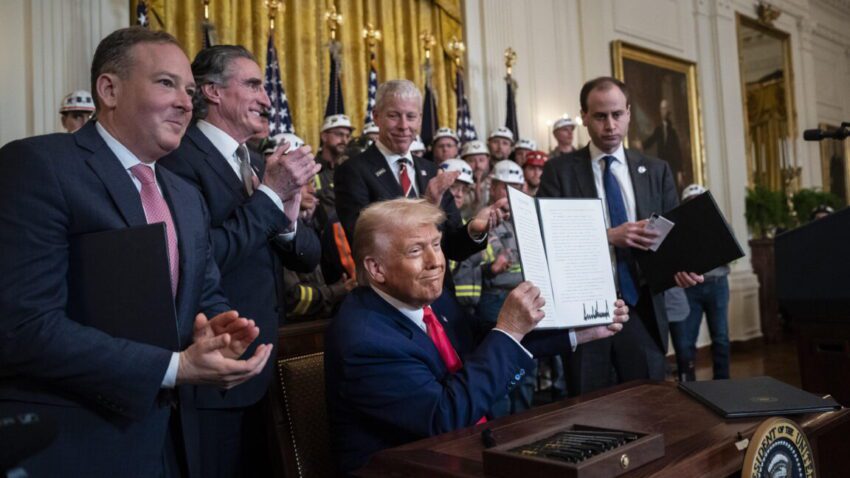
EPA Administrator Lee Zeldin is expected to announce the repeal during an event focused on promoting the use of coal, a fossil fuel that is a major source of greenhouse gas emissions. This event, which will also see the repeal of mercury and air toxics standards, is indicative of the administration’s broader agenda to roll back environmental regulations. Zeldin’s assignment to finalize the repeal of the endangerment finding was given to him by President Trump through an executive order on the first day of his second term in office.
Implications of the Repeal
The revocation of the endangerment finding has far-reaching implications for U.S. climate policy and environmental regulation. By dismantling this legal framework, the Trump administration is effectively removing the EPA’s authority to regulate greenhouse gas emissions under the Clean Air Act. This move could lead to increased emissions and a further deterioration of air quality, with potential consequences for public health.
Impact on Climate Change Mitigation Efforts
Without the endangerment finding, the federal government may struggle to implement comprehensive measures to combat climate change. States and local governments that have been proactive in addressing climate issues may find their efforts undermined by a lack of federal support. This could lead to a patchwork of regulations across the country, where some regions take significant steps to reduce emissions while others do not.
Legal Challenges Ahead
The repeal of the endangerment finding is likely to face significant legal challenges. Environmental advocacy groups and several states may file lawsuits to contest the decision, arguing that it disregards established scientific evidence and undermines public health protections. Legal experts suggest that the courts could play a crucial role in determining the future of U.S. climate policy, particularly if the repeal is perceived as arbitrary or capricious.
Stakeholder Reactions
The announcement of the repeal has elicited a range of reactions from various stakeholders. Environmental groups have condemned the decision, arguing that it prioritizes short-term economic gains over long-term public health and environmental sustainability. They contend that the rollback of regulations will exacerbate the already severe impacts of climate change, particularly on vulnerable communities.
Conversely, proponents of the repeal, including certain industry groups, argue that reducing regulatory burdens will stimulate economic growth and job creation, particularly in the fossil fuel sector. They assert that the previous administration’s regulations were overly restrictive and hindered energy production and economic development.
Public Health Concerns
Public health experts have raised alarms about the potential consequences of revoking the endangerment finding. Increased greenhouse gas emissions are linked to a range of health issues, including respiratory diseases, cardiovascular problems, and heat-related illnesses. As climate change continues to intensify, these health risks are expected to grow, particularly among vulnerable populations such as children, the elderly, and low-income communities.
Future of Climate Policy in the U.S.
The repeal of the endangerment finding raises critical questions about the future of climate policy in the United States. With the federal government stepping back from its role in regulating greenhouse gas emissions, the responsibility may shift to states and local governments to fill the void. Some states, particularly those with Democratic leadership, are likely to continue pursuing aggressive climate initiatives, while others may embrace a more laissez-faire approach.
International Implications
The U.S. withdrawal from its role as a leader in global climate policy could have significant international ramifications. The endangerment finding was a cornerstone of the U.S. commitment to international climate agreements, including the Paris Agreement. By revoking this finding, the Trump administration may undermine the credibility of the U.S. in international climate negotiations and hinder global efforts to address climate change.
Other countries may view the repeal as a signal that the U.S. is retreating from its commitments to reduce emissions, potentially emboldening nations that are less inclined to take action on climate change. This could lead to a fragmented global response to one of the most pressing challenges of our time.
Conclusion
The impending repeal of the endangerment finding marks a significant turning point in U.S. climate policy. As the Trump administration moves to dismantle the legal framework for regulating greenhouse gas emissions, the implications for public health, environmental sustainability, and international climate leadership are profound. The future of climate policy in the United States now hangs in the balance, with states and local governments poised to take on greater responsibility in the absence of federal action. The legal challenges that are likely to arise will also play a crucial role in shaping the trajectory of climate policy in the coming years.
Source: Original report
Was this helpful?
Last Modified: February 11, 2026 at 10:36 pm
6 views