
we keep finding the raw material of A recent study has reignited interest in the origins of life by confirming the presence of all four DNA bases on an asteroid, a discovery that builds on previous findings and raises intriguing questions about the building blocks of life.
we keep finding the raw material of
Context of the Discovery
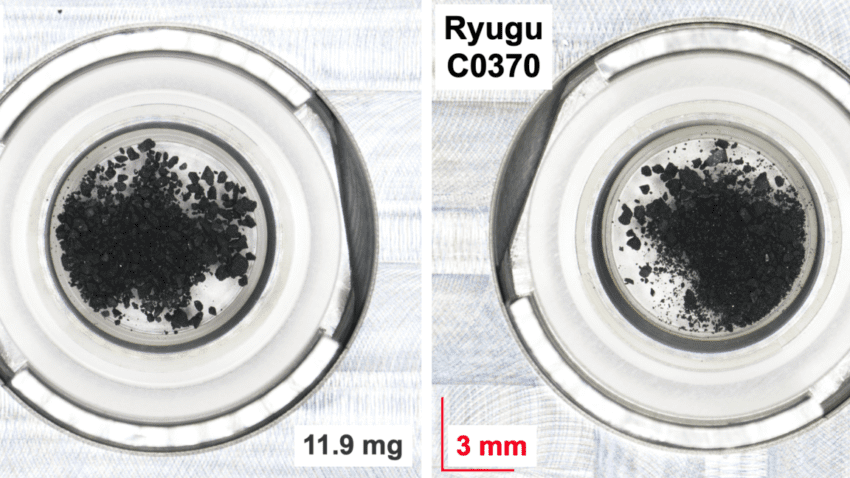
On Monday, a paper published in a scientific journal announced that researchers had found all four DNA bases—adenine, thymine, cytosine, and guanine—on the asteroid Ryugu. While this discovery has garnered significant media attention, many reports overlooked a crucial detail: this is not the first time these bases have been identified in extraterrestrial materials. The paper itself references similar findings dating back to 2011, which have been corroborated by subsequent studies over the years.
The significance of the recent work lies not just in the confirmation of these bases on Ryugu, but in its potential to resolve a previous mystery. Earlier analyses had failed to detect these nucleobases on the asteroid, despite their presence in numerous other asteroid samples. This discrepancy has puzzled scientists and prompted further investigation into the conditions and processes that could lead to the formation of these essential components of life.
Understanding the Building Blocks of Life
To grasp the implications of this discovery, it is essential to understand the structure and function of DNA and RNA. Both nucleic acids are fundamental to all known forms of life and share a similar structural framework. They consist of a backbone made up of alternating sugar and phosphate groups, which are chemically linked together. The primary difference between DNA and RNA lies in the type of sugar used: DNA contains deoxyribose, while RNA contains ribose. Additionally, the length of the chain varies between the two, but the backbone itself remains fundamentally the same.
The Role of Nucleobases
The four nucleobases—adenine, thymine, cytosine, and guanine—serve as the building blocks of genetic material. They encode the information necessary for the growth, development, and functioning of living organisms. The sequence of these bases along the DNA or RNA strand determines the genetic instructions carried by the molecule. Understanding how these bases formed in space and eventually made their way to Earth is crucial for piecing together the puzzle of life’s origins.
Previous Findings and Their Implications
The discovery of nucleobases in asteroids is not a new phenomenon. In fact, the first evidence of such compounds was reported in 2011, when scientists detected organic molecules in the Murchison meteorite, which fell in Australia in 1969. This meteorite contained a variety of amino acids and other organic compounds, suggesting that the building blocks of life could be formed in space.
Since then, several studies have confirmed the presence of nucleobases in other extraterrestrial samples, including meteorites and comets. These findings have led researchers to theorize that the raw materials for life may have been delivered to Earth via these celestial bodies. The implications of this theory are profound, as they suggest that life on Earth could have originated from materials that were synthesized in the cosmos.
Asteroid Ryugu: A Unique Case
Ryugu, a near-Earth asteroid, was the target of Japan’s Hayabusa2 mission, which successfully returned samples to Earth in December 2020. The samples were collected from the asteroid’s surface and have provided a wealth of information about its composition. The recent study focusing on the detection of DNA bases in these samples adds another layer of complexity to our understanding of Ryugu.
Researchers had previously struggled to identify these nucleobases in Ryugu, leading to questions about the asteroid’s chemical environment and the processes that could facilitate the formation of such complex molecules. The new findings suggest that Ryugu may have undergone specific conditions that allowed for the preservation of these bases, despite earlier analyses failing to detect them.
How Did the Bases Get There?
One of the most pressing questions raised by this discovery is how the DNA bases ended up on Ryugu in the first place. Understanding the mechanisms behind their formation is critical for unraveling the origins of life on Earth. Several theories have been proposed, each with its own implications for the broader understanding of life’s beginnings.
Cosmic Synthesis
One leading hypothesis is that the nucleobases formed through chemical reactions in space. The harsh conditions of space, including radiation and extreme temperatures, can lead to the synthesis of complex organic molecules. Laboratory experiments have demonstrated that under certain conditions, simple molecules can react to form more complex structures, including nucleobases. This suggests that similar processes could occur in the cold, dark environments of space, leading to the formation of the building blocks of life.
Delivery to Earth
Once these nucleobases were formed, they would need to be delivered to Earth for life to emerge. This could occur through various means, including asteroid impacts or the collision of comets with our planet. The recent findings from Ryugu support the idea that asteroids may have played a significant role in delivering organic materials to Earth, providing the necessary components for the development of life.
Implications for Astrobiology
The discovery of DNA bases on Ryugu has significant implications for the field of astrobiology, which seeks to understand the potential for life beyond Earth. If the building blocks of life can be found in asteroids, it raises the possibility that similar materials could exist on other celestial bodies, such as Mars or the moons of Jupiter and Saturn.
Future missions to these locations could focus on searching for organic compounds and other signs of life, further expanding our understanding of the universe and our place within it. The findings from Ryugu may also encourage researchers to explore other asteroids and comets, as they could hold valuable clues about the origins of life.
Reactions from the Scientific Community
The scientific community has reacted positively to the recent findings, viewing them as a significant step forward in understanding the origins of life. Many researchers have expressed excitement about the implications of the discovery, emphasizing the importance of continued exploration of asteroids and other celestial bodies.
Dr. Sarah Johnson, an astrobiologist at the University of California, noted, “This discovery not only confirms previous findings but also opens up new avenues for research. Understanding how these nucleobases formed and were delivered to Earth could change our perspective on the origins of life.” Her sentiments reflect a broader enthusiasm within the scientific community regarding the potential for future discoveries.
Conclusion
The confirmation of all four DNA bases on the asteroid Ryugu is a remarkable achievement that builds on a decade of research into the origins of life. While the discovery itself is significant, its implications for understanding how the building blocks of life may have been synthesized and delivered to Earth are even more profound. As scientists continue to explore the cosmos, the findings from Ryugu serve as a reminder of the intricate connections between life on Earth and the universe beyond.
Source: Original report
Was this helpful?
Last Modified: March 22, 2026 at 12:36 am
2 views














