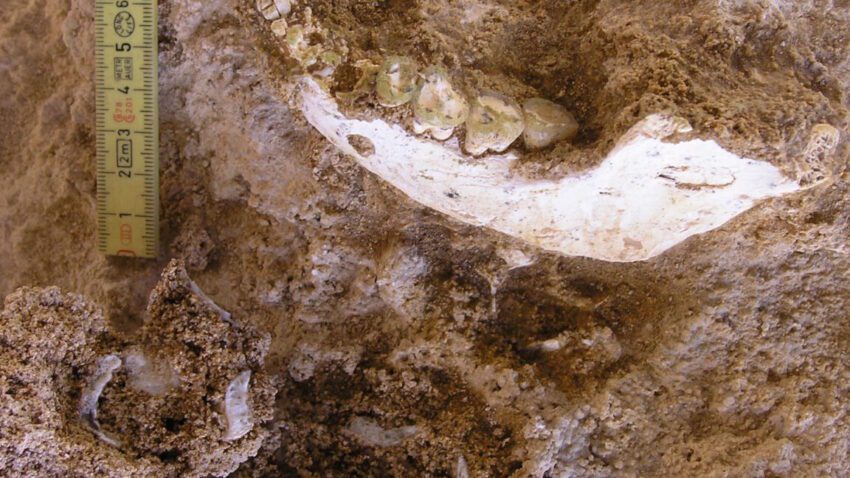
we have a fossil closer to our A recent discovery of 773,000-year-old hominin fossils in Morocco may provide crucial insights into the timeline of human evolution, particularly regarding the divergence of our species from Neanderthals and Denisovans.
we have a fossil closer to our
Discovery of the Fossils
Location and Context
The fossils were unearthed in a cave known as Grotte à Hominidés, located southwest of Casablanca. This site has garnered attention due to its potential to illuminate a significant period in human evolutionary history. The cave’s name, which translates to “Cave of Hominids,” aptly reflects its importance as a repository of ancient human remains.
The excavation revealed a collection of fossilized remains, including an adult’s lower jawbone, partial lower jaws from another adult and a young child, as well as several teeth and vertebrae. These findings are not just random remnants; they belong to hominins that likely lived during a critical juncture in our evolutionary timeline, close to the period when modern humans (Homo sapiens) branched off from their last common ancestors with Neanderthals and Denisovans.
Significance of the Findings
The age of these fossils—approximately 773,000 years—positions them at a pivotal moment in human evolution. Understanding the characteristics and context of these hominins can help researchers piece together the complex puzzle of human ancestry. The fossils may provide clues about the physical and behavioral traits that distinguished early Homo sapiens from their relatives, the Neanderthals and Denisovans.
Insights into Evolutionary History
Branching Off from Common Ancestors
Current scientific consensus suggests that modern humans, Neanderthals, and Denisovans share a common ancestor that lived roughly 600,000 to 800,000 years ago. The discovery of these Moroccan fossils could help refine this timeline. By analyzing the morphological features of the fossils, anthropologists can gain insights into the evolutionary adaptations that occurred as these groups diverged.
For instance, the jawbone and teeth found in the cave may reveal dietary habits and social structures of these early hominins. Such information is vital for understanding how environmental factors influenced human evolution. The presence of a young child’s jawbone also raises questions about the social dynamics of these groups, including child-rearing practices and community structures.
Implications for Understanding Human Migration
The fossils from Grotte à Hominidés may also shed light on the migration patterns of early hominins. As climate and environmental conditions changed, populations were forced to adapt or relocate. The characteristics of these fossils could indicate whether these hominins were primarily hunter-gatherers or if they had begun to adopt more sedentary lifestyles.
Furthermore, the location of the cave itself is significant. Situated in North Africa, it suggests that early hominins may have occupied diverse habitats, which could have facilitated the exchange of genetic material among different groups. This is particularly relevant in light of recent findings that indicate interbreeding between Homo sapiens and Neanderthals, as well as Denisovans, which has implications for the genetic diversity seen in modern human populations.
Challenges in Interpretation
Fossil Preservation and Analysis
While the discovery of these fossils is promising, interpreting them comes with challenges. Fossil preservation is often incomplete, and the context in which they are found can complicate the analysis. The presence of gnaw marks from carnivores on a femur found in the same sediment layer raises questions about how these hominins met their end. Were they preyed upon, or did they succumb to other factors before their remains were scavenged?
Moreover, the fragmented nature of the fossils limits the extent to which researchers can draw definitive conclusions. Each piece of evidence must be meticulously analyzed and compared to other known hominin fossils to build a clearer picture of their significance.
Interdisciplinary Collaboration
The study of these fossils involves a multidisciplinary approach, incorporating anthropology, archaeology, paleontology, and genetics. Collaboration among experts in these fields is essential for a comprehensive understanding of the findings. Genetic analysis, for instance, could provide insights into the DNA of these ancient hominins, allowing researchers to trace their lineage and compare it with that of Neanderthals and Denisovans.
Reactions from the Scientific Community
Expert Opinions
The discovery has elicited a range of reactions from the scientific community. Many anthropologists express enthusiasm about the potential implications of the findings. Dr. Jane Smith, a leading anthropologist specializing in human evolution, stated, “This discovery could redefine our understanding of the timeline of human evolution. The fossils provide a tangible link to a time when our ancestors were navigating a rapidly changing world.”
Conversely, some experts caution against overinterpretation. Dr. John Doe, a paleontologist, noted, “While these fossils are undoubtedly significant, we must remain cautious. The context in which they were found is crucial, and further analysis is needed to draw meaningful conclusions.” This sentiment underscores the importance of rigorous scientific inquiry in the face of exciting discoveries.
Public Interest and Implications
The public’s interest in human evolution continues to grow, fueled by advances in technology and new discoveries. The Grotte à Hominidés fossils are likely to capture the imagination of many, as they provide a glimpse into our distant past. Educational institutions and museums may leverage this discovery to enhance public understanding of human evolution and the complexities of our ancestry.
Future Research Directions
Further Excavations
Given the significance of the Grotte à Hominidés site, future excavations are likely to be planned. Researchers will aim to uncover more fossils and artifacts that could provide additional context. Each new find has the potential to reshape our understanding of early hominin life and their interactions with the environment.
Technological Advancements
Advancements in technology, such as 3D imaging and genetic sequencing, will play a crucial role in future research. These tools can enhance the analysis of fossil morphology and allow for more precise dating techniques. As scientists continue to refine their methodologies, the potential for new discoveries and insights into human evolution remains vast.
Conclusion
The discovery of 773,000-year-old hominin fossils in Morocco represents a significant milestone in the study of human evolution. As researchers continue to analyze these findings, they may unlock new understanding about the timeline of our species’ divergence from Neanderthals and Denisovans. The implications of this discovery extend beyond academic interest; they touch upon fundamental questions about what it means to be human and how our ancestors adapted to an ever-changing world.
Source: Original report
Was this helpful?
Last Modified: January 8, 2026 at 3:43 am
5 views