waymo leverages genie 3 to create a Waymo is advancing its self-driving technology by leveraging the capabilities of Genie 3 to create a sophisticated world model for its autonomous vehicles.
waymo leverages genie 3 to create a
Waymo’s Expansion and Technological Innovations
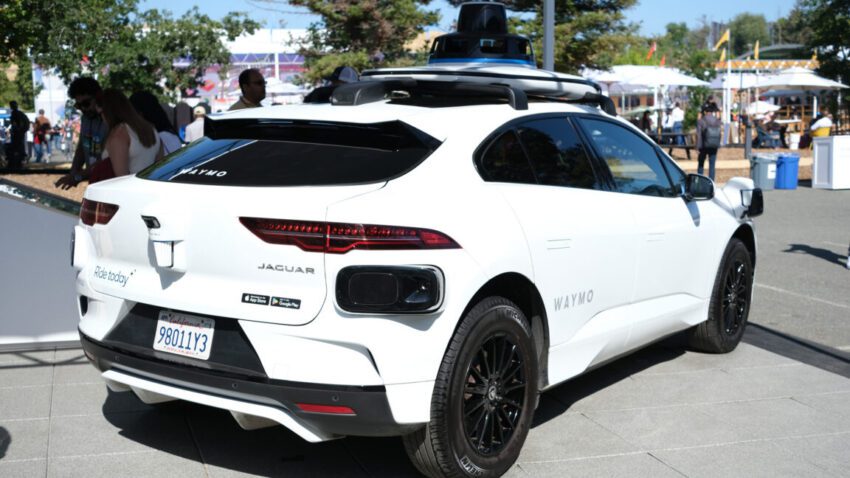
Waymo, the self-driving technology company spun off from Google, is currently in the process of expanding its autonomous vehicle fleet into new regions. This expansion is part of Waymo’s broader strategy to enhance its self-driving capabilities and improve the safety and efficiency of its vehicles. The company has accumulated over 200 million miles of real-world driving data, which informs how its vehicles navigate complex road scenarios. However, Waymo is not solely relying on this real-world data; it is also harnessing the power of artificial intelligence (AI) to simulate driving conditions that are rarely encountered in everyday situations.
The Role of Genie 3
At the heart of this innovation is the Waymo World Model, which is built on Google DeepMind’s advanced AI system known as Genie 3. This model is designed to create “hyper-realistic” simulated environments that can train the AI on various scenarios, including those that may be dangerous or uncommon in real life. For instance, the model can simulate conditions such as snow on the Golden Gate Bridge, a situation that is not typically experienced in the region.
Genie 3 represents a significant advancement in the field of world modeling. Google introduced this technology last year, highlighting its long-horizon memory as a key differentiator from previous models. In traditional world models, once a user moves away from a specific object, the simulation often loses context about that object almost immediately. This limitation can hinder the effectiveness of training AI systems, as they may not retain crucial information about their environment.
In contrast, Genie 3 allows for a more persistent memory, enabling the model to remember details for several minutes. This capability is crucial for developing autonomous vehicles that can navigate complex environments safely and effectively. By retaining contextual information, the AI can better understand the relationships between various objects and their surroundings, leading to improved decision-making in real-time driving situations.
Addressing Limitations in Training Data
Historically, the autonomous driving industry has relied heavily on training data collected from real cars operating in real-world situations. While this approach has its merits, it also presents significant challenges. Rare and potentially dangerous events, such as sudden weather changes or unexpected obstacles, are often underrepresented in training datasets. This lack of diversity in training data can lead to gaps in the AI’s understanding of how to respond to such situations, ultimately compromising safety.
The Waymo World Model aims to bridge this gap by allowing engineers to create simulations using simple prompts and driving inputs. This flexibility enables the development of training scenarios that may not be feasible to replicate in real life. For example, engineers can simulate a variety of weather conditions, traffic patterns, and road configurations, providing the AI with a more comprehensive understanding of how to navigate diverse environments.
Implications for Safety and Efficiency
The implications of this technology are profound. By training AI systems in a wider array of simulated scenarios, Waymo can enhance the safety and reliability of its self-driving vehicles. The ability to prepare for rare events means that the AI can make better-informed decisions when faced with unexpected challenges on the road. This proactive approach to training could potentially reduce the likelihood of accidents and improve overall public confidence in autonomous driving technology.
Moreover, the efficiency of the training process is expected to improve significantly. Traditional methods of collecting real-world data can be time-consuming and costly. By utilizing the Waymo World Model, the company can generate vast amounts of training data quickly and efficiently, allowing for faster iterations in the development of its autonomous systems.
Stakeholder Reactions and Industry Impact
The introduction of the Waymo World Model and its reliance on Genie 3 has garnered attention from various stakeholders within the technology and automotive industries. Industry experts have praised the innovative approach to training AI for self-driving cars, noting that it represents a critical step forward in addressing the limitations of traditional training methods.
Some stakeholders have expressed optimism about the potential for improved safety outcomes. As autonomous vehicles become more prevalent on public roads, the need for robust training methodologies becomes increasingly important. The ability to simulate rare and complex scenarios could lead to a new standard in safety protocols for self-driving technology.
However, there are also concerns regarding the ethical implications of using AI in this manner. Questions have been raised about the potential for over-reliance on simulated data, as it may not fully capture the nuances of real-world driving. Critics argue that while simulations can enhance training, they should not replace real-world testing entirely. Balancing the use of simulated environments with continued real-world data collection will be crucial for the long-term success of autonomous driving technology.
Future Developments and Research Directions
Looking ahead, Waymo’s use of Genie 3 and the Waymo World Model is likely to evolve as the company continues to refine its technology. Ongoing research and development efforts will focus on enhancing the realism of simulations and expanding the range of scenarios that can be modeled. This could involve integrating additional data sources, such as weather patterns and traffic behavior, to create even more comprehensive training environments.
Furthermore, collaboration with other technology firms and research institutions may play a significant role in advancing the capabilities of the Waymo World Model. By sharing insights and best practices, the industry can collectively work toward improving the safety and efficiency of autonomous vehicles.
Conclusion
Waymo’s innovative approach to creating a world model for self-driving cars through the use of Genie 3 represents a significant leap forward in the field of autonomous driving technology. By addressing the limitations of traditional training methods and leveraging advanced AI capabilities, Waymo is positioning itself as a leader in the industry. As the company continues to expand its fleet and refine its technology, the implications for safety, efficiency, and public acceptance of self-driving vehicles will be profound.
As the autonomous driving landscape continues to evolve, the integration of advanced simulation techniques like those offered by the Waymo World Model will be crucial in shaping the future of transportation. The ongoing development of these technologies will not only enhance the capabilities of self-driving cars but also contribute to a safer and more efficient road environment for all users.
Source: Original report
Was this helpful?
Last Modified: February 7, 2026 at 2:36 am
3 views