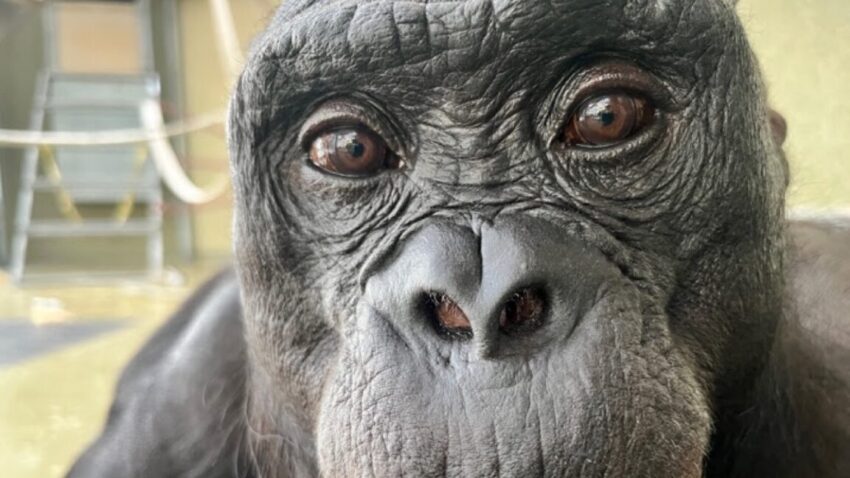
watch kanzi the bonobo pretend to have A recent study reveals that Kanzi, a bonobo, has demonstrated the ability to engage in imaginative play, specifically by pretending to host a tea party, challenging long-held beliefs about the exclusivity of such cognitive abilities to humans.
watch kanzi the bonobo pretend to have
Introduction to Imaginative Play in Animals
Imaginative play is a hallmark of childhood, often seen in young children who create elaborate scenarios with toys and everyday objects. This type of play is not merely a form of entertainment; it is also a crucial aspect of cognitive development. The ability to engage in pretend play allows children to explore social roles, experiment with language, and develop problem-solving skills. Until recently, it was widely believed that this capacity for imagination was unique to humans, setting us apart from other species.
However, new research from Johns Hopkins University has brought this assumption into question. In a groundbreaking study published in the journal Science, researchers observed Kanzi, a bonobo known for his advanced communication skills, engaging in a pretend tea party. This finding suggests that the cognitive abilities associated with imaginative play may not be exclusive to humans, but rather shared with our primate relatives.
The Study: Observations and Findings
Research Methodology
The researchers, led by Christopher Krupenye, designed an experiment to assess Kanzi’s ability to engage in imaginative play. They created a setting that mimicked a tea party, complete with empty teapots and cups. The goal was to observe whether Kanzi could understand the concept of pretending, specifically by acting as if the teapot contained real tea and the cups were ready to be filled.
Kanzi’s interactions during the tea party were meticulously recorded and analyzed. The researchers noted his behaviors, including how he used the props and engaged with the environment. They aimed to determine whether Kanzi could decouple the imagined scenario from the reality of the situation, a cognitive skill that is often referred to as secondary representation.
Results and Interpretation
The results of the study were striking. Kanzi not only participated in the tea party but did so with a level of engagement that indicated an understanding of the imaginary context. He pretended to pour tea into cups and offered it to the researchers, demonstrating an ability to navigate the imaginary scenario despite the absence of actual tea. This behavior aligns with what is observed in human toddlers, who similarly engage in pretend play by using their imagination to fill in the gaps of reality.
Co-author Christopher Krupenye remarked on the significance of these findings, stating, “It really is game-changing that their mental lives go beyond the here and now.” He emphasized that the ability to imagine scenarios and engage in pretend play has long been considered a defining characteristic of humanity. The revelation that bonobos like Kanzi can also partake in such imaginative activities invites a reevaluation of what it means to be human and challenges the notion of human exceptionalism.
The Implications of Kanzi’s Tea Party
Revisiting Human Uniqueness
The implications of this research extend far beyond the realm of animal cognition. Historically, the ability to engage in imaginative play has been viewed as a critical element that distinguishes humans from other species. This study suggests that the cognitive capacities of non-human primates may be more complex than previously understood. Just as Jane Goodall’s discovery of tool-making in chimpanzees reshaped our understanding of human evolution, Kanzi’s tea party could lead to a similar transformation in how we perceive the mental lives of other animals.
Understanding Animal Cognition
Research into animal cognition has gained momentum in recent years, with studies revealing that various species possess advanced cognitive abilities. From problem-solving skills in crows to social learning in dolphins, the animal kingdom is filled with examples of intelligence that challenge traditional views of animal behavior. Kanzi’s ability to engage in imaginative play adds another layer to this growing body of evidence, suggesting that the cognitive divide between humans and other primates may not be as vast as once thought.
Potential Applications in Conservation and Animal Welfare
Understanding the cognitive abilities of animals like Kanzi has important implications for conservation efforts and animal welfare. Recognizing that non-human primates possess complex mental lives can influence how they are treated in captivity and the wild. It underscores the importance of providing enriched environments that allow for social interaction and imaginative play, which are essential for their psychological well-being.
Moreover, this research could inform conservation strategies aimed at protecting bonobos and other primates in their natural habitats. By acknowledging their cognitive capabilities, conservationists can advocate for policies that prioritize the preservation of their social structures and natural behaviors, ultimately contributing to the survival of these species.
Contextualizing Kanzi’s Abilities
The Evolution of Imagination
The evolution of imaginative play and cognitive abilities in primates raises intriguing questions about the origins of these traits. Researchers have long debated the evolutionary pressures that may have led to the development of advanced cognitive skills in humans and our closest relatives. The ability to engage in imaginative scenarios could have provided evolutionary advantages, such as enhanced social cohesion and improved problem-solving skills.
In the case of Kanzi, his upbringing in a language-rich environment has likely played a role in his cognitive development. Raised in a research facility where he was exposed to human language and social interactions, Kanzi has demonstrated remarkable communication skills, including the ability to understand and use symbols. This unique upbringing may have contributed to his capacity for imaginative play, suggesting that environmental factors can significantly influence cognitive development in primates.
Comparative Studies with Other Species
Comparative studies of imaginative play across different species can provide further insights into the cognitive abilities of animals. For instance, research has shown that some species of dolphins engage in play behavior that resembles imaginative scenarios, such as playing with seaweed or interacting with objects in their environment. Similarly, elephants have been observed engaging in play that involves role reversal and social interaction.
These findings highlight the need for continued research into the cognitive abilities of various species, as they may reveal a broader spectrum of imaginative play and social behavior in the animal kingdom. Understanding these behaviors can deepen our appreciation for the complexity of animal minds and the evolutionary processes that have shaped them.
Conclusion: A New Perspective on Animal Intelligence
Kanzi’s tea party serves as a compelling case study that challenges our understanding of imagination and cognitive abilities in non-human animals. The evidence presented by the researchers at Johns Hopkins University suggests that bonobos, like Kanzi, possess the capacity for imaginative play, a trait once thought to be exclusive to humans. This finding invites us to reconsider our assumptions about what makes us unique and highlights the importance of recognizing the cognitive complexities present in other species.
As we continue to explore the mental lives of animals, it becomes increasingly clear that the boundaries between human and non-human cognition are not as rigid as once believed. The implications of this research extend beyond the realm of academia, influencing conservation efforts, animal welfare practices, and our understanding of the evolutionary origins of imagination. Kanzi’s tea party is not just a charming anecdote; it is a pivotal moment in the ongoing journey to understand the rich tapestry of life on our planet.
Source: Original report
Was this helpful?
Last Modified: February 6, 2026 at 1:40 pm
0 views