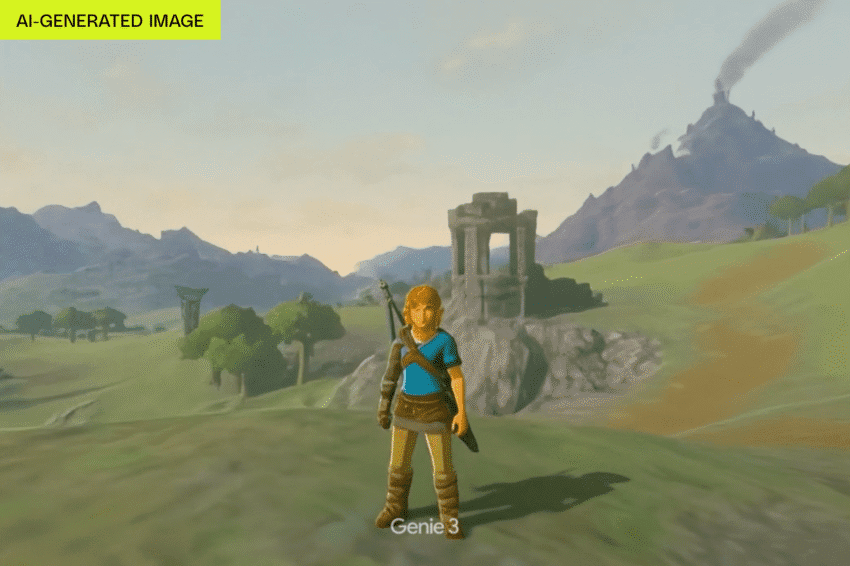
video game company stock prices dip after The stock prices of major video game companies have experienced significant declines following Google’s announcement of its new AI world-generation tool, Project Genie.
video game company stock prices dip after
Overview of Google’s Project Genie
On Thursday, Google unveiled Project Genie, an innovative tool designed to allow users to generate interactive experiences through artificial intelligence. This development marks a significant advancement in the realm of AI and gaming, as it empowers users to create content with minimal technical expertise. By simply prompting the AI, users can produce intricate game environments and scenarios, potentially revolutionizing the way games are developed and played.
Project Genie leverages advanced machine learning algorithms to interpret user commands and translate them into interactive experiences. This capability not only democratizes game development but also poses a challenge to traditional game creation processes. The implications of such technology are vast, as it could lead to a surge in user-generated content, altering the landscape of the gaming industry.
Impact on Major Video Game Companies
Following the announcement of Project Genie, stock prices for several leading video game companies experienced notable declines. Take-Two Interactive, Roblox, and Unity were among the most affected, with their stocks plummeting significantly on Friday.
Take-Two Interactive
Take-Two Interactive, known for popular franchises such as Grand Theft Auto and NBA 2K, saw its stock price close at $220.30, marking a decrease of 7.93 percent from the previous day. Analysts suggest that the introduction of AI-driven tools like Project Genie could disrupt the traditional game development model that Take-Two has relied upon for years. With AI enabling rapid content creation, the competitive landscape may shift, challenging established companies to adapt or risk losing market share.
Roblox
Roblox, a platform that allows users to create and share games, experienced an even steeper decline. Its stock closed at $65.76, down 13.17 percent. The platform has thrived on user-generated content, but the emergence of AI tools could change the dynamics of how games are created and monetized. Analysts are concerned that if users can generate high-quality content through AI, the unique value proposition of Roblox may diminish, leading to a potential decline in user engagement and revenue.
Unity Technologies
Unity Technologies, a leading game development platform, faced the most significant drop, with its stock closing at $29.10, down 24.22 percent. Unity has been a staple in the game development community, providing developers with tools to create immersive experiences. However, the introduction of Project Genie raises questions about the future of such platforms. If users can generate content more easily and quickly through AI, the demand for traditional development tools may wane, impacting Unity’s business model.
Broader Implications for the Gaming Industry
The introduction of AI tools like Project Genie is likely to have far-reaching implications for the gaming industry as a whole. As AI technology continues to advance, it may lead to a paradigm shift in how games are developed, distributed, and consumed.
Democratization of Game Development
One of the most significant implications of Project Genie is the potential democratization of game development. With AI tools, individuals without extensive programming knowledge can create complex games. This could lead to an influx of new creators entering the market, resulting in a diverse array of gaming experiences. While this democratization could foster innovation, it may also create challenges for established companies that have traditionally dominated the industry.
Competition and Market Dynamics
The rise of AI-generated content may intensify competition within the gaming industry. Established companies will need to adapt to the changing landscape, potentially investing in their own AI technologies or rethinking their development strategies. The ability to generate content quickly and efficiently could become a key differentiator in the market, prompting companies to innovate at a faster pace.
Concerns from Creators and Artists
Despite the potential benefits of AI tools, there are significant concerns from artists and creators regarding the ethical implications of such technology. Many creators have voiced their apprehensions about AI’s reliance on existing works to train its models. Allegations of theft and copyright infringement have surfaced, as artists worry that their creations may be used without permission to enhance AI capabilities.
Additionally, there are environmental concerns associated with AI technology. The energy consumption required to train AI models has raised alarms among sustainability advocates. As the gaming industry increasingly adopts AI tools, it will need to address these concerns to maintain a positive public image and ensure long-term viability.
Stakeholder Reactions
The announcement of Project Genie has elicited a range of reactions from stakeholders within the gaming industry. While some view the tool as a groundbreaking advancement, others express skepticism and concern.
Industry Experts
Industry experts are divided on the implications of Project Genie. Some believe that the tool could lead to a new era of creativity and innovation, enabling a broader range of voices to contribute to game development. Others caution that the influx of AI-generated content may dilute the quality of games and undermine the efforts of traditional developers.
Game Developers
Game developers have expressed mixed feelings about the introduction of AI tools. While some are excited about the potential for increased efficiency and creativity, others worry that the reliance on AI may lead to a loss of artistic integrity. The balance between human creativity and machine-generated content will be a critical consideration as the industry evolves.
Investors
Investors have responded to the stock market fluctuations with caution. The sharp declines in stock prices for companies like Take-Two, Roblox, and Unity have raised concerns about the long-term viability of these businesses in an increasingly AI-driven landscape. Investors are closely monitoring how these companies adapt to the changing market dynamics and whether they can leverage AI technology to their advantage.
Conclusion
The introduction of Google’s Project Genie has sent shockwaves through the gaming industry, leading to significant stock price declines for major companies. As AI tools continue to evolve, the implications for game development, market dynamics, and creator rights will be profound. The industry stands at a crossroads, with the potential for innovation and disruption coexisting alongside ethical concerns and challenges. How companies navigate this new landscape will determine their future success in an increasingly competitive environment.
Source: Original report
Was this helpful?
Last Modified: January 31, 2026 at 5:40 pm
0 views