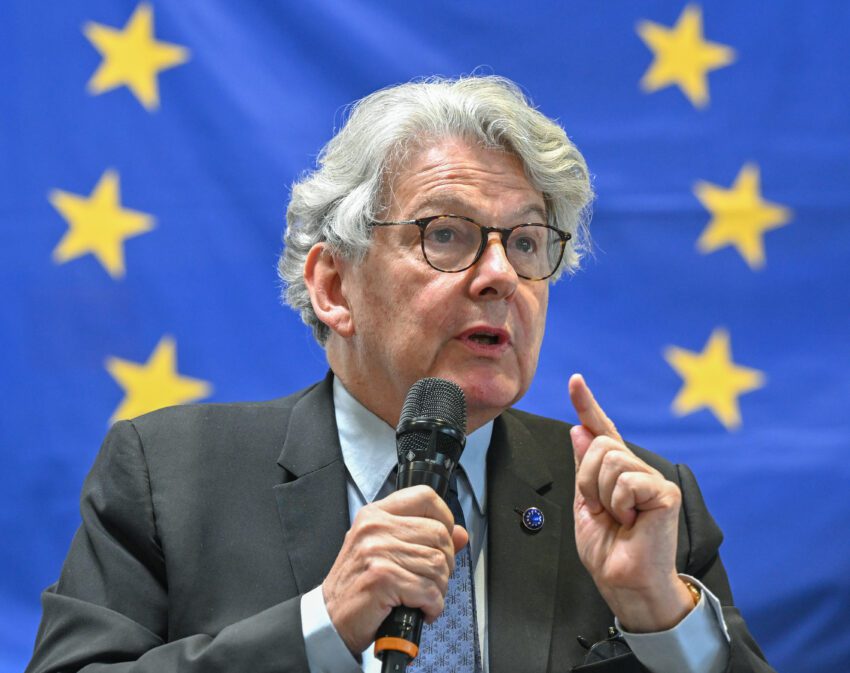
trump administration bars former eu official and The Trump administration has enacted sanctions against former EU Commissioner Thierry Breton and several researchers involved in content moderation and anti-disinformation efforts.
trump administration bars former eu official and
Background on the Sanctions
On Tuesday, the Trump Administration implemented a series of sanctions that specifically target individuals engaged in content moderation and disinformation research. This move aligns with the administration’s ongoing efforts to push back against perceived foreign interference in domestic affairs, particularly in the realm of digital content. The sanctions were announced by the State Department, which has taken a more aggressive stance on issues related to digital governance and information integrity.
Who is Thierry Breton?
Thierry Breton served as the EU Commissioner for Internal Market and Services, a role in which he was responsible for overseeing various aspects of the digital economy, including content moderation and online safety. His tenure in the European Commission has been marked by a focus on regulating digital platforms and ensuring that they adhere to standards that protect users from harmful content. Breton has been a vocal advocate for stronger regulations on tech companies, emphasizing the need for accountability in how these platforms manage content.
The Implications of the Sanctions
The sanctions against Breton and the researchers signal a significant escalation in the ongoing battle over content moderation and digital governance. The U.S. government is sending a clear message that it will not tolerate what it perceives as foreign interference in its digital landscape. This move could have far-reaching implications for international relations, particularly between the U.S. and the European Union, which has been at the forefront of regulating digital platforms.
Details of the Sanctions
The State Department’s announcement included the names of several individuals who are now barred from entering the United States. In addition to Thierry Breton, the sanctions extend to four researchers known for their work in combating disinformation and hate speech online. Among them is Imran Ahmed, the CEO of the Center for Countering Digital Hate (CCDH), an organization that has gained prominence for its research on online hate and misinformation.
Reactions from the Affected Individuals
The individuals targeted by these sanctions have expressed their dismay and concern over the implications of such actions. Imran Ahmed, for instance, has been vocal about the importance of combating online hate and misinformation. He stated that the sanctions are an attempt to silence voices that are critical of harmful online practices. Ahmed’s work at the CCDH has focused on identifying and countering hate speech, making him a significant figure in the ongoing discourse surrounding digital content moderation.
Statements from U.S. Officials
Secretary of State Marco Rubio emphasized the administration’s commitment to expanding the list of sanctioned individuals if foreign actors do not change their approach to content moderation. Rubio’s comments reflect a broader strategy aimed at deterring foreign influence in U.S. digital spaces. He stated, “The State Department stands ready and willing to expand today’s list if other foreign actors do not reverse course.” This statement serves as a warning to other researchers and officials who may be involved in similar activities.
Context of Content Moderation in the U.S.
The issue of content moderation has become increasingly contentious in recent years, particularly as social media platforms have faced scrutiny over their handling of misinformation and hate speech. The Trump administration has frequently criticized tech companies for what it perceives as bias against conservative viewpoints. This has led to a push for more stringent regulations governing how these platforms manage content.
The Role of the EU in Digital Governance
The European Union has taken a proactive stance in regulating digital platforms, with initiatives aimed at curbing misinformation and protecting users from harmful content. The EU’s Digital Services Act and other regulatory measures have set a precedent for how digital governance can be approached. Breton’s role in these discussions has positioned him as a key figure in the global conversation about content moderation.
Potential Consequences for International Relations
The sanctions against Breton and the researchers could strain relations between the U.S. and the EU, particularly as both entities navigate the complexities of digital governance. The EU has been critical of the U.S. approach to content moderation, often advocating for more robust protections for users. The imposition of sanctions may be viewed as an aggressive move that undermines collaborative efforts to address shared challenges in the digital space.
Broader Implications for Researchers and Activists
The sanctions serve as a chilling reminder for researchers and activists working in the field of digital governance. The threat of being barred from the U.S. may deter individuals from engaging in critical research that challenges the status quo. This could lead to a reduction in the diversity of voices and perspectives in the ongoing discourse surrounding content moderation and disinformation.
Future of Content Moderation Research
As the landscape of digital content continues to evolve, the need for rigorous research and analysis becomes increasingly important. Researchers play a vital role in understanding the dynamics of online hate and misinformation, providing insights that can inform policy decisions. However, the recent sanctions may create an environment where researchers feel less secure in their work, potentially stifling innovation and critical inquiry.
Conclusion
The sanctions imposed by the Trump administration against Thierry Breton and several researchers mark a significant development in the ongoing debate over content moderation and digital governance. As the U.S. government takes a more aggressive stance against perceived foreign influence, the implications for international relations, research, and activism in the digital space are profound. The actions taken by the State Department may serve to deter foreign actors, but they also raise important questions about the future of content moderation and the role of researchers in shaping that future.
Source: Original report
Was this helpful?
Last Modified: December 24, 2025 at 4:38 pm
0 views