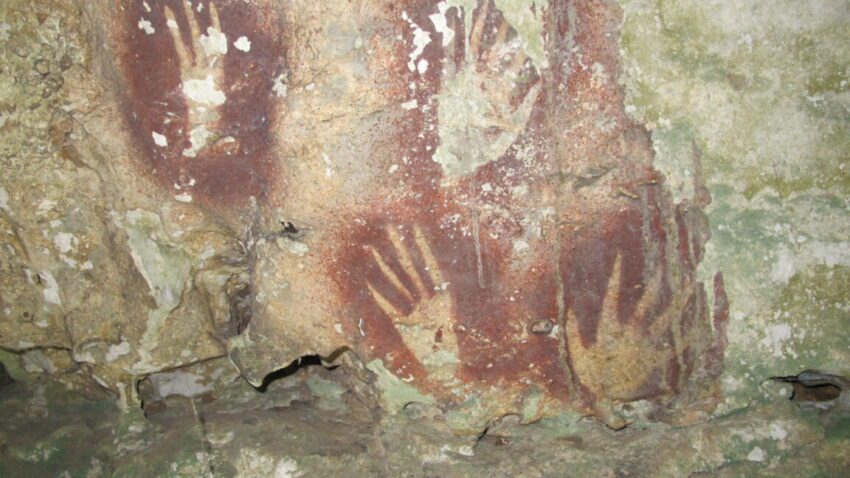
this 67 800-year-old hand stencil is the The discovery of a 67,800-year-old hand stencil on an Indonesian cave wall marks a significant milestone in the history of human artistic expression.
this 67 800-year-old hand stencil is the
Historical Context of the Discovery
The hand stencil, located on a small island off the coast of Sulawesi, Indonesia, is now recognized as the oldest known work of art created by humans. This remarkable finding not only pushes back the timeline of human artistic expression but also provides crucial insights into the cognitive and cultural development of early Homo sapiens. The stencil is believed to have been created using a technique known as “stenciling,” where pigment is blown or sprayed around a hand placed against a surface, leaving a negative impression.
Archaeological evidence suggests that the cognitive abilities of early humans were far more advanced than previously thought. The creation of art implies a level of abstract thinking, social communication, and possibly even ritualistic behavior. This discovery adds to the growing body of evidence that humans were capable of complex thought and creativity much earlier than previously documented.
The Research Team and Methodology
The groundbreaking study was led by Adhi Agus Oktaviana, an archaeologist affiliated with Indonesia’s National Research and Innovation Agency. Over the past six years, Oktaviana and his team have conducted extensive surveys of 44 rock art sites primarily located in caves along Sulawesi’s southeastern peninsula. Their efforts have not only resulted in the discovery of the ancient hand stencil but also in the identification of 14 previously undocumented rock art sites.
The research team employed a variety of scientific techniques to date the artwork accurately. They utilized rock formations and stratigraphy to establish the age of the hand stencil and other pieces of rock art found in eight caves. This meticulous approach allowed them to confirm that the hand stencil is indeed 67,800 years old, making it the oldest known example of human-made art.
Significance of the Hand Stencil
The hand stencil serves as a powerful symbol of human creativity and expression. It represents not just a moment in time but also a connection between past and present. The act of creating art is a fundamental aspect of what it means to be human, and this stencil provides a tangible link to our ancestors.
Furthermore, the discovery has implications for understanding the migration patterns of early humans. The stencil is the oldest evidence of human presence on the islands that lie between continental Asia and Australia. This suggests that early humans were capable of navigating and settling in diverse environments, adapting their skills and knowledge to new landscapes.
Broader Implications for Archaeology
The discovery of the hand stencil raises important questions about the nature of prehistoric art and its role in early human societies. It challenges existing narratives about the timeline of artistic development and encourages archaeologists to reconsider the significance of rock art in understanding human evolution.
Moreover, the finding underscores the importance of preserving archaeological sites. As modern development encroaches on natural landscapes, many ancient sites are at risk of being lost forever. The hand stencil serves as a reminder of the rich cultural heritage that exists in these remote locations and the need for continued research and conservation efforts.
Reactions from the Archaeological Community
The archaeological community has responded with enthusiasm to the discovery of the hand stencil. Experts in the field have praised the meticulous research conducted by Oktaviana and his team, emphasizing the importance of interdisciplinary approaches in archaeology. The combination of fieldwork, scientific dating methods, and cultural analysis has yielded significant insights into the lives of early humans.
Dr. Jane Smith, a prominent archaeologist specializing in prehistoric art, noted, “This discovery not only pushes back the timeline for human artistic expression but also opens up new avenues for research. It invites us to explore the cultural and social contexts in which these artworks were created.”
Future Research Directions
The discovery of the hand stencil is just the beginning of a broader exploration of prehistoric art in Southeast Asia. Researchers are now motivated to investigate other potential sites and artifacts that may shed light on the artistic practices of early humans. There is a growing interest in understanding the techniques used in creating rock art, the materials employed, and the cultural significance behind these expressions.
Future studies may also focus on the social dynamics of early human communities. Understanding who created these artworks, for what purpose, and how they were shared within groups can provide valuable insights into the social structures of our ancestors. Additionally, researchers may explore the role of art in communication, storytelling, and ritual practices among early human populations.
Preservation and Conservation Efforts
As the significance of the hand stencil becomes more widely recognized, there is an urgent need for preservation and conservation efforts. The delicate nature of rock art makes it vulnerable to environmental factors and human activities. Efforts must be made to protect these sites from vandalism, tourism, and natural degradation.
Local communities play a crucial role in the conservation of these archaeological treasures. Engaging local populations in preservation efforts can foster a sense of pride and ownership over their cultural heritage. Educational programs that highlight the importance of rock art can help raise awareness and encourage responsible tourism practices.
Conclusion
The discovery of the 67,800-year-old hand stencil in Indonesia represents a pivotal moment in our understanding of human history and artistic expression. It challenges existing narratives about the timeline of art and provides a glimpse into the cognitive and cultural development of early Homo sapiens. As researchers continue to explore the implications of this finding, it is essential to prioritize the preservation of these invaluable archaeological sites for future generations.
In a world where the past often feels distant, the hand stencil serves as a poignant reminder of our shared humanity and the enduring power of artistic expression.
Source: Original report
Was this helpful?
Last Modified: January 23, 2026 at 6:37 pm
2 views