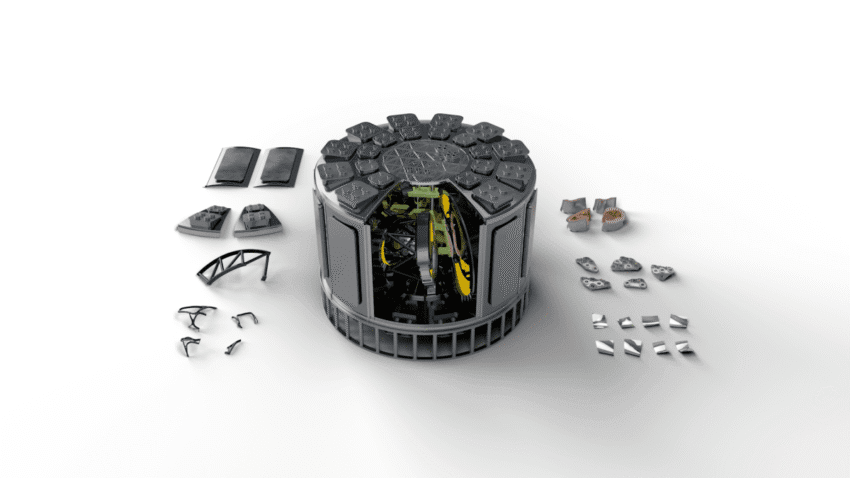
thea energy previews helios its pixel-inspired fusion Thea Energy has unveiled its innovative Helios fusion power plant, which promises to revolutionize energy production through advanced technology and design.
thea energy previews helios its pixel-inspired fusion
Introduction to Helios
Thea Energy, a pioneer in fusion energy technology, has recently showcased its latest project, the Helios fusion power plant. This facility is designed to leverage a unique planar-coil configuration, which the company claims will not only reduce construction costs but also simplify the building process. The Helios plant is a significant step forward in the quest for sustainable and efficient energy solutions, aiming to address the growing global energy demands while minimizing environmental impact.
Technological Innovations
At the core of Helios’s design is its planar-coil fusion technology, which differentiates it from traditional fusion reactors. This innovative approach allows for a more compact and scalable design, making it easier to construct and deploy. Thea Energy asserts that the use of artificial intelligence (AI) in the plant’s control software will further enhance its operational efficiency and safety.
Planar-Coil Design
The planar-coil design is a departure from the more common toroidal configurations seen in many existing fusion reactors. By employing flat coils arranged in a planar manner, Helios aims to achieve a more uniform magnetic field, which is crucial for maintaining plasma stability. This stability is essential for sustaining the fusion reaction, which requires extremely high temperatures and pressures.
AI-Powered Control Systems
The integration of AI into the control systems of Helios represents a significant advancement in fusion technology. The AI algorithms are designed to monitor and adjust operational parameters in real-time, ensuring optimal performance and safety. This capability could potentially reduce the need for extensive human oversight, allowing for a more automated and efficient operation.
Cost-Effectiveness and Construction Efficiency
One of the most compelling aspects of Thea Energy’s Helios plant is its potential for cost-effectiveness. The company claims that the combination of the planar-coil design and AI-driven control systems could lead to substantial reductions in both construction and operational costs. This is particularly important in the context of fusion energy, which has historically faced challenges related to high development costs and lengthy construction timelines.
Reducing Construction Costs
Thea Energy’s approach to construction aims to streamline the building process. By utilizing prefabricated components and modular construction techniques, the Helios plant can be assembled more quickly and with fewer resources. This method not only reduces labor costs but also minimizes the time required to bring the plant online, potentially accelerating the timeline for delivering clean energy to the grid.
Operational Cost Savings
In addition to construction savings, the AI-driven control systems are expected to enhance operational efficiency, leading to lower ongoing costs. By optimizing energy output and reducing downtime through predictive maintenance, Helios could offer a more economically viable alternative to traditional energy sources. This could make fusion energy more competitive in a market dominated by fossil fuels and renewable energy technologies.
Environmental Implications
The Helios fusion power plant is positioned as a cleaner alternative to conventional energy sources. Fusion energy, which mimics the processes that power the sun, produces minimal waste and has the potential to generate vast amounts of energy without the harmful emissions associated with fossil fuels.
Minimal Waste Production
One of the key advantages of fusion energy is its low environmental impact. Unlike fission reactors, which produce long-lived radioactive waste, fusion reactions primarily yield helium, a harmless byproduct. This characteristic makes fusion an attractive option for meeting global energy needs while addressing concerns about waste management and environmental degradation.
Reducing Carbon Footprint
As nations strive to meet ambitious climate goals, the development of fusion energy could play a crucial role in reducing carbon emissions. The Helios plant, with its potential for high energy output and low environmental impact, could significantly contribute to global efforts to transition away from fossil fuels. The ability to provide a stable and reliable energy source without the associated carbon footprint is a compelling argument for investing in fusion technology.
Stakeholder Reactions
The announcement of the Helios fusion power plant has garnered attention from various stakeholders within the energy sector. Industry experts, environmental advocates, and government officials have expressed a mix of optimism and caution regarding the project’s potential impact.
Industry Experts
Many industry experts have praised Thea Energy’s innovative approach to fusion technology. The planar-coil design and AI integration are seen as promising advancements that could address some of the longstanding challenges associated with fusion energy. However, experts also caution that while the technology is promising, practical implementation will require rigorous testing and validation.
Environmental Advocates
Environmental advocates have welcomed the development of the Helios plant as a step toward cleaner energy production. The potential for fusion energy to provide a sustainable and low-emission alternative to fossil fuels aligns with global efforts to combat climate change. However, some advocates emphasize the need for continued investment in renewable energy sources, such as solar and wind, alongside the development of fusion technology.
Government Officials
Government officials have expressed interest in the Helios project as part of broader energy strategies aimed at achieving energy independence and sustainability. The potential for fusion energy to provide a reliable and abundant energy source aligns with national goals of reducing reliance on fossil fuels. However, officials also recognize the importance of balancing investment in emerging technologies with the need for immediate solutions to current energy challenges.
Future Prospects for Fusion Energy
The unveiling of the Helios fusion power plant marks a significant milestone in the ongoing pursuit of practical fusion energy. While challenges remain, the advancements made by Thea Energy could pave the way for a new era of energy production.
Research and Development
As Thea Energy moves forward with the Helios project, continued research and development will be essential. The company plans to conduct extensive testing to validate the performance of the planar-coil design and AI control systems. Successful implementation of these technologies could lead to further innovations in fusion energy and inspire additional investment in the sector.
Global Energy Landscape
The potential impact of the Helios plant extends beyond Thea Energy itself. If successful, it could influence the global energy landscape by demonstrating the viability of fusion energy as a mainstream power source. This could encourage other companies and governments to invest in fusion research, accelerating the transition to cleaner energy solutions worldwide.
Conclusion
Thea Energy’s Helios fusion power plant represents a bold step toward realizing the long-held dream of practical fusion energy. With its innovative design and AI-driven technology, Helios has the potential to transform the energy sector by providing a cost-effective, efficient, and environmentally friendly alternative to traditional energy sources. As the world grapples with the challenges of climate change and energy sustainability, the success of the Helios project could be a pivotal moment in the quest for a cleaner energy future.
Source: Original report
Was this helpful?
Last Modified: December 15, 2025 at 6:36 pm
8 views