the tv industry finally concedes that the The television industry is beginning to acknowledge that consumer interest in 8K technology may not be as robust as previously anticipated.
the tv industry finally concedes that the
The Rise and Fall of 8K Technology
Throughout the 2010s, technology companies invested significant resources into promoting 8K displays, asserting that they would become the next standard in home entertainment. The journey began in 2012 when Sharp unveiled the first 8K TV prototype at the Consumer Electronics Show (CES) in Las Vegas. This marked the initial foray into ultra-high-definition television, a term that would soon become synonymous with 8K technology.
By 2015, the first commercial 8K TVs hit the market in Japan, priced at an astonishing 16 million yen, which equated to approximately $133,034 at that time. This exorbitant price tag limited accessibility, making it clear that 8K was not yet ready for mass adoption. However, the industry continued to push forward, and in 2018, Samsung launched its first 8K TVs in the United States, starting at a more palatable price of $3,500. Despite the high cost, the introduction of these models indicated a growing belief among manufacturers that 8K was the future of television.
Industry Standards and Support
The push for 8K technology was not solely driven by manufacturers; it also gained traction through the establishment of industry standards. By 2016, the Video Electronics Standards Association (VESA) introduced a specification to support 8K resolution through DisplayPort 1.4. Shortly thereafter, the HDMI Forum followed suit with HDMI 2.1, which was designed to handle the increased bandwidth required for 8K content.
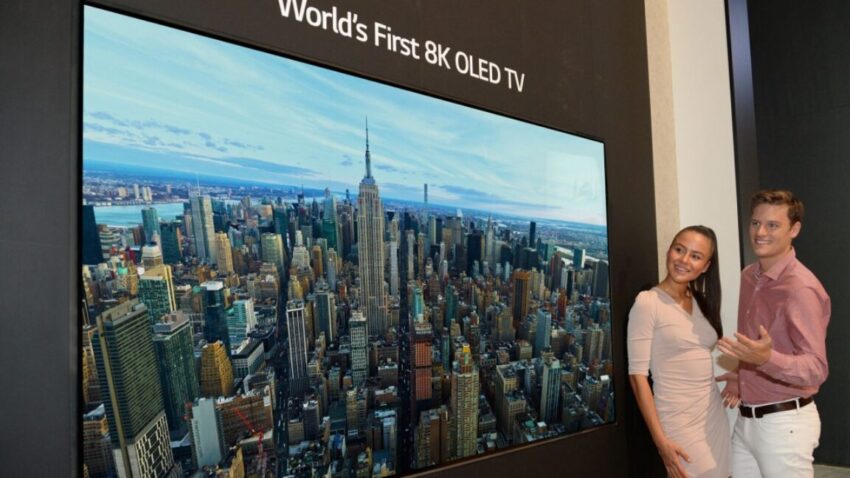
In 2017, Dell entered the fray by releasing an 8K computer monitor, further solidifying the notion that 8K was not just a passing trend but a significant advancement in display technology. The following year, LG made headlines by launching the first 8K OLED TV, reinforcing the industry’s narrative that 8K TVs were the inevitable future of home entertainment.
Consumer Reception and Market Reality
Despite the aggressive marketing and technological advancements, consumer reception of 8K TVs has been lukewarm at best. Many consumers have expressed skepticism regarding the necessity and practicality of 8K resolution. The question remains: is there a tangible benefit to upgrading from 4K to 8K?
While 8K resolution offers four times the pixel count of 4K, the difference in visual quality is often imperceptible to the average viewer, especially when watching content that is not specifically produced in 8K. Most television programs, movies, and streaming services still predominantly offer content in 4K or lower resolutions. As a result, the demand for 8K TVs has not materialized as manufacturers had hoped.
Content Availability
One of the significant barriers to the widespread adoption of 8K technology is the lack of available content. While some platforms have begun to experiment with 8K streaming, such as YouTube, the majority of mainstream content remains in 4K or lower resolutions. This discrepancy raises concerns about the practicality of investing in an 8K television when there is limited content to support its capabilities.
Furthermore, the production of 8K content is resource-intensive, requiring advanced filming equipment and substantial storage capacity. As a result, many filmmakers and content creators are hesitant to invest in 8K production, especially when 4K content is already widely accepted and consumed. This creates a vicious cycle where the lack of content discourages consumers from purchasing 8K TVs, which in turn dissuades content creators from producing 8K material.
Market Trends and Shifting Focus
As the TV industry grapples with the realities of consumer demand, it has become increasingly clear that the focus may need to shift away from 8K technology. Recent reports indicate that major manufacturers, including LG, are starting to pivot their strategies. LG, in particular, has acknowledged that the market may not be ready for 8K TVs, leading the company to reconsider its approach to high-definition displays.
This shift in focus is not merely a reaction to consumer sentiment; it also reflects broader market trends. The rise of 4K technology has been accompanied by a growing interest in other features that enhance the viewing experience, such as improved color accuracy, better HDR (High Dynamic Range) capabilities, and advancements in display technologies like OLED and QLED. These features often provide a more noticeable improvement in picture quality than simply increasing resolution.
Consumer Preferences
Consumer preferences are evolving, and many viewers are prioritizing features that enhance their overall viewing experience rather than merely seeking higher resolution. For instance, advancements in sound technology, smart TV capabilities, and user-friendly interfaces are becoming increasingly important to consumers. As a result, manufacturers are beginning to recognize the need to diversify their offerings and focus on delivering a well-rounded viewing experience.
In addition, the economic landscape has changed significantly in recent years. With rising inflation and economic uncertainty, consumers are more cautious about their spending habits. As a result, the high price point of 8K TVs may deter potential buyers, further complicating the industry’s efforts to promote this technology.
The Future of Television Technology
As the television industry navigates these challenges, it is essential to consider what the future holds for display technology. While 8K may not be the immediate future, there are several promising trends on the horizon that could shape the next generation of televisions.
Enhanced Display Technologies
One area of focus is the continued development of enhanced display technologies. OLED and QLED displays have gained popularity due to their superior color accuracy and contrast ratios. These technologies offer a more immersive viewing experience, which may resonate more with consumers than simply increasing resolution.
Additionally, advancements in mini-LED and micro-LED technologies are on the rise. These innovations promise to deliver improved brightness and contrast, further enhancing picture quality. As manufacturers invest in these technologies, they may find that consumers are more receptive to upgrades that provide tangible benefits rather than just higher resolution.
Smart TV Features
The integration of smart features into televisions is another area where manufacturers can focus their efforts. As streaming services continue to dominate the entertainment landscape, consumers are increasingly looking for TVs that offer seamless access to their favorite content. Features such as voice control, personalized recommendations, and compatibility with smart home devices are becoming essential selling points.
Moreover, the rise of gaming has also influenced consumer preferences. With the increasing popularity of gaming consoles that support 4K and even 8K gaming, manufacturers may find opportunities to market their products to this demographic by emphasizing features that enhance the gaming experience, such as low input lag and high refresh rates.
Conclusion
In summary, the television industry is beginning to recognize that the future may not lie in 8K technology as initially envisioned. While the push for higher resolution displays has been a significant part of the industry’s narrative, consumer interest and practical considerations have led to a reevaluation of priorities. As manufacturers like LG pivot their strategies, the focus may shift toward enhancing overall viewing experiences through improved display technologies and smart features. The evolution of consumer preferences will undoubtedly shape the landscape of television technology in the years to come.
Source: Original report
Was this helpful?
Last Modified: January 31, 2026 at 4:36 pm
2 views