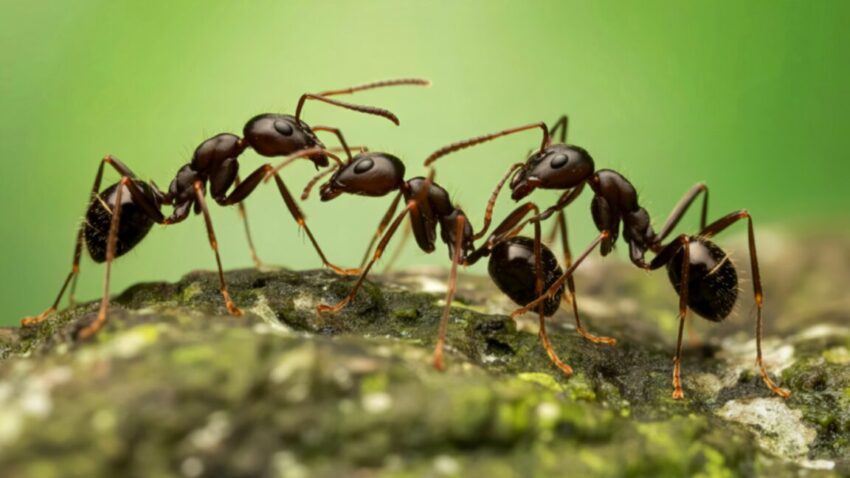
the evolution of expendability why some ants A recent study reveals how the evolutionary trajectory of ants has been shaped by a trade-off between quality and quantity, leading to the development of less armored but more numerous worker ants.
the evolution of expendability why some ants
The Economic Dilemma in Biology
The trade-off between quality and quantity is a fundamental economic dilemma that extends beyond human economics into the realm of biology. This concept is particularly relevant in the study of social insects, such as ants, where the dynamics of group living can significantly influence evolutionary outcomes. A collaborative research team from Britain, the United States, and Japan has explored this dilemma in depth, shedding light on how it has influenced the evolutionary strategies of ants, one of the most successful groups of organisms on Earth.
The Complexity of Ant Societies
Ant societies are characterized by their complexity and organization. As these societies have evolved, they have not only increased in size but also in the intricacies of their social structures. The research indicates that as ant colonies grew, they adapted by making their worker ants smaller and, crucially, less costly to produce. This shift in strategy raises important questions about the evolutionary pressures that drive such changes.
Understanding the Cost of Armor
In the insect world, the exoskeleton, or cuticle, serves as a protective barrier against various threats, including predators, pathogens, and environmental factors such as desiccation. The cuticle also provides a structural framework for muscle attachment, making it essential for mobility and survival. However, the production of a robust cuticle comes at a significant cost. Building a strong exoskeleton requires substantial amounts of nitrogen and rare minerals, such as zinc and manganese. This creates a dilemma for individual insects: while a well-armored body can enhance survival, the resources required to develop such armor can be limiting.
The Evolutionary Shift in Ants
The research team’s findings suggest that ants have found a way to circumvent the high costs associated with armor. By evolving smaller, less armored workers, ant colonies can allocate resources more efficiently. This shift allows for a greater number of workers, which can enhance the colony’s overall effectiveness in foraging, defense, and other critical activities.
Implications of Smaller Workers
The implications of this evolutionary strategy are profound. Smaller workers may be less capable of defending the colony against predators, but their increased numbers can compensate for this vulnerability. In essence, the trade-off between armor and numbers reflects a strategic choice: prioritize quantity to bolster the colony’s collective strength. This approach may also facilitate more efficient resource allocation, allowing colonies to thrive in diverse environments.
Comparative Analysis with Other Insects
To understand the significance of this evolutionary shift, it is essential to compare ants with other insect groups. Many solitary insects invest heavily in armor to protect themselves from threats. For example, beetles often have thick exoskeletons that provide substantial protection. However, this strategy is less viable in social insects like ants, where the collective effort of many individuals can provide a more robust defense. The research highlights how ants have adapted their evolutionary strategies to fit their social structures, leading to a unique balance between individual and collective survival.
Research Methodology
The research team employed a combination of field studies and laboratory experiments to gather data on ant populations. They analyzed various species of ants, examining their physical characteristics, social structures, and resource allocation strategies. By comparing these factors across different species, the researchers were able to identify patterns that suggest a clear evolutionary trend toward smaller, less armored workers in more complex ant societies.
Field Studies and Observations
Field studies involved observing ant colonies in their natural habitats, documenting their behaviors, interactions, and responses to environmental challenges. These observations provided valuable insights into how ant societies function and adapt to changing conditions. The researchers noted that larger colonies tended to have a higher proportion of smaller workers, supporting the hypothesis that resource allocation strategies are influenced by colony size and complexity.
Laboratory Experiments
In addition to field studies, laboratory experiments were conducted to assess the physical attributes of various ant species. By manipulating environmental variables and measuring the resulting changes in worker size and armor, the researchers were able to establish a clearer understanding of the trade-offs involved. These experiments reinforced the idea that smaller workers are a strategic adaptation to the demands of living in larger, more complex colonies.
Stakeholder Reactions
The findings of this research have garnered attention from various stakeholders in the scientific community. Evolutionary biologists, ecologists, and entomologists have expressed interest in the implications of these results for understanding social behavior in insects. Many researchers are eager to explore how these insights can be applied to other social species, including bees and termites, which may exhibit similar trade-offs between armor and numbers.
Broader Implications for Evolutionary Biology
The study’s findings contribute to a broader understanding of evolutionary biology by illustrating how resource allocation strategies can shape the physical and social characteristics of species. The trade-off between armor and numbers in ants serves as a compelling case study for examining how environmental pressures and social dynamics influence evolutionary trajectories. This research may also have implications for conservation efforts, as understanding the adaptive strategies of social insects can inform approaches to preserving biodiversity.
Future Research Directions
Looking ahead, researchers are considering several avenues for future studies. One area of interest is the genetic basis of the traits associated with smaller, less armored workers. Understanding the genetic mechanisms behind these adaptations could provide deeper insights into the evolutionary processes at play. Additionally, researchers are keen to investigate how environmental changes, such as climate change and habitat loss, may impact the resource allocation strategies of ant colonies and their ability to adapt.
Conclusion
The evolution of ants illustrates a fascinating example of how the trade-off between quality and quantity can shape biological outcomes. By prioritizing numbers over armor, ants have developed a successful strategy that allows them to thrive in diverse environments. This research not only enhances our understanding of ant biology but also contributes to the broader field of evolutionary science, offering valuable insights into the complexities of social living in the animal kingdom.
Source: Original report
Was this helpful?
Last Modified: December 20, 2025 at 11:37 am
0 views