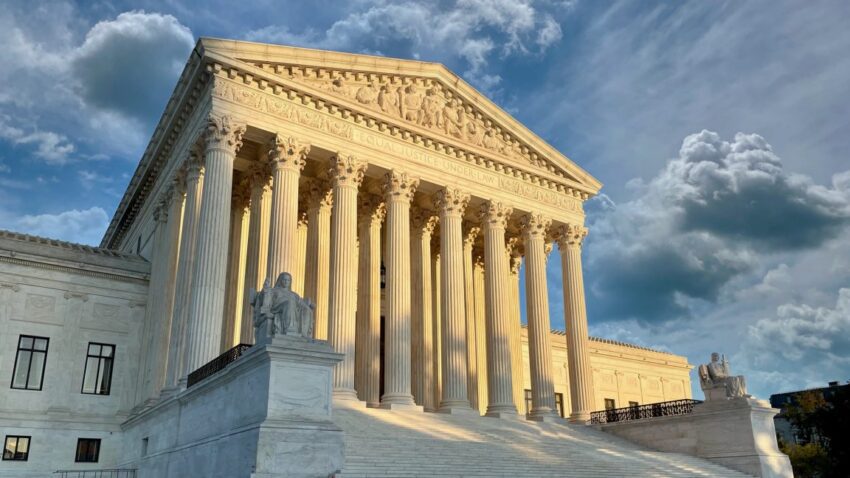
supreme court takes case that could strip The Supreme Court is set to hear a pivotal case that may significantly limit the Federal Communications Commission’s (FCC) authority to impose fines on telecommunications companies.
supreme court takes case that could strip
Background of the Case
The case arises from a series of disputes involving major telecommunications companies—AT&T, Verizon, and T-Mobile—concerning the FCC’s regulatory powers, particularly its ability to enforce penalties for violations of consumer privacy. The controversy began when the FCC fined these carriers for selling customer location data without obtaining explicit consent from users, raising serious concerns about privacy rights and consumer protection.
Details of the Fines
In 2020, the FCC imposed fines on these companies after an investigation revealed that they had been selling sensitive location data to third parties, including data brokers. This practice raised alarms about the potential misuse of personal information and the implications for consumer privacy. The fines were intended to serve as a deterrent against future violations and to reinforce the importance of obtaining user consent before sharing personal data.
Judicial Outcomes
The legal battles that ensued following the imposition of these fines have been complex and varied across different jurisdictions. AT&T successfully challenged the FCC’s authority in the 5th Circuit Court of Appeals, which ruled in favor of the company, effectively overturning the fine imposed by the FCC. This ruling has significant implications for the FCC’s regulatory reach and its ability to enforce compliance among telecommunications companies.
In contrast, Verizon faced a different outcome in the 2nd Circuit Court, where it lost its appeal against the FCC’s fine. T-Mobile also experienced a setback in the District of Columbia Circuit, where the court upheld the FCC’s authority to impose penalties. These divergent outcomes have led to a complicated legal landscape, prompting the companies to seek further clarification from the Supreme Court.
The Supreme Court’s Involvement
In response to these conflicting rulings, Verizon petitioned the Supreme Court to reverse its loss in the 2nd Circuit, while the FCC and the Department of Justice (DOJ) sought to overturn AT&T’s victory in the 5th Circuit. The Supreme Court granted both petitions, indicating its willingness to address the broader implications of the FCC’s regulatory authority. The cases have been consolidated for oral arguments, which are expected to take place in the coming months.
Implications for the FCC
The outcome of this case could have far-reaching consequences for the FCC and its ability to regulate the telecommunications industry. If the Supreme Court rules in favor of the telecommunications companies, it could effectively strip the FCC of its authority to impose fines, significantly weakening its enforcement capabilities. This would set a precedent that may embolden other companies to challenge the FCC’s regulatory powers, potentially leading to a more lenient regulatory environment.
Conversely, if the Supreme Court upholds the FCC’s authority to issue fines, it would reinforce the commission’s role as a key regulator in protecting consumer rights and privacy. This outcome could also serve as a warning to other companies about the potential consequences of violating consumer privacy laws.
Stakeholder Reactions
The impending Supreme Court case has elicited a range of reactions from various stakeholders, including consumer advocacy groups, legal experts, and industry representatives. Consumer advocates have expressed concerns that limiting the FCC’s authority could undermine protections for consumers, particularly in an era where data privacy is increasingly at risk. They argue that the FCC plays a crucial role in holding companies accountable for their actions and ensuring that consumer rights are prioritized.
On the other hand, telecommunications companies have welcomed the opportunity to challenge the FCC’s authority. They argue that the fines imposed by the FCC were excessive and that the regulatory framework needs to be reevaluated to better reflect the realities of the modern telecommunications landscape. Industry representatives contend that the current regulatory environment is overly burdensome and stifles innovation.
Legal Perspectives
Legal experts are closely monitoring the case, as it presents an opportunity for the Supreme Court to clarify the boundaries of regulatory authority in the telecommunications sector. Some legal analysts suggest that the Court may be inclined to limit the FCC’s powers, especially given the current political climate and the emphasis on reducing regulatory burdens for businesses. Others caution that the Court may recognize the importance of consumer protection and uphold the FCC’s authority to impose fines as a necessary tool for enforcement.
Broader Context
This case is not occurring in isolation; it is part of a larger conversation about data privacy and consumer rights in the digital age. As technology continues to evolve, the regulatory landscape must adapt to address new challenges and protect consumers from potential abuses. The Supreme Court’s decision could set a significant precedent for how regulatory agencies operate and enforce compliance moving forward.
Moreover, the case highlights the ongoing tension between regulatory oversight and corporate interests. As companies increasingly collect and utilize consumer data, the need for robust regulatory frameworks becomes more critical. The outcome of this case may influence how other regulatory bodies approach enforcement and compliance in various sectors, not just telecommunications.
Conclusion
The Supreme Court’s decision to hear this case marks a crucial moment for the FCC and its regulatory authority. As the legal battles unfold, the implications for consumer privacy, corporate accountability, and the future of regulatory oversight will be closely scrutinized. The outcome could reshape the landscape of telecommunications regulation and set important precedents for how agencies enforce compliance in an increasingly complex digital environment.
Source: Original report
Was this helpful?
Last Modified: January 13, 2026 at 6:42 am
0 views