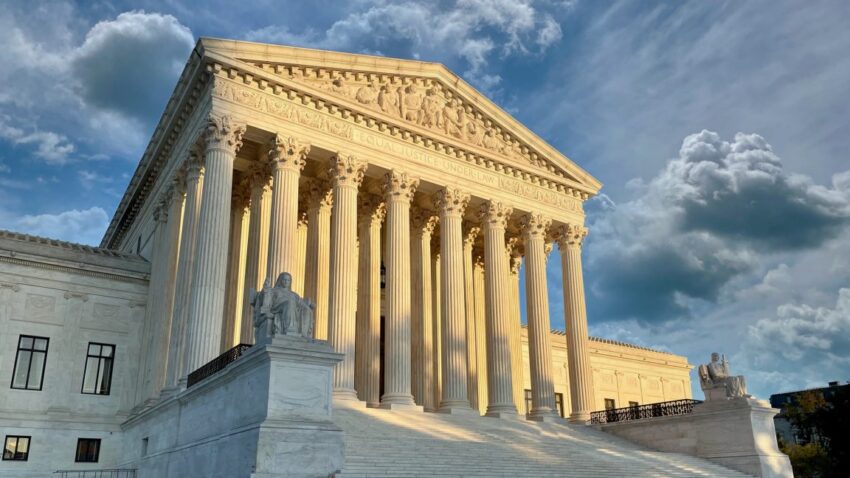
supreme court appears likely to approve trump The Supreme Court appears poised to endorse former President Donald Trump’s authority to dismiss Federal Trade Commission (FTC) members without cause, potentially reshaping the balance of power within independent regulatory agencies.
supreme court appears likely to approve trump
Background on the Case
The legal battle stems from Trump’s decision to fire two Democratic commissioners from the FTC in March 2020, including Rebecca Kelly Slaughter, who subsequently filed a lawsuit challenging the firings. Slaughter’s case is grounded in a 90-year-old legal precedent established in the 1935 Supreme Court ruling of Humphrey’s Executor v. United States. This landmark decision held that the president could only remove FTC commissioners for specific reasons, namely inefficiency, neglect of duty, or malfeasance in office.
In her lawsuit, Slaughter argues that Trump’s actions violated this precedent, which has long been viewed as a safeguard against political interference in independent regulatory bodies. The FTC, established in 1914, is tasked with protecting consumers and maintaining competition in the marketplace. Its independence from direct presidential control has been considered essential for its ability to enforce regulations impartially.
Implications of the Supreme Court’s Potential Ruling
If the Supreme Court rules in favor of Trump, it could significantly expand presidential powers over the FTC and potentially other independent agencies, such as the Federal Communications Commission (FCC). This shift could lead to a more politicized environment within these agencies, undermining their ability to operate free from political pressure.
Legal experts and political analysts have raised concerns that such a ruling could set a precedent allowing future presidents to dismiss agency heads and commissioners at will, thereby diminishing the independence that these regulatory bodies have historically enjoyed. The implications could extend beyond the FTC, affecting various agencies that play crucial roles in regulating industries ranging from telecommunications to finance.
The Justices’ Perspectives
During the oral arguments, Chief Justice John Roberts expressed skepticism regarding the relevance of the Humphrey’s Executor precedent. He referred to it as a “dried husk,” suggesting that its applicability to contemporary governance is questionable. Roberts noted that the court’s 2020 ruling in Seila Law LLC v. Consumer Financial Protection Bureau indicated a shift in how the Supreme Court views the powers of independent agencies.
In Seila Law, the Court ruled that the structure of the Consumer Financial Protection Bureau (CFPB) was unconstitutional because it limited the president’s ability to remove its director. This ruling has been interpreted as a signal that the Court may be willing to reevaluate the legal frameworks that govern the independence of regulatory agencies.
Potential Consequences for Regulatory Independence
The potential overturning of the Humphrey’s Executor ruling raises critical questions about the future of regulatory independence in the United States. If the Court decides that the president can dismiss FTC commissioners without cause, it could lead to a cascade of changes across various regulatory agencies. This could result in:
- Increased Political Influence: The ability of a president to remove agency heads at will could lead to increased political influence over regulatory decisions, potentially prioritizing partisan interests over public welfare.
- Chilling Effect on Agency Actions: Commissioners may hesitate to pursue aggressive regulatory actions for fear of being dismissed if their decisions conflict with the president’s agenda.
- Changes in Agency Leadership: Frequent turnover in agency leadership could disrupt ongoing regulatory initiatives and undermine the continuity necessary for effective governance.
Stakeholder Reactions
The reactions to the Supreme Court’s deliberations have been varied, reflecting the broader political and legal implications of the case. Consumer advocacy groups and some legal scholars have expressed concern that a ruling in favor of Trump could erode the independence of the FTC and similar agencies, ultimately harming consumers and the competitive landscape.
On the other hand, proponents of increased presidential control argue that such a shift could enhance accountability within regulatory agencies. They contend that allowing the president to remove commissioners without cause would ensure that these agencies align more closely with the administration’s policy goals.
Political Context
The case also unfolds against a backdrop of heightened political polarization in the United States. The FTC has been at the forefront of several contentious issues, including antitrust actions against major technology companies and consumer protection measures. As such, the stakes are particularly high, with both sides of the political spectrum closely monitoring the outcome.
Former President Trump’s administration was marked by significant regulatory rollbacks and a focus on deregulation. The potential for a ruling that empowers the president to dismiss FTC commissioners could be seen as a continuation of this trend, further embedding political considerations into the regulatory framework.
Legal Precedents and Historical Context
The Humphrey’s Executor ruling has long been viewed as a cornerstone of the legal framework governing independent regulatory agencies. The case arose from the dismissal of William Humphrey, an FTC commissioner, by President Franklin D. Roosevelt. The Supreme Court’s unanimous decision established that the president’s power to remove commissioners was limited to specific causes, thereby reinforcing the independence of the FTC.
This precedent has been cited in numerous cases over the decades, serving as a bulwark against political interference in regulatory matters. However, the evolving landscape of governance and the increasing scrutiny of independent agencies have led to calls for a reevaluation of these long-standing principles.
Future of Regulatory Agencies
The Supreme Court’s eventual decision in this case could have far-reaching implications for the future of regulatory agencies in the United States. If the Court sides with Trump, it may embolden future presidents to exert greater control over independent agencies, fundamentally altering the relationship between the executive branch and regulatory bodies.
Conversely, a ruling that upholds the Humphrey’s Executor precedent could reaffirm the importance of independent regulatory agencies in maintaining a balanced and fair regulatory environment. Such a decision would signal to future administrations that the independence of these agencies is a critical component of effective governance.
Conclusion
The Supreme Court’s deliberations on the case involving the firing of FTC commissioners represent a pivotal moment in the ongoing debate over the balance of power between the presidency and independent regulatory agencies. As the justices weigh the implications of their ruling, the potential consequences for regulatory independence, consumer protection, and the political landscape are significant. The outcome will not only affect the FTC but could also reshape the governance of various independent agencies for years to come.
Source: Original report
Was this helpful?
Last Modified: December 10, 2025 at 1:36 am
6 views