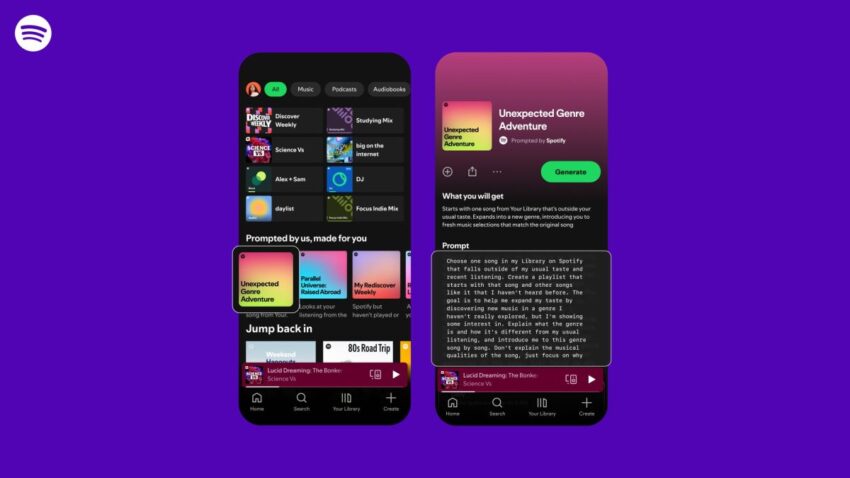
spotify tests more personalized ai-powered prompted playlists Spotify is currently experimenting with a new feature that leverages artificial intelligence to create more personalized playlists for its users.
spotify tests more personalized ai-powered prompted playlists
Overview of the New Feature
Spotify’s latest initiative, dubbed “Prompted Playlists,” aims to enhance user experience by utilizing AI technology to curate playlists tailored to individual preferences. This feature is designed to take into account not only a user’s listening history but also broader world knowledge, allowing for a more dynamic and relevant music selection process.
Personalization at Its Core
The core of the Prompted Playlists feature is its ability to analyze a user’s listening habits from the very beginning of their Spotify journey. By examining data from day one, Spotify can identify trends and preferences that may have evolved over time. This deep dive into user history allows the platform to create playlists that resonate more closely with individual tastes.
Moreover, the playlists are not static; they can be refreshed on a daily or weekly basis. This ensures that users are continually exposed to new music that aligns with their preferences, keeping the listening experience fresh and engaging. The dynamic nature of these playlists is crucial in a music landscape that is constantly evolving, as it allows Spotify to adapt to changing user tastes and emerging musical trends.
Integration of World Knowledge
One of the standout features of the Prompted Playlists is its incorporation of world knowledge. This means that the AI can consider external factors, such as current events, seasonal trends, and cultural phenomena, when curating playlists. For instance, if a major music festival is happening, the AI might prioritize tracks from artists performing at the event, or if a new genre is gaining popularity, it could introduce users to emerging artists in that space.
Benefits of AI-Driven Playlists
The use of AI in playlist curation presents several advantages:
- Enhanced User Engagement: By providing playlists that are more aligned with user preferences and current trends, Spotify can increase user engagement and satisfaction.
- Discovery of New Music: The AI’s ability to analyze a wide array of data can help users discover new artists and genres they may not have encountered otherwise.
- Timeliness: Incorporating world knowledge allows Spotify to create playlists that are relevant to the current cultural climate, making the listening experience more relatable.
Stakeholder Reactions
The introduction of AI-powered Prompted Playlists has garnered mixed reactions from stakeholders within the music industry. Some artists and record labels view this innovation as a positive development, as it could lead to increased visibility for lesser-known artists and genres. By curating playlists that reflect current trends and user preferences, Spotify may provide a platform for emerging talents to reach wider audiences.
Concerns from Artists and Labels
However, there are also concerns among some artists and industry professionals regarding the implications of AI-driven curation. Critics argue that relying heavily on algorithms may lead to a homogenization of music, where only certain styles or artists are promoted based on data-driven decisions. This could potentially stifle creativity and diversity in the music industry.
Additionally, there are worries about the transparency of Spotify’s algorithms. Artists and labels often seek clarity on how their music is being promoted and what factors influence playlist placements. Without transparency, there is a risk that certain artists may be unfairly disadvantaged in the competitive landscape.
Implications for the Music Industry
The introduction of AI-powered playlists could have far-reaching implications for the music industry as a whole. As streaming platforms like Spotify continue to innovate, traditional methods of music promotion may need to adapt to keep pace with technological advancements.
Shift in Marketing Strategies
Record labels and artists may need to rethink their marketing strategies to align with the new landscape shaped by AI-driven playlists. This could involve focusing more on social media engagement, live performances, and collaborations to capture the attention of the AI algorithms that curate playlists.
Moreover, artists may need to consider how their music is perceived in the context of broader cultural trends. Understanding how world knowledge influences playlist curation could lead to more strategic releases and marketing campaigns that resonate with listeners.
Future of AI in Music Streaming
The development of Prompted Playlists is just one example of how AI is being integrated into music streaming services. As technology continues to advance, it is likely that we will see even more sophisticated applications of AI in the music industry. This could include personalized recommendations based on mood, time of day, or even specific activities, such as working out or studying.
Potential for Greater Customization
Future iterations of AI-driven features may offer users even greater customization options. For instance, users might be able to input specific prompts or themes for their playlists, allowing the AI to generate music selections that align with their immediate needs or desires. This level of personalization could further enhance user satisfaction and loyalty to the platform.
Conclusion
Spotify’s testing of AI-powered Prompted Playlists represents a significant step forward in the evolution of music streaming. By harnessing the power of artificial intelligence to create more personalized and relevant playlists, Spotify aims to enhance user engagement and satisfaction. However, as with any technological advancement, there are challenges and concerns that must be addressed, particularly regarding the implications for artists and the broader music industry.
As Spotify continues to refine this feature, it will be essential for stakeholders to engage in open dialogue about the impact of AI on music curation and promotion. The future of music streaming is undoubtedly intertwined with technological advancements, and how these changes are navigated will shape the industry for years to come.
Source: Original report
Was this helpful?
Last Modified: December 11, 2025 at 12:43 pm
1 views