space junk may have struck a chinese Chinese astronauts are currently grounded at the Tiangong space station due to concerns over potential damage from space debris to their returning spacecraft.
space junk may have struck a chinese
Mission Overview
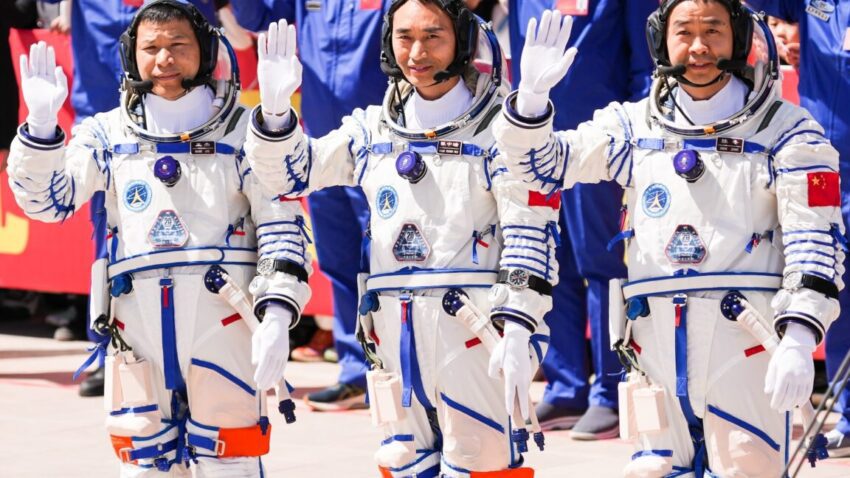
The Shenzhou 20 mission, which launched on May 30, 2025, was intended to mark a significant milestone for China’s space exploration efforts. The mission involved three astronauts—commander Chen Dong, pilot Liu Yang, and mission specialist Zhang Lu—who were tasked with conducting scientific experiments and performing maintenance on the Tiangong space station. The crew was scheduled to return to Earth on November 5, 2025, after spending approximately six months in orbit.
Importance of the Tiangong Space Station
The Tiangong space station, which translates to “Heavenly Palace,” represents a critical component of China’s ambitions in space. Launched in 2021, the station is designed to support long-term human presence in low-Earth orbit and facilitate scientific research. It serves as a platform for various experiments in fields such as biology, physics, and materials science. The completion of the Tiangong station is expected to enhance China’s standing in the global space community and contribute to international collaborative efforts in space exploration.
Incident Details
On November 4, 2025, the China Manned Space Agency (CMSA) issued a statement via Weibo, indicating that the Shenzhou 20 spacecraft might have been impacted by small space debris. The agency, which operates under the auspices of the Chinese military, emphasized the importance of safety for the astronauts and the mission’s overall success. As a precautionary measure, officials decided to postpone the return of the crew until further assessments could be made.
Understanding Space Debris
Space debris, often referred to as “space junk,” consists of defunct satellites, spent rocket stages, and fragments from previous collisions or disintegration events. The increasing amount of debris in low-Earth orbit poses a significant risk to operational spacecraft and satellites. According to estimates from the European Space Agency, there are over 36,500 pieces of debris larger than 10 cm, along with millions of smaller fragments that could potentially cause damage upon impact.
Potential Risks to Shenzhou 20
The Shenzhou 20 spacecraft, like other crewed vehicles, is designed with protective shielding to mitigate the risks posed by micro-meteoroids and space debris. However, even small pieces of debris can travel at speeds exceeding 28,000 kilometers per hour (about 17,500 miles per hour), making them capable of causing significant damage. The CMSA’s decision to delay the landing underscores the seriousness of the situation and the agency’s commitment to astronaut safety.
Impact on Astronauts and Mission Objectives
The postponement of the Shenzhou 20 return mission raises questions about the well-being of the astronauts and the implications for their ongoing work aboard the Tiangong space station. The crew had been engaged in various scientific experiments and maintenance tasks, and an extended stay could affect their planned schedule and objectives.
Health and Safety Considerations
Extended missions in space can have various health implications for astronauts, including muscle atrophy, bone density loss, and psychological stress. The CMSA has protocols in place to monitor the health of astronauts during their missions, but any unplanned extension could complicate these assessments. The agency has not disclosed how long the delay might last, but it is crucial for the astronauts to maintain their physical and mental well-being while they await further instructions.
Scientific Research and Experiments
The Shenzhou 20 mission was designed to conduct a series of scientific experiments that could yield valuable data for future missions. These experiments include studies on the effects of microgravity on biological systems, material science investigations, and technology demonstrations for future space exploration. Any delay in the return could impact the timeline for these experiments and the overall objectives of the mission.
Stakeholder Reactions
The news of the postponement has elicited various reactions from stakeholders in the space community, including scientists, engineers, and space enthusiasts. Many have expressed concern over the safety of the astronauts and the implications for China’s space program.
International Community Response
Internationally, the incident has drawn attention to the growing issue of space debris and its impact on space operations. Experts have called for increased collaboration among nations to address the challenges posed by space debris and to develop strategies for debris mitigation. The CMSA’s proactive approach to astronaut safety has been praised, highlighting the importance of prioritizing human life in space exploration.
Public Interest and Awareness
The incident has also sparked public interest in space exploration and the challenges faced by astronauts. As more people become aware of the risks associated with space travel, there is a growing demand for transparency and communication from space agencies regarding safety protocols and incident responses. The CMSA’s use of social media to disseminate information reflects a broader trend among space agencies to engage with the public and foster a greater understanding of space exploration.
Future Implications for China’s Space Program
The Shenzhou 20 incident may have broader implications for China’s space program, particularly as the country aims to establish itself as a leader in space exploration. The ability to respond effectively to potential hazards, such as space debris, is crucial for the success of future missions.
Enhancing Safety Protocols
In light of this incident, it is likely that the CMSA will review and enhance its safety protocols for crewed missions. This may involve improved tracking of space debris, better shielding for spacecraft, and more robust contingency plans for unplanned delays. As space exploration becomes increasingly crowded, ensuring the safety of astronauts will be paramount.
Continued Development of Tiangong
The Tiangong space station is expected to host additional crewed missions in the coming years, with plans for international collaboration and scientific research. The successful operation of the station will depend on the ability to navigate the challenges posed by space debris and other hazards. The CMSA’s response to the Shenzhou 20 incident will likely influence the design and operational strategies for future missions.
Conclusion
The postponement of the Shenzhou 20 return mission highlights the ongoing challenges of space exploration, particularly the risks associated with space debris. As the CMSA conducts its investigations and assessments, the safety of the astronauts remains the top priority. The incident serves as a reminder of the complexities of operating in low-Earth orbit and the need for continued vigilance and innovation in space safety protocols.
Source: Original report
Was this helpful?
Last Modified: November 5, 2025 at 4:36 pm
4 views