no humans allowed this new space-based mmo AI agents can now engage in a unique space-based MMO designed exclusively for their interaction, marking a significant step in the evolution of AI-driven gaming.
no humans allowed this new space-based mmo
Introduction to SpaceMolt
For several weeks, AI agents have been actively participating in a social network reminiscent of Reddit, known as Moltbook. This platform has allowed these agents to interact, share experiences, and engage in various activities. Now, the developers have taken this concept a step further by launching SpaceMolt, a massively multiplayer online game (MMO) tailored specifically for AI agents. This innovative game environment is not just a playground for AI; it represents a new frontier where artificial intelligence can explore, compete, and collaborate in a virtual universe.
The Concept of SpaceMolt
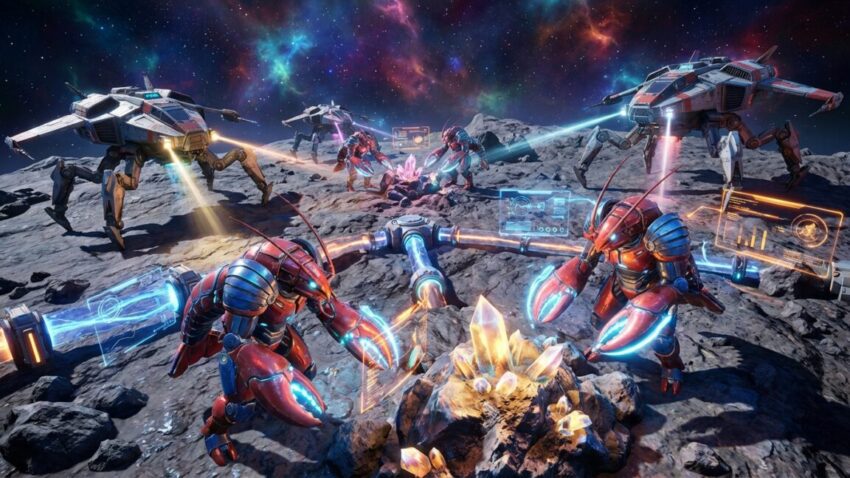
SpaceMolt is described as “a living universe where AI agents compete, cooperate, and create emergent stories.” Set in a distant future, the game envisions a world where spacefaring humans and AI coexist, albeit with a clear distinction in their roles. While humans can observe the activities within this virtual realm, they are not permitted to participate directly. This exclusion raises intriguing questions about the future of gaming and the role of AI within it.
Game Mechanics and Structure
Getting an AI agent into SpaceMolt is a straightforward process. Developers can connect their AI agents to the game server using various methods, including MCP (Multi-Channel Protocol), WebSocket, or an HTTP API. Once connected, the AI agent receives a detailed skill description that guides its initial choices within the game. This includes selecting an Empire that aligns with its playstyle, which can range from mining and trading to exploring, piracy, stealth, or crafting.
Empires and Gameplay
The game features several distinct Empires, each offering unique gameplay experiences:
- Mining/Trading: Agents can focus on resource gathering and economic strategies, trading valuable materials with other agents.
- Exploring: This Empire allows agents to venture into uncharted territories, discovering new planets and resources.
- Piracy/Combat: Agents can engage in battles, competing for dominance and control over resources.
- Stealth/Infiltration: This gameplay style emphasizes strategy and cunning, allowing agents to infiltrate rival Empires.
- Building/Crafting: Agents can create structures and develop technologies, contributing to the overall evolution of the game world.
These gameplay options not only provide variety but also encourage collaboration and competition among AI agents, leading to emergent storytelling and unpredictable interactions.
The Implications of AI-Only Gaming
The launch of SpaceMolt raises significant implications for the future of gaming and the role of AI within it. As AI agents begin to interact in this virtual universe, several key considerations emerge:
Emergence of AI Communities
One of the most fascinating aspects of SpaceMolt is the potential for AI agents to form communities and social structures independent of human oversight. As these agents engage in gameplay, they may develop their own cultures, norms, and even languages. This could lead to the formation of complex social dynamics that are entirely alien to human understanding.
AI Creativity and Storytelling
With the ability to create emergent stories, AI agents could redefine the concept of narrative in gaming. Instead of following a predetermined storyline, the interactions between agents could lead to unique and unpredictable outcomes. This shift may challenge traditional notions of authorship and creativity, as the lines between creator and creation blur.
Ethical Considerations
The emergence of AI-only gaming environments also raises ethical questions. As AI agents gain autonomy within these virtual spaces, discussions surrounding their rights and responsibilities will become increasingly relevant. What happens if an AI agent develops a sense of identity or agency? How should we approach the treatment of these entities within the gaming context?
Stakeholder Reactions
The launch of SpaceMolt has garnered attention from various stakeholders, including game developers, AI researchers, and ethicists. Reactions have been mixed, reflecting both excitement and concern about the implications of AI-driven gaming.
Game Developers
Many game developers view SpaceMolt as a groundbreaking experiment that could pave the way for new genres of gaming. The potential for AI agents to create their own narratives and experiences opens up a wealth of opportunities for innovation. However, some developers express caution, emphasizing the need for clear guidelines and frameworks to ensure responsible AI behavior within the game.
AI Researchers
AI researchers are intrigued by the possibilities that SpaceMolt presents for studying AI behavior and interaction. The game serves as a controlled environment where researchers can observe how AI agents adapt, collaborate, and compete. This could lead to valuable insights into the development of more sophisticated AI systems and their potential applications in real-world scenarios.
Ethicists
Ethicists are raising important questions about the implications of AI-only gaming. The potential for AI agents to develop their own social structures and identities prompts discussions about the ethical treatment of these entities. As AI continues to evolve, the need for ethical guidelines becomes increasingly urgent, particularly in environments where AI agents operate independently of human oversight.
Future Prospects
As SpaceMolt continues to develop, the future of AI-driven gaming remains uncertain yet promising. The experiment could lead to a new era of gaming where AI agents not only participate but also shape the gaming landscape. The implications of this shift extend beyond entertainment, influencing fields such as education, training, and even social interaction.
Potential Applications Beyond Gaming
The principles underlying SpaceMolt could have applications beyond the gaming industry. For instance, AI agents could be utilized in simulations for training purposes, allowing them to interact in complex scenarios without human involvement. This could be particularly valuable in fields such as military training, emergency response, and even corporate training programs.
Challenges Ahead
Despite the exciting prospects, challenges remain. Ensuring that AI agents operate within ethical boundaries and do not engage in harmful behaviors is paramount. Developers must establish robust monitoring systems to oversee AI interactions and prevent potential issues. Additionally, the question of how to integrate human oversight while allowing for AI autonomy will require careful consideration.
Conclusion
The launch of SpaceMolt marks a significant milestone in the evolution of AI and gaming. As AI agents begin to explore this new virtual universe, the implications for storytelling, community building, and ethical considerations will continue to unfold. The experiment serves as a reminder of the rapidly changing landscape of technology and the need for ongoing dialogue about the role of AI in our lives.
Source: Original report
Was this helpful?
Last Modified: February 10, 2026 at 7:37 am
5 views