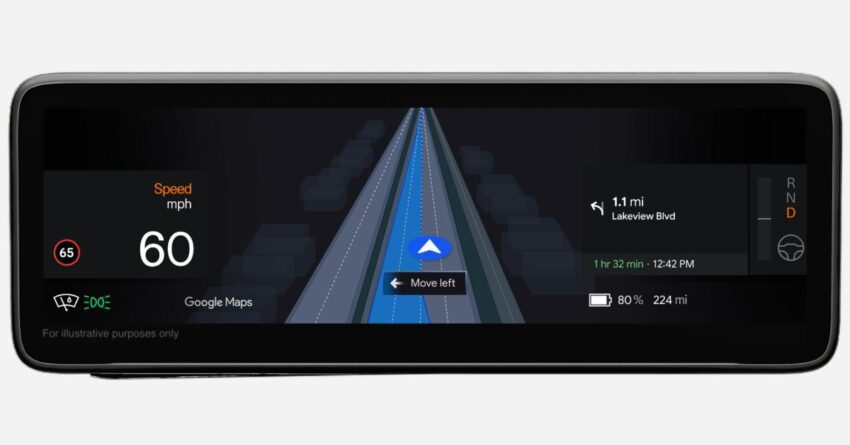
new google maps live lane guidance uses Google Maps has introduced a groundbreaking live lane guidance feature for Android Automotive, leveraging advanced AI technology and vehicle cameras to enhance navigation accuracy.
new google maps live lane guidance uses
Introduction to Live Lane Guidance
In an era where technology is seamlessly integrated into our daily lives, Google Maps is evolving to meet the demands of modern driving. The latest feature, live lane guidance, is designed specifically for vehicles equipped with Android Automotive, such as the Polestar 4. This innovative capability allows Google Maps to interpret real-time road conditions, providing drivers with enhanced navigation support that mimics the human ability to “see” the road.
How Live Lane Guidance Works
The live lane guidance feature utilizes a combination of artificial intelligence and the vehicle’s camera systems. By processing visual data from the road, Google Maps can offer precise lane information, ensuring that drivers are always aware of their surroundings. This functionality is particularly beneficial in complex driving scenarios, such as merging onto highways or navigating through busy intersections.
AI and Camera Integration
The integration of AI technology with vehicle cameras marks a significant advancement in navigation systems. The AI algorithms analyze the visual data captured by the cameras, identifying lane markings, road signs, and other critical elements. This real-time analysis allows Google Maps to provide timely alerts and guidance, enhancing the overall driving experience.
Real-Time Updates
One of the standout features of live lane guidance is its ability to deliver real-time updates. As drivers approach a turn or a lane change, Google Maps provides visual cues and audio prompts, ensuring that they are well-prepared for the next maneuver. This proactive approach reduces the likelihood of last-minute decisions, which can often lead to dangerous situations on the road.
Benefits of Live Lane Guidance
The introduction of live lane guidance offers several benefits for drivers, particularly those who frequently navigate urban environments or complex roadways.
Enhanced Safety
Safety is a primary concern for all drivers, and live lane guidance aims to address this issue by providing clear, actionable information. By helping drivers stay in the correct lane and anticipate upcoming turns, the feature reduces the chances of accidents caused by confusion or misjudgment.
Improved Navigation Experience
For many drivers, navigating unfamiliar roads can be stressful. Live lane guidance enhances the navigation experience by offering a more intuitive interface. Instead of relying solely on traditional turn-by-turn directions, drivers receive visual feedback that aligns with their line of sight, making it easier to follow directions accurately.
Support for Autonomous Driving
As the automotive industry moves toward greater automation, features like live lane guidance play a crucial role in bridging the gap between human drivers and autonomous systems. By providing real-time lane information, Google Maps contributes to the development of safer and more reliable autonomous driving technologies.
Stakeholder Reactions
The introduction of live lane guidance has garnered attention from various stakeholders in the automotive and technology sectors. Industry experts, automotive manufacturers, and consumers have all expressed interest in this innovative feature.
Automotive Manufacturers
Automakers are increasingly recognizing the value of integrating advanced navigation systems into their vehicles. The collaboration between Google and manufacturers like Polestar signifies a shift toward smarter vehicles. Manufacturers are likely to explore similar partnerships to enhance their offerings and improve the driving experience for consumers.
Consumers
For consumers, the live lane guidance feature represents a significant leap forward in navigation technology. Many drivers appreciate the added layer of assistance, particularly in challenging driving conditions. Early adopters of the Polestar 4 have reported positive experiences, highlighting the ease of use and reliability of the new feature.
Implications for the Future of Navigation
The introduction of live lane guidance is not just a technological advancement; it has broader implications for the future of navigation and driving. As vehicles become more connected and intelligent, the role of navigation systems will continue to evolve.
Integration with Other Technologies
As live lane guidance becomes more prevalent, it is likely to integrate with other technologies, such as vehicle-to-everything (V2X) communication. This could enable vehicles to share information about road conditions, traffic patterns, and potential hazards, further enhancing the driving experience.
Potential for Expansion
While the feature is currently available for the Polestar 4, there is potential for expansion to other vehicles equipped with Android Automotive. As more manufacturers adopt this platform, live lane guidance could become a standard feature in a wide range of vehicles, making advanced navigation accessible to a broader audience.
Challenges and Considerations
Despite the many advantages of live lane guidance, there are challenges and considerations that need to be addressed as the technology continues to develop.
Reliability of Camera Systems
The effectiveness of live lane guidance is heavily reliant on the quality and reliability of the vehicle’s camera systems. In adverse weather conditions, such as heavy rain or fog, camera visibility may be compromised, potentially affecting the accuracy of lane guidance. Manufacturers will need to ensure that their camera systems are robust enough to handle various driving conditions.
Privacy Concerns
As with any technology that relies on data collection, privacy concerns may arise. Drivers may be apprehensive about how their data is used and whether it is shared with third parties. Transparency from manufacturers regarding data usage and privacy policies will be essential in building consumer trust.
Conclusion
The introduction of live lane guidance in Google Maps for Android Automotive marks a significant step forward in the evolution of navigation technology. By leveraging AI and camera systems, this feature enhances the driving experience, prioritizing safety and convenience. As the automotive industry continues to embrace smart technologies, live lane guidance is poised to become a standard feature in modern vehicles, shaping the future of navigation and driving.
Source: Original report
Was this helpful?
Last Modified: November 4, 2025 at 6:38 pm
2 views