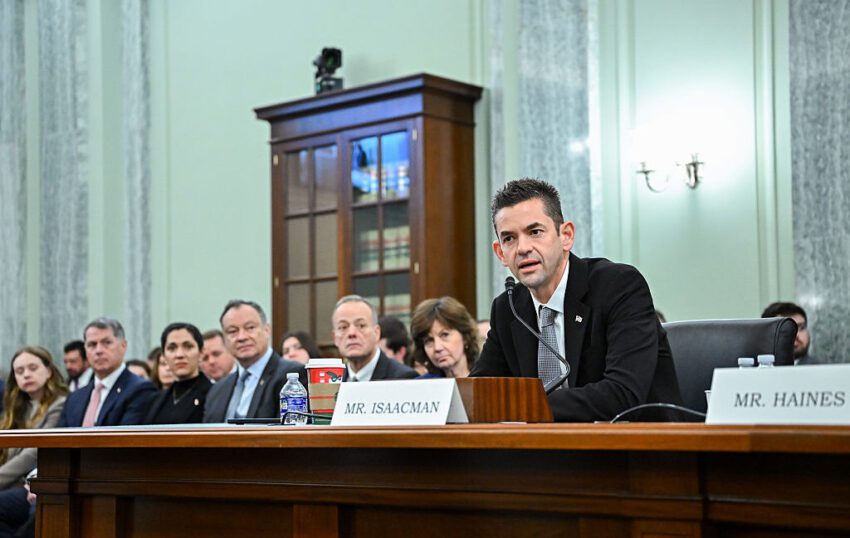
nasa finally-and we really do mean it Jared Isaacman has officially been confirmed as NASA’s 15th administrator, marking a significant milestone for the agency after a prolonged period without a full-time leader.
nasa finally-and we really do mean it
Background on Jared Isaacman
Jared Isaacman is not just a name in the aerospace industry; he is a multifaceted individual whose career spans aviation, technology, and philanthropy. As a pilot and financial technology billionaire, Isaacman has made headlines for his innovative approaches to both business and space exploration. He gained prominence as the commander of two groundbreaking spaceflights, including the historic Inspiration4 mission, which was notable for being the first all-civilian spaceflight to orbit Earth. This mission not only showcased the potential of commercial space travel but also raised significant funds for St. Jude Children’s Research Hospital.
Isaacman’s experience extends beyond mere piloting; he also led the first private spacewalk during the Axiom Space mission. This achievement highlighted the growing role of private enterprises in space exploration, a trend that has been gaining momentum in recent years. His ventures have often been characterized by a blend of ambition and philanthropy, making him a compelling figure in discussions about the future of space travel.
Confirmation Process
Isaacman’s path to becoming NASA’s administrator was not without its challenges. His nomination by President Trump came on a backdrop of political turbulence and uncertainty within the agency. The confirmation process took an extended 377 days, during which Isaacman faced a variety of issues that could have derailed his appointment.
Political Landscape
The political landscape surrounding NASA has been complex, particularly in recent years. The agency has often found itself at the intersection of partisan politics, with differing views on budget allocations, mission priorities, and the role of private industry in space exploration. Isaacman’s nomination was initially met with skepticism from some senators who questioned his experience and suitability for the role, given that NASA has traditionally been led by individuals with extensive backgrounds in government or science.
Despite these challenges, Isaacman remained steadfast in his commitment to the role. He engaged with various stakeholders, including lawmakers, industry leaders, and the public, to articulate his vision for NASA. His ability to navigate this intricate political terrain ultimately played a crucial role in securing the necessary votes for his confirmation.
Senate Vote
The Senate vote on Isaacman’s confirmation took place on a Wednesday, with a final tally of 67 to 30 in favor. This bipartisan support is indicative of a growing recognition of the importance of leadership at NASA, particularly as the agency prepares for ambitious future missions, including plans for lunar exploration and Mars colonization.
Implications of Isaacman’s Leadership
Isaacman’s confirmation comes at a pivotal time for NASA. The agency is facing numerous challenges and opportunities as it seeks to expand its reach into space. With the Artemis program aiming to return humans to the Moon by 2024 and plans for manned missions to Mars in the coming decades, strong leadership is essential.
Focus on Innovation
One of Isaacman’s primary focuses as administrator will likely be fostering innovation within NASA. His background in financial technology and experience with private space ventures position him uniquely to bridge the gap between government and commercial space efforts. Isaacman has expressed a commitment to leveraging partnerships with private companies to enhance NASA’s capabilities and reduce costs.
In recent years, NASA has increasingly relied on private companies for various missions, including crew transportation to the International Space Station (ISS). Isaacman’s experience in this arena could lead to more streamlined collaborations that benefit both the agency and its commercial partners.
Addressing Challenges
Isaacman will also need to address several pressing challenges facing NASA. These include budget constraints, workforce issues, and the need for technological advancements. The agency has faced criticism in the past for delays and cost overruns on major projects, and Isaacman’s leadership will be scrutinized as he works to ensure that NASA meets its ambitious goals without compromising on safety or efficiency.
Stakeholder Reactions
The reaction to Isaacman’s confirmation has been mixed among stakeholders. Supporters have lauded his entrepreneurial spirit and innovative mindset, arguing that these qualities are essential for navigating the complexities of modern space exploration. They believe that his unique background will bring fresh perspectives to an agency that has sometimes been viewed as slow to adapt to change.
Conversely, some critics remain skeptical about his lack of traditional experience in government roles. They argue that NASA requires a leader who understands the intricacies of federal operations and the importance of scientific integrity. These concerns highlight the ongoing debate about the role of private industry in public sector agencies and the balance that must be struck between innovation and accountability.
Looking Ahead
As Isaacman steps into his new role, the future of NASA hangs in the balance. His leadership will be pivotal in shaping the agency’s direction over the coming years. With ambitious missions on the horizon, including the Artemis program and potential manned missions to Mars, the stakes are high.
Public Engagement
Isaacman has also emphasized the importance of public engagement in space exploration. He believes that fostering a sense of excitement and curiosity about space can inspire future generations to pursue careers in science, technology, engineering, and mathematics (STEM). His previous philanthropic efforts, particularly through the Inspiration4 mission, demonstrate his commitment to using space as a platform for positive change.
International Collaboration
Another area where Isaacman may focus is international collaboration in space exploration. As nations around the world ramp up their space programs, the potential for partnerships and joint missions has never been greater. Isaacman’s experience in the private sector may enable him to forge new alliances that can enhance NASA’s capabilities and broaden its reach.
Conclusion
Jared Isaacman’s confirmation as NASA’s 15th administrator marks a new chapter for the agency. His unique background, combined with a vision for innovation and collaboration, positions him to lead NASA into an exciting future. While challenges remain, the bipartisan support for his confirmation reflects a shared belief in the importance of strong leadership at NASA. As the agency embarks on ambitious missions to explore the Moon, Mars, and beyond, Isaacman’s role will be critical in shaping the trajectory of space exploration for years to come.
Source: Original report
Was this helpful?
Last Modified: December 18, 2025 at 9:36 am
3 views