nasa faces a crucial choice on a A critical decision looms for NASA regarding its next Mars spacecraft, a choice that could significantly influence the agency’s exploration efforts for the next decade.
nasa faces a crucial choice on a
The Current Landscape of Mars Exploration
NASA’s exploration of Mars has been a cornerstone of its planetary science program, yielding invaluable data about the planet’s geology, climate, and potential for past life. Over the years, various missions have contributed to our understanding of Mars, including rovers, landers, and orbiters. However, as the agency looks to the future, the need for a new spacecraft capable of enhancing communication capabilities has become increasingly urgent.
The Importance of Communication
Effective communication between Mars and Earth is vital for the success of ongoing and future missions. Currently, NASA relies on several orbiters to relay data back to Earth. Among these, the Mars Reconnaissance Orbiter (MRO) has been a workhorse, operating for over 20 years. While MRO has provided a wealth of information, its aging technology raises concerns about its reliability and capacity to handle the increasing data demands of new missions.
The recent loss of the Mars Atmosphere and Volatile Evolution (MAVEN) spacecraft has further underscored the urgency of this issue. MAVEN was instrumental in studying the Martian atmosphere and its loss has left a significant gap in NASA’s communication capabilities. As a result, the agency is now faced with the pressing need to develop a new spacecraft that can effectively relay communications from Mars to Earth.
Congressional Support and Funding
Recognizing the critical need for enhanced communication capabilities, Congress has taken steps to support NASA’s efforts. In the supplemental funding package known as the “One Big Beautiful Bill,” Congress allocated an additional $700 million specifically for the development of a “Mars Telecommunications Orbiter.” This funding reflects a growing recognition of the importance of maintaining robust communication links with Mars, especially as more missions are planned for the coming years.
Options for the New Spacecraft
As NASA deliberates on the next steps, several options for the new Mars spacecraft are on the table. Each option comes with its own set of advantages and challenges, and the decision will ultimately shape the agency’s exploration strategy for the next decade.
Designing a Mars Telecommunications Orbiter
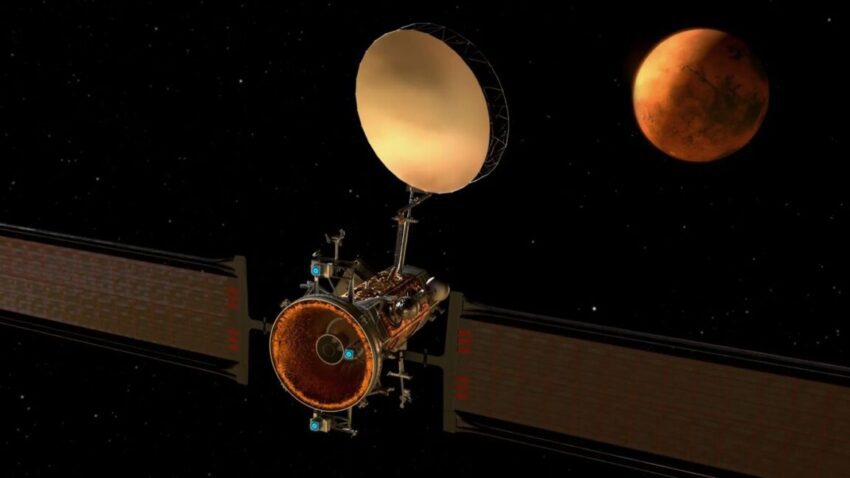
The proposed Mars Telecommunications Orbiter aims to enhance communication capabilities significantly. This spacecraft would be equipped with advanced technology to facilitate high-bandwidth data transmission, allowing for the efficient relay of information from multiple missions on the Martian surface.
One of the key features of the new orbiter would be its ability to support multiple missions simultaneously. As NASA plans to send more rovers and landers to Mars, the demand for data transmission will only increase. A dedicated telecommunications orbiter could alleviate some of the pressure on existing orbiters, ensuring that data from all missions can be transmitted back to Earth without delay.
Potential Scientific Contributions
In addition to its communication capabilities, the new spacecraft could also contribute to scientific research. Equipped with advanced instruments, the Mars Telecommunications Orbiter could conduct its own scientific investigations while performing its primary role of data relay. This dual functionality could maximize the return on investment for the mission and provide additional insights into Martian geology and atmosphere.
Stakeholder Reactions
The debate surrounding the selection of the new Mars spacecraft has elicited a variety of reactions from stakeholders within the scientific community, industry, and government. Many experts emphasize the importance of timely decision-making, as delays could hinder future missions and the overall progress of Mars exploration.
Scientific Community Perspectives
Members of the scientific community have expressed a strong interest in the development of a new telecommunications orbiter. Researchers argue that improved communication capabilities are essential for the success of upcoming missions, particularly those focused on astrobiology and the search for signs of past life on Mars. Enhanced data transmission would allow scientists to analyze findings more rapidly and make informed decisions about subsequent mission objectives.
Industry Involvement
Private aerospace companies are also closely monitoring NASA’s decision-making process. Many of these companies have developed advanced communication technologies that could be integrated into the new spacecraft. Their involvement could lead to cost savings and innovative solutions, ultimately benefiting NASA’s Mars exploration program.
Challenges Ahead
While the prospect of a new Mars Telecommunications Orbiter is promising, several challenges lie ahead. The development of advanced spacecraft technology is inherently complex and requires careful planning and execution.
Technological Hurdles
One of the primary challenges is ensuring that the new spacecraft can withstand the harsh conditions of space and the Martian environment. Engineers must design systems that can operate reliably over extended periods, as missions to Mars often last for years. Additionally, the spacecraft must be equipped with cutting-edge communication technology that can handle the increasing volume of data generated by multiple missions.
Budgetary Considerations
While Congress has allocated significant funding for the Mars Telecommunications Orbiter, budget constraints remain a concern. NASA must balance its resources across various missions and projects, making it essential to prioritize investments wisely. The agency will need to demonstrate that the new orbiter is a worthwhile investment that will yield substantial scientific and operational benefits.
The Path Forward
As NASA approaches a decision on its next Mars spacecraft, the implications of this choice will resonate throughout the agency and the broader scientific community. A successful telecommunications orbiter could pave the way for a new era of exploration on Mars, enabling more ambitious missions and facilitating groundbreaking discoveries.
Timeline for Decision-Making
NASA officials have indicated that a decision regarding the new spacecraft is expected soon, but the exact timeline remains unclear. The agency is currently evaluating various proposals and conducting feasibility studies to determine the best path forward. Stakeholders are hopeful that a decision will be made in a timely manner, allowing for the new orbiter to be developed and launched within the next few years.
Conclusion
The choice of NASA’s next Mars spacecraft is not just a matter of technology; it represents a pivotal moment in the agency’s exploration strategy. With the right decision, NASA can enhance its communication capabilities, support multiple missions, and ultimately unlock new scientific insights about the red planet. As the agency prepares to make this crucial choice, the future of Mars exploration hangs in the balance.
Source: Original report
Was this helpful?
Last Modified: January 31, 2026 at 4:37 am
3 views