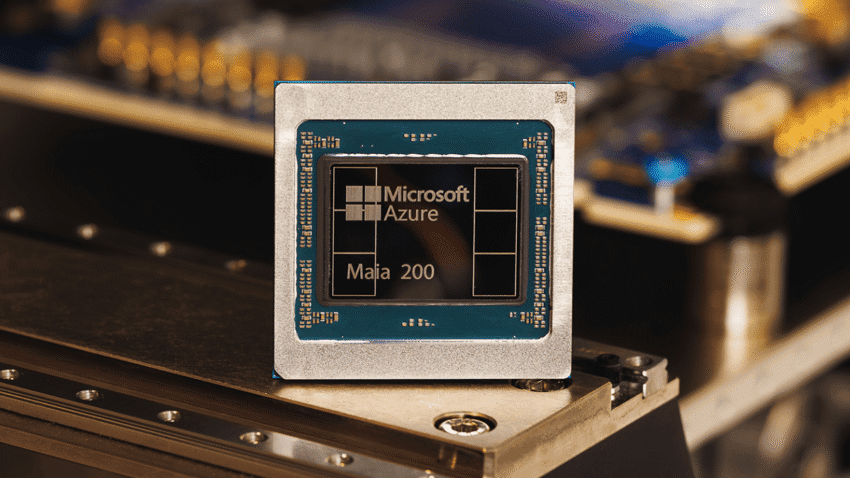
microsoft announces powerful new chip for ai Microsoft has unveiled a groundbreaking new chip designed specifically for artificial intelligence (AI) inference, marking a significant advancement in the field of AI hardware.
microsoft announces powerful new chip for ai
Introduction to Maia
The newly announced chip, named Maia, is engineered to handle the increasing demands of AI applications. With over 100 billion transistors, Maia is a powerhouse of computational capability. It delivers over 10 petaflops in 4-bit precision and approximately 5 petaflops in 8-bit performance. This represents a substantial leap in performance compared to its predecessor, which is crucial as AI models continue to grow in complexity and size.
Technical Specifications
Maia’s architecture is designed to optimize performance for AI workloads. The chip’s ability to process data at such high speeds is attributed to its advanced transistor technology and efficient design. The following are key specifications that highlight Maia’s capabilities:
- Transistor Count: Over 100 billion transistors, enabling high-density processing.
- Performance Metrics:
- 10 petaflops in 4-bit precision, ideal for deep learning tasks.
- 5 petaflops in 8-bit performance, suitable for a range of AI applications.
- Power Efficiency: Designed to maximize performance while minimizing energy consumption, which is critical for large-scale deployments.
Context and Implications
The introduction of Maia comes at a time when the demand for AI capabilities is surging across various sectors, including healthcare, finance, and autonomous vehicles. Organizations are increasingly relying on AI to drive insights, automate processes, and enhance decision-making. As AI models become more sophisticated, the need for powerful hardware to support these advancements is paramount.
Maia’s enhanced performance metrics suggest that it will be particularly effective in training and running large AI models. This is significant because many current AI applications require substantial computational resources, often leading to bottlenecks in processing speed and efficiency. With Maia, Microsoft aims to address these challenges, providing developers and researchers with the tools needed to push the boundaries of what AI can achieve.
Comparison with Previous Generations
To understand the impact of Maia, it is essential to compare it with its predecessor. The previous chip, while capable, did not offer the same level of performance or efficiency. The advancements in Maia can be summarized as follows:
- Increased Transistor Count: Maia’s 100 billion transistors represent a significant increase over previous generations, allowing for more complex computations.
- Enhanced Performance: The jump from previous performance metrics to 10 petaflops in 4-bit precision is a game-changer for AI workloads.
- Improved Power Efficiency: Maia’s design focuses on reducing energy consumption while maximizing output, addressing one of the critical challenges in AI hardware.
Market Reactions
The announcement of Maia has garnered attention from various stakeholders in the tech industry. Analysts and industry experts have expressed optimism about the chip’s potential to reshape the landscape of AI hardware. Some key reactions include:
- Industry Analysts: Many analysts believe that Maia could set a new standard for AI inference chips, particularly in cloud computing and enterprise applications.
- Developers: Software developers are excited about the possibilities that Maia opens up for building more advanced AI applications, particularly in natural language processing and computer vision.
- Competitors: Other tech companies are likely to respond to Maia’s capabilities, potentially leading to a new wave of innovation in AI hardware.
Strategic Importance for Microsoft
For Microsoft, the launch of Maia is not just about technological advancement; it is also a strategic move to solidify its position in the AI market. The company has been investing heavily in AI research and development, and Maia represents a culmination of these efforts. By offering a powerful chip tailored for AI inference, Microsoft aims to enhance its Azure cloud services, making them more attractive to businesses looking to leverage AI technologies.
Furthermore, Maia aligns with Microsoft’s broader vision of democratizing AI. By providing developers with access to cutting-edge hardware, Microsoft is empowering a new generation of innovators to create solutions that can benefit society at large. This is particularly relevant in areas such as healthcare, where AI has the potential to revolutionize diagnostics and treatment options.
Future Prospects
The introduction of Maia raises several questions about the future of AI hardware and its applications. As AI continues to evolve, the demand for specialized chips like Maia is expected to grow. Some potential future developments include:
- Increased Adoption of AI: As businesses recognize the value of AI, the demand for powerful hardware will likely increase, leading to more investments in chips like Maia.
- Advancements in AI Models: With more powerful chips, researchers may develop even more complex AI models, pushing the boundaries of what is possible.
- Competitive Landscape: As other companies respond to Maia’s capabilities, the competition in AI hardware is expected to intensify, leading to rapid advancements in technology.
Conclusion
Microsoft’s announcement of the Maia chip marks a significant milestone in the evolution of AI hardware. With its impressive specifications and performance metrics, Maia is poised to address the growing demands of AI applications across various sectors. As organizations increasingly rely on AI to drive innovation and efficiency, the introduction of powerful chips like Maia will play a crucial role in shaping the future of technology.
As we look ahead, it will be interesting to observe how Maia influences the development of AI applications and the competitive landscape of AI hardware. The potential for increased adoption and advancements in AI models suggests that we are on the brink of a new era in artificial intelligence, driven by powerful hardware solutions.
Source: Original report
Was this helpful?
Last Modified: January 27, 2026 at 12:00 am
0 views