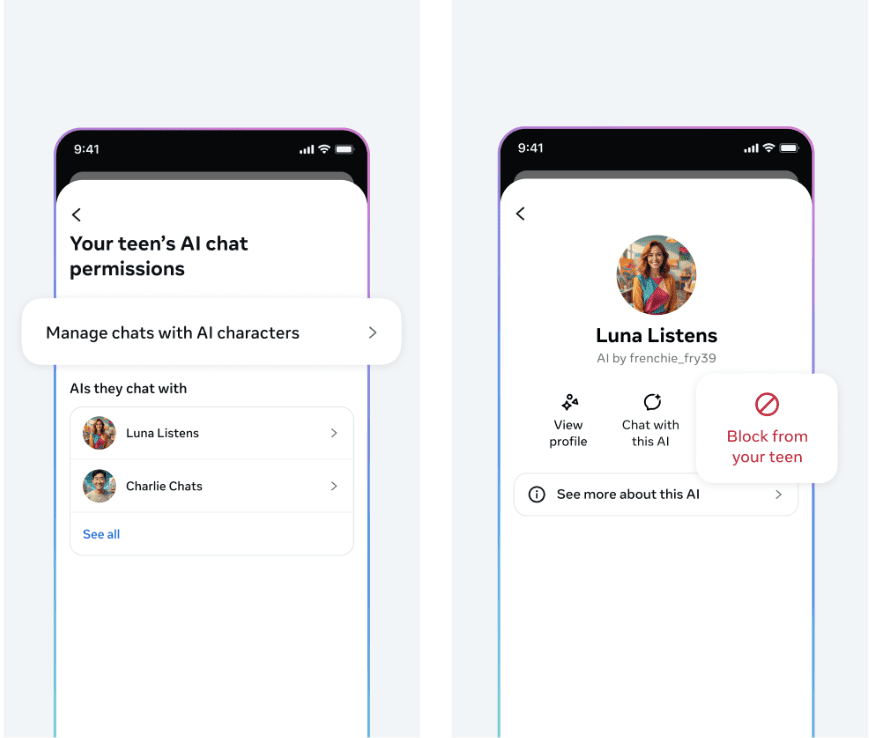
meta previews new parental controls for its Meta has announced new parental control features aimed at enhancing the safety of teens interacting with AI characters on its platforms.
meta previews new parental controls for its
Overview of New Parental Controls
On Friday, Meta previewed a suite of parental control features designed to give parents greater oversight of their teenagers’ interactions with AI characters across its platforms. This initiative is part of Meta’s broader commitment to ensuring a safer online environment for younger users, particularly as AI technologies become increasingly integrated into social media and digital communication.
The new features are set to be rolled out in 2026 and will include several key functionalities. Parents will have the ability to block specific AI characters from interacting with their teens, as well as monitor the topics of conversation that occur between their children and these AI entities. This move comes amid growing concerns about the impact of AI on youth, particularly regarding issues such as privacy, safety, and the potential for harmful content.
Key Features of the Parental Controls
Blocking AI Characters
One of the standout features of the upcoming parental controls is the ability for parents to block certain AI characters. This functionality allows parents to curate the digital experiences of their children by restricting access to characters that may not align with their values or that they deem inappropriate. This feature is particularly important in light of the diverse range of AI characters that can engage with users, some of which may present content that is not suitable for younger audiences.
Monitoring Conversation Topics
In addition to blocking characters, parents will also be able to monitor the topics of conversation that their teens have with AI characters. This feature aims to provide parents with insights into the types of interactions their children are having, allowing them to engage in meaningful discussions about online safety and the content their teens are exposed to. By understanding these conversations, parents can better guide their children in navigating the complexities of digital communication.
Disabling AI Chats
Starting in the coming months, parents will have the option to disable chats with AI characters entirely. This feature is particularly significant for parents who may feel that their children are not yet ready to engage with AI or who wish to limit screen time. By providing this level of control, Meta is acknowledging the varying comfort levels that parents have regarding their children’s interactions with technology.
Context and Implications
The introduction of these parental controls comes at a time when the conversation around digital safety for children is more critical than ever. With the rise of AI technologies, concerns about the potential for exposure to inappropriate content and the impact of these interactions on mental health have been at the forefront of discussions among parents, educators, and policymakers.
Meta’s decision to implement these features reflects an understanding of the responsibility that comes with providing platforms for young users. By allowing parents to have a say in their children’s interactions with AI, Meta is taking a proactive approach to address these concerns. This move may also help to alleviate some of the apprehensions parents have regarding the influence of AI on their children’s development and socialization.
Stakeholder Reactions
The announcement of these parental controls has garnered a range of reactions from stakeholders across various sectors. Parents have largely welcomed the initiative, viewing it as a necessary step toward ensuring their children’s safety online. Many parents express a desire for more tools to help them navigate the complexities of digital parenting, particularly in an age where technology is rapidly evolving.
Child psychologists and educators have also weighed in on the implications of AI interactions for young users. Some experts argue that while AI can provide valuable educational opportunities, it is essential to monitor and guide these interactions to prevent potential negative consequences. The ability to block characters and monitor conversations is seen as a positive development in this regard, as it allows for a more controlled and supportive environment for children.
Challenges Ahead
Despite the positive reception, there are challenges that Meta may face as it rolls out these parental controls. One significant concern is the balance between providing safety features and ensuring user privacy. As parents gain more oversight, it will be crucial for Meta to implement these features in a way that respects the privacy of both parents and children. Transparency about how data is collected and used will be essential to maintain trust among users.
Another challenge is the potential for overreach. While many parents may appreciate the ability to monitor and control their children’s interactions, there is a fine line between guidance and intrusion. Meta will need to provide clear communication about the purpose and limitations of these controls to avoid creating a sense of surveillance that could strain parent-child relationships.
Future Developments
Looking ahead, the introduction of these parental controls may pave the way for further innovations in digital safety features. As AI technology continues to evolve, Meta and other tech companies may need to adapt their approaches to ensure that they are meeting the needs of both parents and young users. This could include ongoing updates to parental control features based on user feedback and emerging trends in digital communication.
Moreover, the success of these parental controls could influence industry standards for safety features across various platforms. If Meta’s approach proves effective in enhancing the safety of AI interactions for teens, other companies may follow suit, leading to a broader movement toward responsible AI usage in social media and digital communication.
Conclusion
Meta’s preview of new parental controls for AI interactions represents a significant step in addressing the concerns of parents regarding their children’s online safety. With features that allow for blocking characters, monitoring conversations, and disabling chats, the company is taking proactive measures to create a safer digital environment for teens. As the rollout approaches, the reactions from stakeholders and the challenges that lie ahead will be crucial in shaping the future of AI interactions on social media platforms.
Source: Original report
Was this helpful?
Last Modified: October 17, 2025 at 3:36 pm
5 views