meta is adding more parental controls for Meta has announced new parental controls aimed at managing teen interactions with AI chatbots on Instagram, reflecting the company’s response to growing concerns about the safety and appropriateness of these digital interactions.
meta is adding more parental controls for
Background on Meta’s AI Initiatives
In recent years, Meta has aggressively integrated AI chatbots into its platforms, including Facebook, Instagram, and WhatsApp. The deployment of these chatbots was initially met with enthusiasm, as they promised to enhance user engagement and provide personalized experiences. However, the excitement has been tempered by reports highlighting troubling interactions between AI chatbots and minors. These incidents have raised alarms among parents, educators, and child safety advocates, prompting calls for greater oversight and control.
Meta’s decision to introduce parental controls is a direct response to these concerns. The company aims to rehabilitate its image and reassure users that it is taking the safety of young users seriously. The new features are designed to give parents more authority over their children’s interactions with AI, allowing them to set limits and monitor usage.
New Parental Controls Overview
On Friday, Instagram lead Adam Mosseri and Meta’s chief AI officer Alexandr Wang detailed the new parental controls in a blog post. These controls are designed to empower parents by providing them with tools to manage their children’s engagement with AI chatbots. The key features of the new controls include:
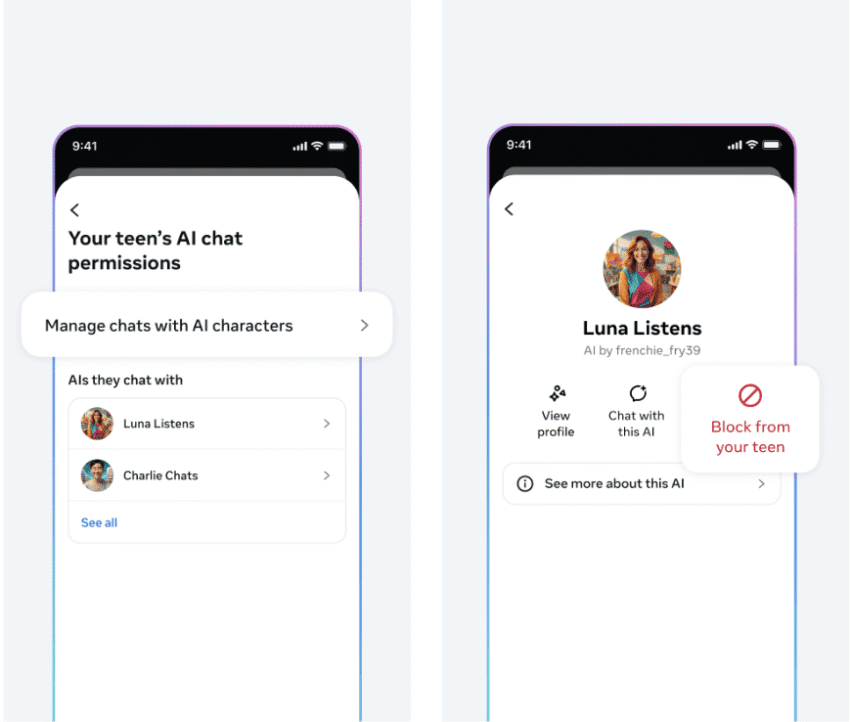
- Complete Blockage of AI Chatbots: Parents will have the option to completely prevent their children from interacting with AI chatbots. This feature allows parents to take a proactive stance if they feel uncomfortable with the idea of their teens engaging with AI.
- Selective Blocking: In addition to the complete blockage, parents can also block access to specific AI characters that they deem inappropriate or concerning. This selective approach allows for more nuanced control over the types of interactions their children can have.
- Insights into AI Interactions: Meta has promised to provide parents with some form of insight into their children’s interactions with AI. While details on this feature remain vague, it is expected to include a high-level summary of the topics teens are discussing with AI characters and Meta’s AI assistant.
Meta’s AI Assistant Exception
Interestingly, Meta’s AI assistant will not be subject to the same restrictions as other AI chatbots. The company has stated that the assistant will remain available to provide helpful information and educational opportunities, with age-appropriate protections in place. This distinction raises questions about the nature of the interactions that the AI assistant will facilitate and how it will differ from other chatbots.
Implications for Parents and Teens
The introduction of these parental controls is significant for several reasons. First and foremost, it acknowledges the concerns that parents have regarding their children’s online safety. By providing tools for monitoring and limiting interactions, Meta is taking a step toward fostering a safer digital environment for young users.
Moreover, the insights feature aims to facilitate conversations between parents and teens about AI interactions. By understanding the topics their children are discussing with AI, parents can engage in meaningful dialogues about technology, privacy, and the implications of AI in everyday life. This proactive approach could help bridge the generational gap in understanding technology and its impact.
Concerns About AI Interactions
Despite these new controls, concerns remain about the nature of AI interactions and their potential effects on young users. Critics argue that while parental controls are a step in the right direction, they may not fully address the underlying issues associated with AI chatbots. For instance, the emotional and psychological impact of interacting with AI characters, especially those designed to mimic human behavior, is still not fully understood.
There are also questions about the effectiveness of the insights feature. If the summaries provided to parents are too vague or not actionable, they may not lead to the meaningful conversations that Meta hopes to encourage. Parents may need more detailed information to understand the context of their children’s interactions fully.
Future Developments and Expansion Plans
Meta has indicated that these parental controls will initially be available only on Instagram and will be limited to English-speaking users in the United States, the United Kingdom, Canada, and Australia. The company plans to expand these features across its platforms in the future, which could include Facebook and WhatsApp. However, the timeline for this expansion remains unclear.
As Meta continues to roll out these features, it will be essential to monitor their effectiveness and gather feedback from users. The company has stated that it will have more updates to share soon, indicating that it is committed to refining its approach to AI safety.
Stakeholder Reactions
The announcement of new parental controls has elicited a range of reactions from stakeholders. Parents, in particular, have expressed cautious optimism about the changes. Many appreciate the acknowledgment of their concerns and the provision of tools to help manage their children’s online experiences. However, some parents remain skeptical about the effectiveness of these controls and whether they will be sufficient to protect their children from potential harm.
Child safety advocates have also weighed in, emphasizing the need for ongoing vigilance and education regarding AI interactions. While they welcome the introduction of parental controls, they argue that more comprehensive measures are necessary to ensure the safety of minors in digital spaces. This includes not only monitoring tools but also educational resources for both parents and children about the implications of AI technology.
Conclusion
Meta’s introduction of parental controls for teen interactions with AI chatbots marks a significant step in addressing the growing concerns surrounding the safety of young users in digital environments. By providing parents with tools to manage and monitor their children’s interactions, Meta aims to foster a safer online experience. However, the effectiveness of these controls and the insights feature will ultimately determine their impact on parent-teen conversations about technology.
As Meta continues to navigate the complexities of AI integration and user safety, it will be crucial for the company to remain transparent and responsive to feedback from users. The evolving landscape of AI technology presents both opportunities and challenges, and how Meta addresses these issues will shape its reputation and relationship with users in the future.
Source: Original report
Was this helpful?
Last Modified: October 17, 2025 at 3:35 pm
3 views