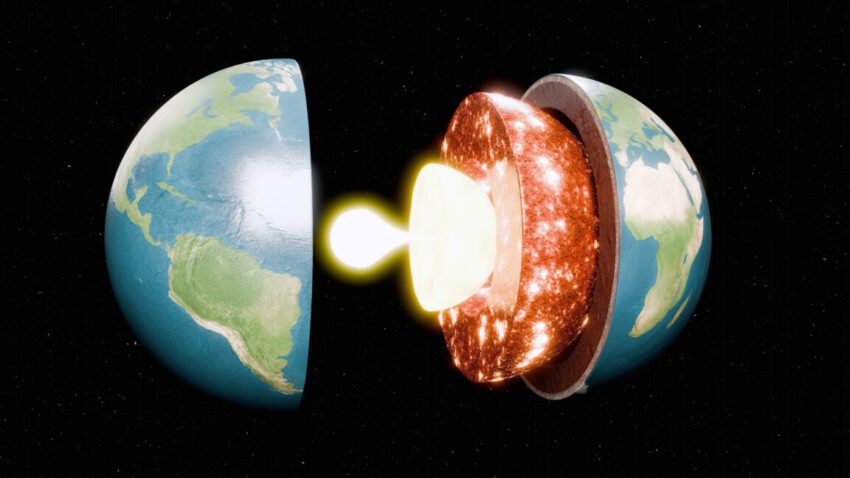
meet the mysterious electrides Recent research suggests that Earth’s lighter elements may be hidden deep within its solid inner core, presenting a new understanding of the planet’s composition.
meet the mysterious electrides
The Mystery of Earth’s Missing Elements
For nearly a century, geoscientists have grappled with a perplexing question: where have Earth’s lighter elements gone? When comparing the elemental composition of Earth to that of the Sun and certain meteorites, a striking disparity emerges. Earth is notably deficient in hydrogen, carbon, nitrogen, sulfur, and noble gases such as helium. In some instances, the planet has been found to contain more than 99 percent less of these elements than what is observed in the Sun and meteorites.
This discrepancy has led scientists to explore various theories regarding the origins and fate of these lighter elements. Some of the loss can be attributed to the processes that occurred during the formation of the solar system. As Earth coalesced from the primordial dust and gas surrounding the young Sun, it is believed that significant amounts of these lighter elements escaped into space. However, this explanation alone does not account for the substantial deficits observed.
Unveiling the Electride Hypothesis
In a groundbreaking study, a team of researchers has proposed a new theory that could shed light on the missing elements. Their research suggests that these lighter elements may be sequestered deep within the solid inner core of Earth. This hypothesis hinges on the unique conditions present in the inner core, where pressures reach an astonishing 360 gigapascals, equivalent to 3.6 million times the atmospheric pressure at sea level.
The Role of Pressure in Element Behavior
Under such extreme pressure, iron, which constitutes a significant portion of Earth’s inner core, exhibits unusual behavior. The researchers have identified a phenomenon where iron transitions into a state known as an electride. Electrically, an electride is a form of metal that possesses trapped electrons, which can interact with lighter elements, effectively “sucking them up.” This behavior raises intriguing questions about the nature of the inner core and its role in the planet’s overall composition.
Understanding Electrides
Electrides are relatively rare and not well understood compared to other forms of matter. They are characterized by the presence of trapped electrons that can behave like anions, or negatively charged ions. This unique property allows electrides to interact with other elements in ways that conventional metals cannot. The implications of this behavior are significant, particularly in the context of Earth’s inner core.
Formation of Electrides
The formation of electrides typically occurs under extreme conditions, such as high pressure and low temperature. In the case of Earth’s inner core, the combination of immense pressure and the metallic nature of iron creates an environment conducive to the formation of electrides. The researchers suggest that as the inner core solidified, lighter elements may have been incorporated into the structure of the iron, becoming trapped within the electride matrix.
Implications for Earth’s Composition
If the electride hypothesis holds true, it would have profound implications for our understanding of Earth’s composition and the processes that shaped it. The presence of lighter elements within the inner core could help explain the observed deficiencies in these elements on the planet’s surface. Furthermore, it could provide insights into the thermal and chemical evolution of Earth over geological timescales.
Geophysical Models and Predictions
Geophysical models of Earth’s interior have long relied on assumptions about the distribution of elements. The discovery of electrides could necessitate a reevaluation of these models. Researchers may need to incorporate the presence of trapped lighter elements in their simulations to more accurately reflect the conditions within the inner core. This could lead to a better understanding of seismic activity, heat flow, and the dynamics of Earth’s magnetic field.
Challenges and Future Research
Despite the promising nature of this research, several challenges remain. The study of electrides is still in its infancy, and much is yet to be understood about their properties and behavior. Further experimental and computational studies will be necessary to validate the electride hypothesis and explore its implications for Earth’s composition.
Experimental Techniques
To investigate the presence of electrides within the inner core, researchers may employ advanced experimental techniques, such as high-pressure experiments using diamond anvil cells. These devices can replicate the extreme conditions found in the Earth’s interior, allowing scientists to observe the behavior of iron and other elements under similar pressures and temperatures.
Broader Context: The Importance of Elemental Composition
The elemental composition of Earth is not just a matter of academic interest; it has far-reaching implications for our understanding of planetary formation and evolution. The distribution of elements influences everything from geological processes to the development of life. Understanding where Earth’s lighter elements have gone could provide crucial insights into the planet’s history and its potential for supporting life.
Comparative Planetology
Comparing Earth’s elemental composition with that of other celestial bodies can also yield valuable information. For instance, studying the atmospheres of exoplanets and the compositions of other planets in our solar system can help scientists understand the processes that govern planetary formation. Insights gained from Earth’s missing elements could inform models of how other planets evolve and what conditions are necessary for life to emerge.
Stakeholder Reactions
The scientific community has responded with interest to the findings regarding electrides and Earth’s missing elements. Many geoscientists view this research as a significant step forward in understanding the complexities of Earth’s interior. The potential implications for geophysical models and our understanding of planetary formation have sparked discussions about future research directions.
Collaboration Across Disciplines
As the study of electrides continues to evolve, collaboration across various scientific disciplines will be essential. Geologists, physicists, and chemists will need to work together to unravel the complexities of Earth’s inner core and its elemental composition. This interdisciplinary approach could lead to new discoveries and a more comprehensive understanding of the planet we inhabit.
Conclusion
The mystery of Earth’s missing lighter elements has intrigued scientists for decades, and the recent proposal of the electride hypothesis offers a compelling explanation. By suggesting that these elements may be trapped within the solid inner core, researchers have opened a new avenue for exploration. As further studies are conducted, the implications for our understanding of Earth’s composition, geological processes, and planetary evolution will become clearer. The journey to unravel the secrets of the Earth’s inner core is just beginning, and it promises to be a fascinating endeavor for scientists in the years to come.
Source: Original report
Was this helpful?
Last Modified: January 28, 2026 at 1:43 am
0 views