man sues cops who jailed him for A former police officer is suing law enforcement officials after being jailed for 37 days over a controversial social media post that criticized the attention given to a vigil for conservative commentator Charlie Kirk.
man sues cops who jailed him for
Background of the Case
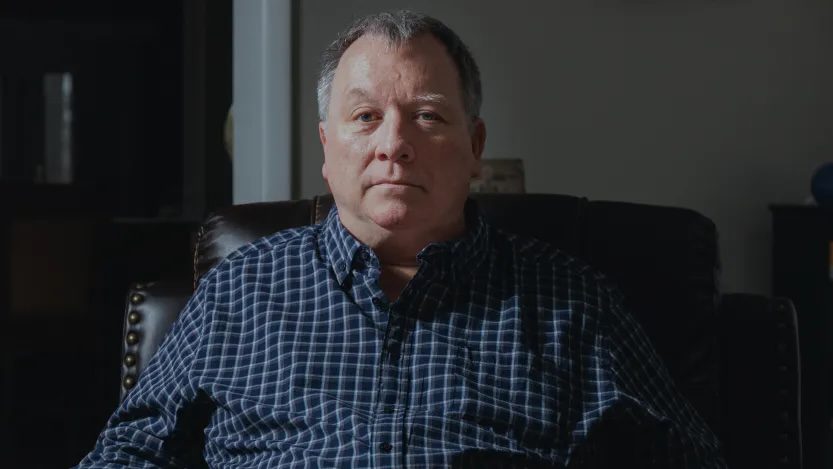
Larry Bushart, a former police officer, found himself embroiled in a legal battle after being arrested for allegedly inciting panic through a Facebook post. The incident began when Bushart expressed his discontent regarding the media coverage of Charlie Kirk’s vigil, which he felt overshadowed other victims of gun violence. In a Facebook group, he shared a series of memes, including one featuring former President Donald Trump with a quote that read, “We have to get over it,” in reference to a past school shooting.
This post, which Bushart intended as a critique of societal reactions to gun violence, quickly drew the ire of local law enforcement. The Perry County Sheriff, Nick Weems, claimed that Bushart’s meme incited “mass hysteria” among parents who believed it threatened violence at a local high school. The sheriff’s assertion was that Bushart’s post was not merely a meme but a potential incitement to violence, leading to his arrest.
The Arrest and Detention
Bushart’s arrest occurred in a climate where tensions surrounding gun violence and public safety were already heightened. The sheriff’s department, under Weems, took a hard stance against what they perceived as a threat to community safety. Despite the lack of evidence that Bushart’s post was intended to incite violence, he was held on a $2 million bond, an amount that effectively ensured he could not afford bail. This bond amount raised questions about the motivations behind his detention, particularly given the context of his arrest.
During his time in jail, Bushart faced not only the psychological toll of being incarcerated but also the ramifications of losing his post-retirement job. The arrest, which many viewed as a politically motivated act of retribution, led to significant personal and professional consequences for him. Bushart’s situation highlights the potential for misuse of authority in law enforcement, especially when political beliefs come into play.
Community Reaction
The community’s response to Bushart’s arrest was mixed. Some residents expressed concern over the implications of his detention, viewing it as an infringement on free speech. Others, however, supported the sheriff’s actions, believing that any perceived threat to public safety should be taken seriously. This division reflects broader societal debates about the balance between free expression and the need for community safety, particularly in an era where social media can amplify messages rapidly and widely.
Legal Implications of the Case
Bushart’s lawsuit against the Perry County Sheriff’s Department raises significant legal questions regarding the First Amendment and the limits of free speech. His legal team argues that his arrest was not only unwarranted but also a violation of his constitutional rights. The case could set a precedent for how law enforcement handles social media posts that may be deemed controversial or inflammatory.
Legal experts suggest that the outcome of this case could have far-reaching implications for individuals expressing dissenting opinions online. If the court finds in favor of Bushart, it may reinforce the notion that individuals cannot be punished for their speech, even if it is provocative or unpopular. Conversely, if the court sides with the sheriff’s department, it could embolden law enforcement agencies to take similar actions against individuals whose online expressions they deem threatening.
First Amendment Considerations
The First Amendment protects individuals from government actions that infringe upon their right to free speech. However, the legal landscape surrounding online speech is complex, particularly when it intersects with issues of public safety. Courts have historically upheld the right to free speech, but they have also recognized exceptions for speech that incites violence or poses a direct threat to public safety.
In Bushart’s case, the sheriff’s department argued that his post incited panic and fear among parents, thus justifying his arrest. However, critics argue that the sheriff’s interpretation of the post was overly broad and failed to recognize the nuances of satire and critique in political discourse. This case could challenge the boundaries of what constitutes incitement versus protected speech, making it a significant legal battle for both sides.
Political Context and Implications
The incident surrounding Bushart’s arrest cannot be viewed in isolation; it is part of a larger political context where social media has become a battleground for ideological conflicts. The polarization of American society has led to heightened sensitivities around speech, particularly when it involves figures like Charlie Kirk, who is a polarizing figure in contemporary political discourse.
Bushart’s decision to post a meme criticizing the attention given to Kirk’s vigil reflects a broader frustration among some individuals regarding how certain narratives dominate public discourse. His arrest raises questions about the extent to which law enforcement can intervene in political expression, especially when that expression challenges prevailing narratives.
Implications for Law Enforcement
This case also has implications for law enforcement agencies and their relationship with the communities they serve. The perception that police can act on personal or political biases raises concerns about accountability and transparency within law enforcement. If officers are perceived as using their authority to silence dissenting opinions, it could erode trust between the community and the police.
Moreover, the case underscores the need for law enforcement agencies to develop clear guidelines regarding the handling of social media posts. As more individuals turn to platforms like Facebook and Twitter to express their opinions, law enforcement must navigate the delicate balance between maintaining public safety and respecting constitutional rights.
Conclusion
Larry Bushart’s lawsuit against the Perry County Sheriff’s Department serves as a critical examination of the intersection between free speech, law enforcement, and political expression. As the case unfolds, it will likely draw attention not only from legal experts but also from civil rights advocates and the general public. The implications of the court’s decision could resonate far beyond Perry County, shaping the future of how social media is policed and how individuals engage in political discourse.
As society grapples with the complexities of online communication and the responsibilities that come with it, Bushart’s case will serve as a litmus test for the protection of free speech in an increasingly polarized environment. The outcome may ultimately influence how individuals express their opinions online and how law enforcement responds to those expressions in the future.
Source: Original report
Was this helpful?
Last Modified: December 18, 2025 at 9:38 am
12 views