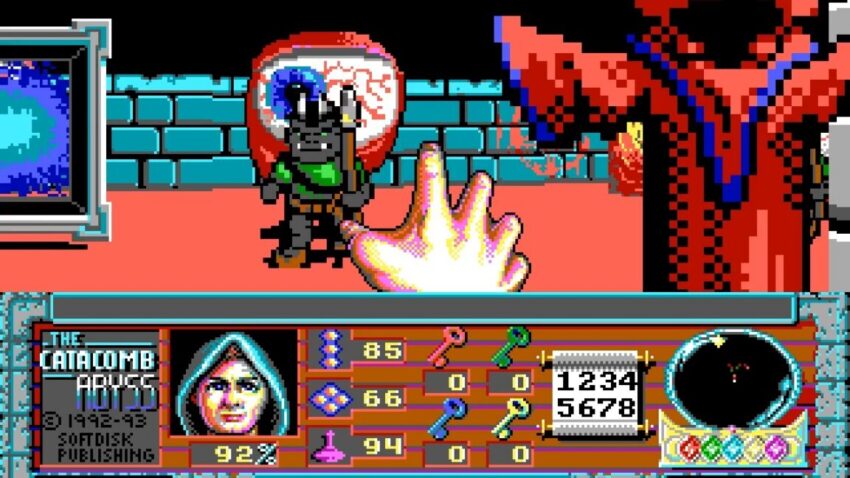
looking back at catacomb 3d the game Nearly 35 years after its release, Catacomb 3D, a pioneering title from id Software, is being revisited by its creators, shedding light on its significant yet often overlooked role in the evolution of first-person shooters.
looking back at catacomb 3d the game
Introduction to Catacomb 3D
Catacomb 3D, released in 1991, was id Software’s first foray into the realm of first-person adventure games. While many gamers recognize Wolfenstein 3D as the title that established id Software’s dominance in the first-person shooter genre, Catacomb 3D laid the groundwork for this success. It introduced several innovative features that would become staples in future games, including mouse support, color-coded keys, and the ability to shoot walls to uncover hidden secrets.
The Context of Its Creation
To fully appreciate Catacomb 3D, it is essential to understand the gaming landscape of the early 1990s. The gaming industry was in a state of transition, moving from 2D graphics to 3D environments. At the time, id Software was still a relatively small company, having gained some recognition through their earlier title, Catacomb, which was a simplified clone of the popular arcade game Gauntlet. This earlier game had a “quarter eater” mentality, which was not particularly fashionable in the PC gaming community.
John Carmack, one of the co-founders of id Software, reflected on this period, noting that the gaming community was not yet ready for the shift to 3D. However, the team at id Software was determined to push the boundaries of what was possible in gaming. Catacomb 3D was born out of this ambition, aiming to create a more immersive experience that would captivate players.
Innovative Features of Catacomb 3D
Catacomb 3D introduced several groundbreaking features that would influence the design of future first-person shooters. Some of these innovations included:
- Mouse Support: This was a significant advancement, allowing players to navigate the game world more intuitively. The introduction of mouse controls set a precedent for future games, making them more accessible and enjoyable.
- Color-Coded Keys: The use of color-coded keys to unlock doors added a layer of complexity to the gameplay. This feature encouraged exploration and problem-solving, as players needed to find the correct keys to progress through the game.
- Shooting Walls for Secrets: The ability to shoot walls to reveal hidden areas was a novel concept that added depth to the gameplay. Players were incentivized to experiment with their environment, leading to a more engaging experience.
The Visuals and Gameplay Mechanics
Visually, Catacomb 3D was a significant step forward from its predecessors. The game’s graphics utilized texture mapping, which provided a more realistic and immersive environment. This was a notable achievement for the time, as many games still relied on simple sprites and flat images.
The gameplay mechanics also contributed to the game’s appeal. Players navigated through a series of dungeons, battling various enemies while solving puzzles to progress. The combination of action and exploration set Catacomb 3D apart from other titles of the era, making it a unique experience for players.
The Legacy of Catacomb 3D
Despite its innovative features and contributions to the gaming landscape, Catacomb 3D did not achieve the same level of commercial success as its successor, Wolfenstein 3D. However, its impact on the industry cannot be overstated. The game served as a testing ground for ideas and mechanics that would later be refined and popularized in subsequent titles.
Transition to Wolfenstein 3D
Following the release of Catacomb 3D, id Software shifted its focus to developing Wolfenstein 3D. The lessons learned from Catacomb 3D were instrumental in shaping the design and mechanics of this groundbreaking title. Wolfenstein 3D would go on to revolutionize the first-person shooter genre, establishing many conventions that are still in use today.
Wolfenstein 3D introduced players to a more structured level design, featuring a series of interconnected rooms and corridors. The game’s fast-paced action, combined with its immersive environments, captivated players and set a new standard for first-person shooters. The success of Wolfenstein 3D propelled id Software into the spotlight, leading to subsequent hits like Doom and Quake.
Reflections from the Creators
In a recent retrospective video, John Romero, co-founder of id Software, gathered the founding members to reflect on the creation of Catacomb 3D. The discussion highlighted the challenges they faced during development and the innovative spirit that drove them to push the boundaries of gaming.
Romero emphasized the importance of Catacomb 3D in the company’s history, noting that it was a crucial stepping stone that paved the way for future successes. The team acknowledged that while Catacomb 3D may not have received the recognition it deserved at the time, its influence is still felt in the gaming industry today.
Challenges and Setbacks
Despite its innovative features, Catacomb 3D faced several challenges during its development. The team struggled with the limitations of hardware at the time, which made it difficult to achieve the level of detail they envisioned. Additionally, the gaming community was still adjusting to the concept of 3D gaming, leading to skepticism about the game’s potential success.
There were concerns that Catacomb 3D could become a gimmicky dead end for the company. However, the team’s commitment to innovation and their willingness to take risks ultimately paid off. The success of Wolfenstein 3D proved that their efforts were not in vain, and Catacomb 3D’s legacy would endure as a testament to their pioneering spirit.
The Broader Impact on the Gaming Industry
The legacy of Catacomb 3D extends beyond its immediate influence on id Software. The game played a role in shaping the trajectory of the first-person shooter genre as a whole. Its innovative features and gameplay mechanics inspired countless developers, leading to the creation of a diverse array of titles that pushed the boundaries of what was possible in gaming.
As the gaming industry evolved, the principles established in Catacomb 3D continued to resonate. The use of 3D environments, immersive gameplay, and engaging mechanics became hallmarks of successful titles. The game’s impact can be seen in the development of franchises such as Halo, Call of Duty, and many others that have defined the genre in the years since.
Conclusion
Catacomb 3D may not have achieved the same level of fame as its successor, but its contributions to the gaming industry are undeniable. As id Software’s first foray into the world of 3D gaming, it laid the groundwork for the innovations that would follow. The retrospective by John Romero and his team serves as a reminder of the importance of this oft-forgotten title in the history of gaming.
As we look back on the evolution of first-person shooters, it is essential to acknowledge the pioneering efforts of Catacomb 3D. Its legacy lives on in the games we play today, and its influence will continue to shape the future of the industry.
Source: Original report
Was this helpful?
Last Modified: February 3, 2026 at 8:40 pm
0 views