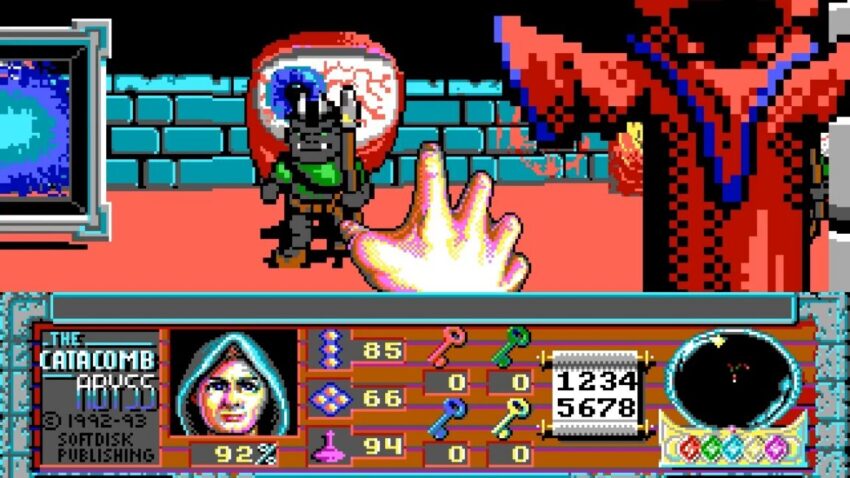
looking back at catacomb 3d the game Nearly 35 years after its release, Catacomb 3D remains a pivotal yet often overlooked title in the history of video games, serving as a crucial stepping stone toward the development of the iconic Wolfenstein 3D.
looking back at catacomb 3d the game
The Genesis of Catacomb 3D
In the early 1990s, the gaming landscape was rapidly evolving, with the rise of personal computers offering new possibilities for game design. id Software, founded by John Carmack and John Romero, was at the forefront of this transformation. Their earlier title, Catacomb, had already made waves as a simplified clone of the popular arcade game Gauntlet. However, it was Catacomb 3D that would set the stage for the first-person shooter genre as we know it today.
Released in 1991, Catacomb 3D was groundbreaking for its time. It introduced several features that would later become staples in the first-person shooter genre. For instance, it was one of the first games to incorporate mouse support, allowing players to navigate the 3D environment with greater precision. This was a significant advancement, as most games at the time relied on keyboard controls, limiting player movement and interaction.
Innovative Features and Gameplay Mechanics
Catacomb 3D was not just a technical achievement; it also introduced innovative gameplay mechanics that would influence future titles. One notable feature was the use of color-coded keys, which players needed to collect to unlock different areas of the game. This mechanic added a layer of strategy, encouraging exploration and problem-solving.
Another significant aspect was the ability to shoot walls to uncover hidden secrets. This mechanic not only enhanced the gameplay experience but also laid the groundwork for the secret levels and hidden items that would become a hallmark of future id Software games.
The Development Journey
Despite its innovative features, the development of Catacomb 3D was not without challenges. John Romero, one of the co-founders of id Software, recently gathered the founding members for a retrospective video discussing the game’s creation. During this discussion, Romero highlighted the initial skepticism surrounding the game’s potential. Many in the industry viewed it as a gimmick, and there were concerns that it could lead to a dead end for the company.
John Carmack, another co-founder, recalled the prevailing attitudes in the gaming community at the time. The “quarter eater” mentality, which emphasized arcade-style gameplay, was not particularly fashionable in the PC gaming market. However, the team at id Software believed in the potential of 3D graphics and immersive gameplay, and they were determined to push the boundaries of what was possible.
Technical Innovations
One of the most significant technical innovations introduced in Catacomb 3D was the use of texture mapping. This technique allowed for more realistic environments, enhancing the overall visual experience. The game’s graphics were a leap forward from its predecessors, and this focus on visual fidelity would become a hallmark of id Software’s future projects.
Moreover, the “undo” animation feature allowed players to reverse their actions, adding a layer of complexity to gameplay. This was particularly useful in a 3D environment where spatial awareness was crucial. Players could experiment with different strategies without the fear of making irreversible mistakes.
Legacy and Impact on the Genre
While Catacomb 3D may not have achieved the same level of commercial success as its successor, Wolfenstein 3D, its impact on the gaming industry is undeniable. The game laid the groundwork for the first-person shooter genre, influencing not only id Software’s future titles but also the broader gaming landscape.
Wolfenstein 3D, released in 1992, built upon the innovations introduced in Catacomb 3D. It expanded the gameplay mechanics and refined the graphics, ultimately becoming a defining title in the genre. The success of Wolfenstein 3D paved the way for subsequent hits like Doom and Quake, solidifying id Software’s position as a leader in the gaming industry.
Community and Cultural Relevance
Despite its initial obscurity, Catacomb 3D has garnered a cult following over the years. Retro gaming enthusiasts and historians recognize its significance in the evolution of video games. The game is often cited in discussions about the early days of 3D gaming and the development of first-person shooters.
In recent years, the gaming community has seen a resurgence of interest in retro titles, with many players revisiting classic games to understand their historical context. Catacomb 3D, with its unique blend of innovation and nostalgia, has found its place in this revival.
Reflections from the Founders
During the retrospective video, the founders of id Software reflected on their experiences working on Catacomb 3D. They expressed a sense of pride in their accomplishments, acknowledging the risks they took in developing a game that was ahead of its time. John Romero emphasized the importance of innovation in game design, stating that Catacomb 3D was a crucial step in their journey toward creating iconic titles.
John Carmack also shared insights into the technical challenges they faced during development. He noted that the limitations of hardware at the time forced them to be creative in their approach to game design. This spirit of innovation and experimentation would become a defining characteristic of id Software’s future projects.
Looking Ahead
As the gaming industry continues to evolve, the lessons learned from Catacomb 3D remain relevant. The importance of innovation, creativity, and pushing the boundaries of technology is as crucial today as it was in the early 1990s. The game’s legacy serves as a reminder of the risks and rewards associated with pioneering new ideas in game design.
Furthermore, the retrospective video featuring the founders of id Software highlights the value of reflection in the creative process. By looking back at their early work, they can appreciate the journey they undertook and the impact it had on the gaming industry as a whole.
Conclusion
Catacomb 3D may not have achieved the same level of fame as Wolfenstein 3D, but its contributions to the gaming industry are significant. As a pioneering title in the first-person shooter genre, it introduced innovative gameplay mechanics and technical advancements that would shape the future of video games. The recent retrospective by id Software’s founders serves as a timely reminder of the importance of innovation and creativity in game design, ensuring that Catacomb 3D remains a vital part of gaming history.
Source: Original report
Was this helpful?
Last Modified: February 3, 2026 at 7:36 am
7 views