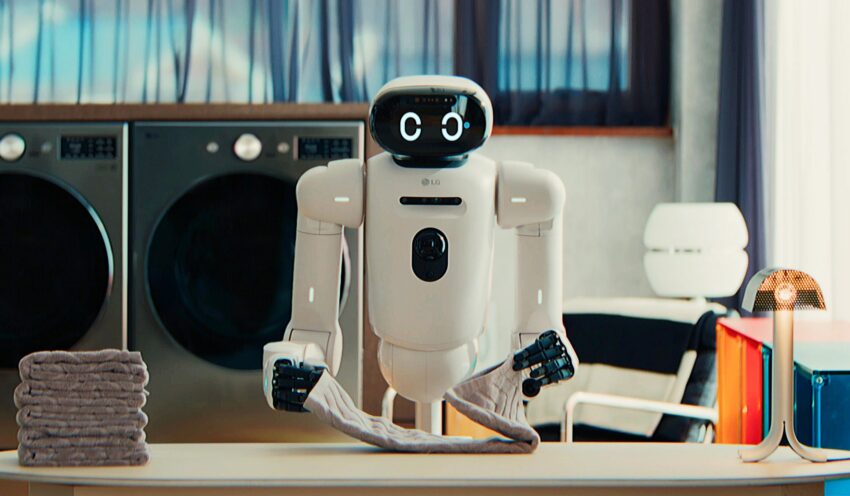
lg says its cloid home robot will LG has unveiled its CLOiD home robot, designed to assist with household chores such as folding laundry and preparing breakfast, at the Consumer Electronics Show (CES).
lg says its cloid home robot will
Overview of CLOiD
At CES, LG introduced its latest innovation, the CLOiD home robot, which aims to revolutionize the concept of a “zero labor home.” This ambitious project is part of a broader trend in home automation, where technology is increasingly integrated into daily life to reduce manual tasks. The CLOiD robot is designed to perform various household chores, including fetching milk from the fridge, placing a croissant in the oven, and handling laundry tasks such as folding and stacking clothes.
Technical Features
One of the standout features of the CLOiD robot is its advanced design, which includes two fully articulated arms equipped with seven degrees of freedom. This level of articulation allows the robot to perform complex movements, making it more capable than many of its competitors. The CLOiD’s arms are engineered to mimic human-like dexterity, enabling it to handle delicate tasks such as folding clothes without damaging them.
Comparison with Competitors
While CLOiD is not the first laundry-folding robot to hit the market, it distinguishes itself from other models, particularly the SwitchBot Onero H1, which is also being showcased at CES. The Onero H1 has a more simplistic design, resembling a modified version of a grocery store robot. In contrast, CLOiD’s sophisticated arm design and functionality suggest a more advanced approach to home robotics.
Implications for Home Automation
The introduction of CLOiD reflects a significant shift in how technology can alleviate everyday burdens. As more households adopt smart devices, the demand for robots capable of performing mundane tasks is likely to grow. CLOiD’s ability to manage multiple chores could pave the way for a new era of home automation, where robots become integral to daily living.
Consumer Expectations
Consumer expectations for home robots are evolving. As technology advances, people are increasingly looking for solutions that not only simplify their lives but also enhance their overall quality of life. CLOiD’s multifunctionality may appeal to busy families, professionals, and anyone seeking to reclaim time spent on household chores.
Challenges Ahead
Despite its impressive features, CLOiD faces several challenges. The integration of such technology into homes requires not only a significant financial investment but also a cultural shift in how people perceive household robots. Concerns about reliability, safety, and privacy will need to be addressed to gain consumer trust.
Market Context
The market for home robotics is becoming increasingly competitive. Companies like LG and SwitchBot are not alone in this space; numerous startups and established tech firms are also exploring the potential of home automation. The growing interest in smart home devices, combined with advancements in artificial intelligence and robotics, is likely to spur innovation in this sector.
Investment and Development
Investment in home robotics is on the rise. Major players in the tech industry are allocating resources to research and development in this area. LG’s commitment to creating a zero labor home aligns with broader trends in automation and artificial intelligence, suggesting that the company is positioning itself as a leader in the home robotics market.
Consumer Adoption Rates
Consumer adoption rates for home robots have been mixed. While some households have embraced smart devices, others remain hesitant due to concerns about cost and practicality. The success of CLOiD will depend on how well it addresses these concerns and how effectively it demonstrates its value to potential users.
Future of Home Robotics
The future of home robotics is promising, with innovations like CLOiD paving the way for more advanced solutions. As technology continues to evolve, we can expect to see robots that are not only capable of performing chores but also learning from their environments and adapting to user preferences.
Potential Developments
Future iterations of home robots may incorporate machine learning algorithms, allowing them to improve their performance over time. This could lead to more personalized experiences, where robots understand individual household routines and preferences, making them even more valuable to users.
Ethical Considerations
As home robotics become more prevalent, ethical considerations will also come to the forefront. Issues such as job displacement, data privacy, and the implications of relying on machines for essential tasks will need to be addressed. Stakeholders, including manufacturers, consumers, and policymakers, will need to engage in discussions about the responsible development and deployment of these technologies.
Stakeholder Reactions
The introduction of CLOiD has elicited a range of reactions from stakeholders in the tech industry and potential consumers. Industry experts have praised LG for its innovative approach, highlighting the robot’s advanced capabilities as a significant step forward in home automation. However, some skeptics question whether consumers will be willing to invest in such technology, particularly given the current economic climate.
Consumer Feedback
Initial consumer feedback has been mixed. While many are excited about the prospect of a robot that can handle household chores, others express concerns about the practicality and reliability of such devices. The success of CLOiD will depend on how well it meets consumer expectations in real-world scenarios.
Industry Expert Opinions
Industry experts believe that CLOiD could set a new standard for home robotics. By combining functionality with advanced technology, LG may have created a product that resonates with consumers looking for innovative solutions to everyday problems. However, experts caution that the market is still in its infancy, and the long-term success of home robots will depend on continued advancements and consumer acceptance.
Conclusion
LG’s CLOiD home robot represents a significant advancement in the realm of home automation. With its ability to perform various household tasks, it has the potential to transform how people manage their daily lives. As the market for home robotics continues to evolve, CLOiD may serve as a catalyst for further innovation and consumer interest in smart home technology. However, challenges remain, and the success of CLOiD will ultimately depend on its ability to meet consumer needs and expectations in a rapidly changing landscape.
Source: Original report
Was this helpful?
Last Modified: January 5, 2026 at 6:37 am
1 views