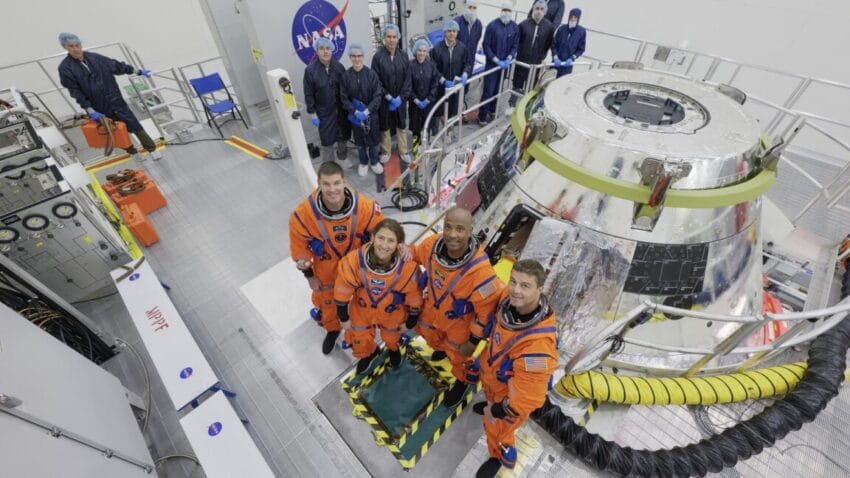
in their own words the artemis ii The Artemis II crew shares their experiences and reflections on the initial hours of their historic mission to the Moon.
in their own words the artemis ii
Introduction to Artemis II
NASA’s Artemis II mission marks a significant milestone in lunar exploration, being the first crewed mission to the Moon in over 50 years. Scheduled for launch in 2025, this mission aims to build on the legacy of the Apollo program while paving the way for future lunar exploration and eventual human missions to Mars. The crew consists of four astronauts, each bringing unique expertise and backgrounds, ready to embark on this groundbreaking journey.
The Crew of Artemis II
The Artemis II crew is composed of seasoned astronauts who have undergone rigorous training to prepare for the challenges of space travel. Their mission is not only to demonstrate the capabilities of NASA’s Orion spacecraft but also to gather invaluable data that will inform future lunar missions. The crew includes:
- Jeremy Hansen (Canadian Space Agency): The first Canadian astronaut to participate in a crewed lunar mission.
- Christina Koch (NASA): A veteran astronaut known for her record-breaking spaceflight duration.
- Victor Glover (NASA): The first African American astronaut to live and work on the International Space Station for an extended period.
- Reid Wiseman (NASA): A former Navy pilot and experienced astronaut with multiple spaceflights under his belt.
Initial Reactions and Preparations
As the launch date approaches, the crew members have shared their thoughts and feelings about the mission. Jeremy Hansen, in particular, has expressed a laid-back attitude toward the impending launch. In a candid moment, he remarked, “You know me, personally, I hope to take a very short nap on the pad. There’s enough time built in there to have a nap. I’ve been practicing falling asleep. So if the loops are quiet enough, and I get a minute, I’ll try for a nap.” This statement reflects not only his confidence but also the extensive preparation that has gone into ensuring a smooth launch.
Training Regimen
The crew’s training has been extensive and multifaceted, encompassing everything from technical simulations to physical conditioning. Each astronaut has spent countless hours in simulators, practicing various scenarios they might encounter during the mission. This preparation is crucial, as it allows them to respond effectively to any unexpected challenges that may arise.
Team Dynamics
The camaraderie among the crew members is palpable. They have developed a strong bond through shared experiences and challenges during their training. This teamwork is essential for the success of the mission, as they will rely on each other for support and problem-solving throughout their journey. Christina Koch shared her thoughts on the importance of teamwork, stating, “We all bring something different to the table, and that diversity is our strength. We have to trust each other completely.” This sentiment underscores the collaborative spirit that defines the Artemis II mission.
The Launch Sequence
As the countdown to launch begins, the crew will undergo a series of final checks and preparations. The launch sequence is meticulously planned, with each step designed to ensure the safety and success of the mission. The crew will be strapped into their seats, surrounded by advanced technology that will monitor their health and performance throughout the flight.
Pre-Launch Activities
In the hours leading up to the launch, the crew will participate in various pre-launch activities, including briefings with mission control and final equipment checks. These activities are designed to ensure that everyone is on the same page and ready for the challenges ahead. Victor Glover emphasized the importance of these final moments, stating, “It’s all about focus and preparation. We have to be ready for anything.” This focus is critical, as the launch will be a complex operation requiring precise execution.
Experiencing Launch Day
On launch day, the atmosphere at the Kennedy Space Center will be electric. Families, friends, and supporters will gather to witness this historic event. The crew will feel the weight of their mission as they prepare to embark on a journey that will take them farther than any human has traveled in over half a century.
The Launch Experience
As the countdown reaches zero, the crew will experience the intense forces of liftoff. The Orion spacecraft will roar to life, propelled by powerful rockets designed to break free from Earth’s gravitational pull. Reid Wiseman described the launch experience as “a mix of exhilaration and focus.” The crew will need to remain calm and collected as they navigate the initial stages of their flight.
First Hours in Space
Once in space, the crew will transition into their roles aboard the Orion spacecraft. The first hours will be critical as they establish communication with mission control and begin to monitor the spacecraft’s systems. Jeremy Hansen’s desire for a nap may seem lighthearted, but it reflects the reality of managing fatigue during long missions. The crew will need to balance rest with their responsibilities to ensure they remain alert and effective.
Scientific Objectives
The Artemis II mission is not just about reaching the Moon; it also has specific scientific objectives that will contribute to our understanding of lunar exploration. The crew will conduct experiments and gather data that will inform future missions, including Artemis III, which aims to land astronauts on the lunar surface.
Data Collection and Experiments
During their journey, the crew will collect data on various aspects of space travel, including radiation exposure, spacecraft performance, and human health. This information will be invaluable for future missions, particularly as NASA aims to establish a sustainable presence on the Moon. Christina Koch highlighted the importance of this research, stating, “Every piece of data we collect brings us one step closer to understanding how to live and work on the Moon.” This emphasis on data collection underscores the mission’s dual purpose of exploration and scientific inquiry.
Looking Ahead: Implications for Future Missions
The success of Artemis II will have far-reaching implications for NASA’s future plans. If the mission goes as planned, it will pave the way for Artemis III and subsequent missions aimed at establishing a sustainable human presence on the Moon. The knowledge gained from this mission will also inform the agency’s long-term goals of sending humans to Mars.
International Collaboration
The Artemis program is not solely a U.S. initiative; it involves collaboration with international partners. The participation of astronauts from the Canadian Space Agency and other international agencies highlights the global nature of space exploration. This collaboration is essential for pooling resources, expertise, and technology to achieve common goals. Jeremy Hansen’s involvement as the first Canadian astronaut on a lunar mission exemplifies this spirit of international cooperation.
Conclusion
The Artemis II mission represents a new chapter in human space exploration, combining the spirit of adventure with scientific inquiry. As the crew prepares for their historic journey, their reflections and experiences provide insight into the challenges and excitement of space travel. With a focus on teamwork, preparation, and scientific objectives, the Artemis II crew is poised to make history and inspire future generations of explorers.
Source: Original report
Was this helpful?
Last Modified: October 1, 2025 at 6:36 pm
4 views