ice protester says her global entry was A Minnesota resident claims her Global Entry and TSA Precheck privileges were revoked shortly after she observed what she believed to be federal immigration enforcement activity.
ice protester says her global entry was
Incident Overview
Nicole Cleland, a 56-year-old resident of Richfield, Minnesota, has brought attention to a troubling incident involving the use of facial recognition technology by immigration agents. According to a declaration she filed in the U.S. District Court for the District of Minnesota, her Global Entry and TSA Precheck privileges were revoked just three days after she witnessed what she suspected to be Immigration and Customs Enforcement (ICE) activity in her neighborhood.
Cleland, who works as a director at Target Corporation, is actively involved in community efforts to monitor potential ICE and Customs and Border Protection (CBP) vehicles. This involvement stems from her commitment to civil rights and her concerns about the impact of immigration enforcement on local communities. Her declaration sheds light on the intersection of technology, law enforcement, and civil liberties, raising questions about the implications of facial recognition technology in policing.
Details of the Incident
The incident in question occurred on January 10, when Cleland observed a white Dodge Ram vehicle that she believed was being driven by federal enforcement agents. In her declaration, she described her actions as motivated by a desire to understand and document the activities of these agents, particularly in relation to a local apartment building that she feared might be targeted for a raid.
Following the Vehicle
Cleland recounted that she maneuvered her vehicle behind the Dodge Ram, intending to observe the agents’ actions from a safe distance. She was accompanied by another observer in a separate vehicle, and together they followed the Dodge Ram for a brief period. Cleland expressed concern that the agents might be conducting a raid on the apartment building, which heightened her sense of urgency to monitor the situation.
As the situation unfolded, Cleland noted that the Dodge Ram stopped in front of the other observer’s vehicle, effectively blocking her path. At this point, she observed two additional vehicles that appeared to be driven by federal agents, further solidifying her belief that she was witnessing a coordinated enforcement action.
Facial Recognition Technology
During the encounter, Cleland reported that an immigration agent informed her that he had used facial recognition technology to identify her. This revelation has raised significant concerns regarding privacy and the potential misuse of technology by law enforcement agencies. Facial recognition technology has been a contentious topic in recent years, with critics arguing that it can lead to wrongful identification and violations of civil liberties.
Implications of Technology in Law Enforcement
The use of facial recognition technology by law enforcement agencies has sparked debates about its ethical implications and effectiveness. Critics argue that the technology can perpetuate racial biases and disproportionately target marginalized communities. In Cleland’s case, her identification through facial recognition following her observation of ICE activity raises questions about the potential chilling effect on community members who wish to monitor or protest against immigration enforcement.
Furthermore, the rapid advancement of technology has outpaced the development of regulatory frameworks to govern its use. As law enforcement agencies increasingly adopt facial recognition technology, there is a pressing need for clear guidelines that protect individuals’ rights while allowing for effective policing.
Revocation of Global Entry and TSA Precheck Privileges
Cleland’s Global Entry and TSA Precheck privileges were revoked just three days after the incident, leading her to believe that her actions as an observer may have played a role in this decision. Global Entry is a program that allows expedited clearance for pre-approved, low-risk travelers upon arrival in the United States, while TSA Precheck provides faster security screening at airports. The revocation of these privileges can significantly impact an individual’s travel experience, leading to longer wait times and increased scrutiny at security checkpoints.
Legal Action and Community Response
In response to the revocation of her privileges, Cleland has taken legal action by filing a declaration in federal court. This step underscores the importance of holding government agencies accountable for their actions, particularly when it comes to the use of technology in policing. Cleland’s case may serve as a pivotal moment in the ongoing discussion about the balance between national security and civil liberties.
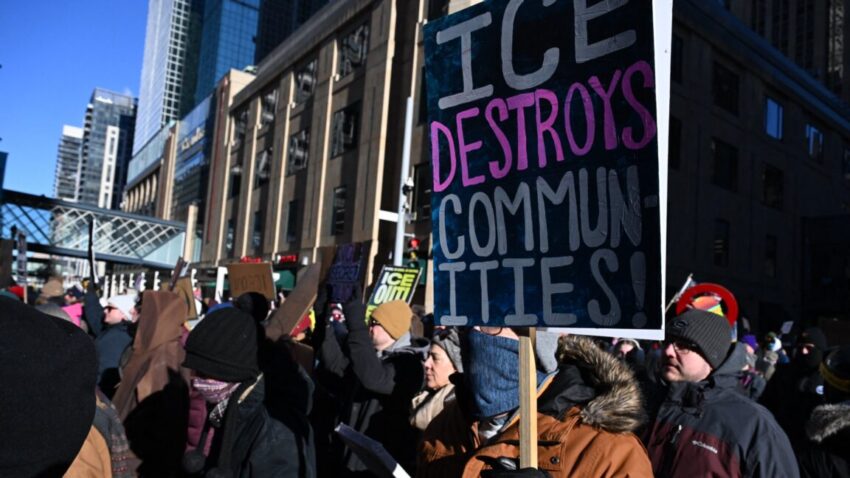
Community members and civil rights advocates have rallied around Cleland’s situation, emphasizing the need for transparency and accountability in law enforcement practices. The incident has sparked conversations about the role of community observers in monitoring immigration enforcement and the potential risks they face when doing so.
Broader Context of Immigration Enforcement
The incident involving Cleland is part of a larger narrative surrounding immigration enforcement in the United States. Over the past few years, there has been a significant increase in the visibility of ICE and CBP activities, particularly in urban areas. Many community members have expressed concerns about the impact of these activities on families and individuals, leading to heightened tensions and fear within immigrant communities.
Community Monitoring Initiatives
In response to these concerns, various grassroots organizations have emerged to monitor and document ICE and CBP activities. These initiatives aim to provide support to individuals who may be targeted by immigration enforcement and to raise awareness about the implications of such actions on community members. Cleland’s involvement in these efforts reflects a growing trend of community activism aimed at protecting civil rights and advocating for humane immigration policies.
Conclusion
The case of Nicole Cleland raises critical questions about the intersection of technology, law enforcement, and civil liberties. As facial recognition technology becomes more prevalent in policing, it is essential to consider the ethical implications and potential consequences for individuals who engage in community monitoring of law enforcement activities. Cleland’s experience serves as a reminder of the importance of protecting civil rights in an era of rapid technological advancement and increasing scrutiny of immigration enforcement practices.
As Cleland continues her legal battle, her case may contribute to a broader dialogue about the need for accountability and transparency in law enforcement, particularly regarding the use of technology that can impact the lives of everyday citizens.
Source: Original report
Was this helpful?
Last Modified: January 31, 2026 at 4:37 pm
2 views