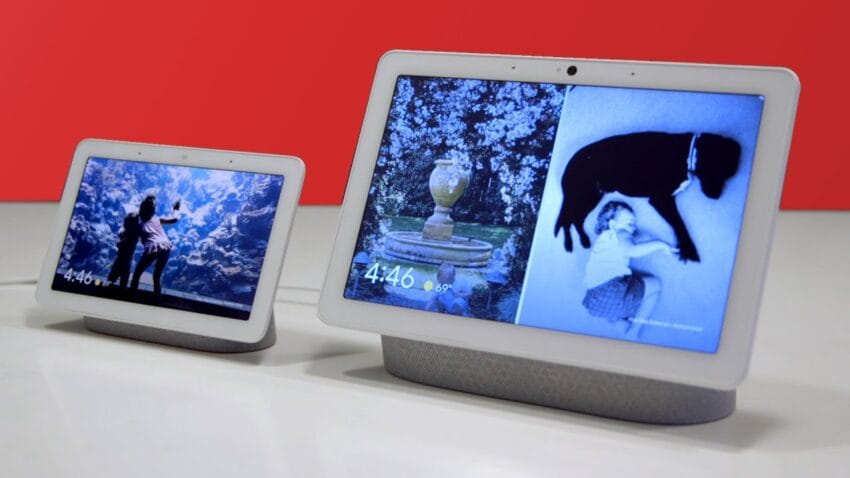
google hints at a new nest hub Google has indicated its ongoing commitment to the smart display market, suggesting that new versions of its Nest Hub and Nest Hub Max may be on the horizon.
google hints at a new nest hub
Google’s Commitment to Smart Displays
In a recent conversation with The Verge, Anish Kattukaran, a representative from Google Home, emphasized the company’s dedication to the smart display category. He stated that Google is “definitely committed to smart displays” and hinted that there will be “news to share there soon.” This announcement comes on the heels of Google’s launch of a new smart speaker designed for its AI-infused Gemini smart home platform, although no new smart display was introduced during that event.
The Role of Smart Displays in Home Automation
Kattukaran elaborated on the importance of smart displays in the context of home automation. He described the smart display as “almost the ultimate form factor to be able to deliver a really great home experience.” This assertion underscores the multifaceted capabilities of smart displays, which combine audio input and output with visual information. He noted that the integration of a microphone, speaker, and screen allows for a more interactive experience, enhancing the way users engage with smart home technology.
Moreover, Kattukaran pointed out that smart displays also include cameras, which add a visual dimension to the multi-modal interaction facilitated by Google’s Gemini platform. “As I see where Gemini for Home is going and Gemini more broadly,” he said, “it feels like almost the ultimate form factor to be able to deliver a really great home experience.” This statement suggests that Google envisions smart displays as central components of its future smart home ecosystem.
Competitive Landscape: Amazon’s Echo Show
Google’s renewed focus on smart displays comes at a time when competitors are also making significant strides in this space. Amazon recently launched two new Echo Show smart displays designed for its Alexa Plus AI assistant. These devices are equipped with a new AZ3 Pro processor, enhanced edge-based computing capabilities, and a new Omnisense fusion platform that allows for local data processing from smart home sensors. This advancement is poised to provide Alexa Plus with more contextual awareness, further enhancing its utility in smart home environments.
The competition in the smart display market is intensifying, and Google will need to ensure that any new offerings are not only competitive but also innovative. The existing Nest Hub and Nest Hub Max, last refreshed in 2021, may not hold up against the latest advancements from Amazon and other competitors. While both devices are compatible with Google’s new Gemini for Home platform, they are running on older hardware, which may hinder their appeal as flagship AI devices for the home in 2025.
Market Trends and Consumer Expectations
The smart display market has evolved significantly since its inception, with consumer expectations shifting over time. Initially, many users viewed smart displays primarily as digital photo frames or basic information hubs. However, as voice assistants have become more sophisticated, the demand for multi-modal input systems has grown. Consumers are increasingly looking for devices that can seamlessly integrate voice commands with visual feedback, allowing for a more intuitive and efficient user experience.
As smart home technology continues to advance, the potential applications for smart displays are expanding. They can serve as control centers for various smart devices, provide real-time information, and even facilitate video calls. The challenge for Google will be to identify and address the specific needs and preferences of consumers, ensuring that any new smart display models offer compelling use cases that go beyond what is currently available.
Technological Considerations for New Models
In order to remain competitive, a new Nest Hub or potentially rebranded Google Home Hub will need to incorporate significant technological advancements. The existing models, while functional, may not meet the expectations of consumers in 2025. The integration of more powerful processors, improved cameras, and enhanced software capabilities will be essential for delivering a superior user experience.
Hardware Upgrades
One of the most pressing needs for a new smart display is an upgrade in hardware. The current Nest Hub and Nest Hub Max, while equipped with features like the Soli radar sensor and a camera, are based on older technology that may not support the advanced functionalities expected from a flagship device. A new model would likely benefit from:
- Enhanced Processing Power: Upgrading to a more powerful processor would enable faster response times and improved performance, particularly for AI-driven applications.
- Improved Display Technology: A higher resolution screen with better color accuracy and brightness would enhance the visual experience, making it more appealing for video content and smart home monitoring.
- Advanced Camera Features: Incorporating features like facial recognition or improved low-light performance could enhance the utility of the camera for video calls and security purposes.
Software Innovations
In addition to hardware upgrades, software innovations will play a crucial role in the success of any new smart display. The integration of Google’s Gemini platform is a significant step forward, but additional features could further enhance the user experience:
- Contextual Awareness: Leveraging AI to provide contextually relevant information based on user preferences and habits could make interactions more intuitive.
- Seamless Integration with Other Devices: Ensuring compatibility with a wide range of smart home devices will be essential for creating a cohesive ecosystem.
- Enhanced Voice Recognition: Improving voice recognition capabilities would allow for more accurate and efficient interactions, particularly in noisy environments.
Challenges and Opportunities Ahead
While the future of smart displays looks promising, several challenges remain. The market is becoming increasingly crowded, and differentiating new products from existing offerings will be crucial. Additionally, consumer skepticism regarding the utility of smart displays must be addressed. Many users have yet to find compelling use cases for these devices, which could hinder adoption rates.
However, the opportunities are equally significant. As smart home technology continues to evolve, the potential for smart displays to serve as central hubs for home automation is growing. By focusing on user experience and addressing the specific needs of consumers, Google can position itself as a leader in this space.
Stakeholder Reactions
The announcement of a potential new Nest Hub has elicited a range of reactions from stakeholders in the tech industry. Analysts have noted that Google’s commitment to smart displays is a positive sign, particularly as the company seeks to regain its footing in the competitive smart home market. Some industry experts believe that a new model could help Google capitalize on the growing demand for multi-modal devices that integrate voice and visual interactions.
Consumers, on the other hand, have expressed a mix of excitement and skepticism. Many are eager for advancements in smart display technology but are cautious about whether new models will deliver meaningful improvements over existing devices. The success of any new offerings will depend on Google’s ability to address these concerns and provide compelling reasons for consumers to upgrade.
Conclusion
Google’s commitment to the smart display category signals an exciting future for its Nest Hub and Nest Hub Max products. As the company prepares to unveil new models, the focus will likely be on integrating advanced technology and enhancing user experience. With competition heating up in the smart display market, Google has the opportunity to redefine its offerings and solidify its position as a leader in smart home technology.
Source: Original report
Was this helpful?
Last Modified: October 7, 2025 at 7:38 pm
4 views