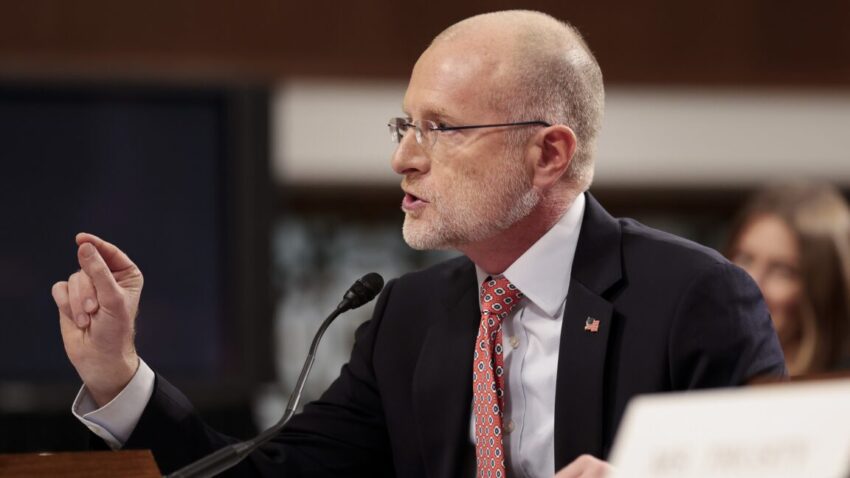
fcc chair scrubs website after learning it The Federal Communications Commission (FCC) has recently come under fire for its leadership’s stance on the agency’s independence, culminating in a significant website update following a contentious Senate hearing.
fcc chair scrubs website after learning it
Background on the FCC’s Role and Independence
The Federal Communications Commission, established in 1934, is tasked with regulating interstate and international communications by radio, television, wire, satellite, and cable. Its mission is to ensure that the American public has access to reliable and diverse communication services. The agency operates under the premise of being an independent regulatory body, which allows it to make decisions free from direct political influence. However, this independence has been increasingly questioned in recent years, particularly under the leadership of Chairman Brendan Carr.
Chairman Carr, appointed by former President Donald Trump, has publicly aligned himself with the administration’s perspective that independent agencies should not operate autonomously from the executive branch. This shift in philosophy has raised alarms among lawmakers and advocacy groups who fear that it undermines the FCC’s ability to function impartially.
Senate Hearing Highlights
During a Senate hearing held recently, Chairman Carr faced intense scrutiny regarding his previous threats to revoke broadcasting licenses from ABC stations due to comments made by late-night host Jimmy Kimmel. Kimmel had made remarks that Carr interpreted as politically charged, prompting him to suggest that the FCC could take punitive actions against the network.
Political Reactions
The hearing was marked by a predominantly Democratic critique of Carr’s actions. Senators expressed concern that his threats could serve as a form of intimidation against news broadcasters, potentially chilling free speech. Senator Ben Ray Luján (D-N.M.) was particularly vocal, questioning Carr directly about the nature of the FCC’s independence.
“Yes or no, is the FCC an independent agency?” Luján asked, to which Carr responded that the FCC is not independent. This admission was significant, as it contradicted the longstanding perception of the agency’s role and function.
Republican Perspective
Interestingly, the criticism was not limited to Democrats. Senator Ted Cruz (R-Texas) also weighed in, suggesting that Congress should consider legislative measures to restrict the FCC’s power to intimidate news broadcasters. Cruz’s comments highlight a growing bipartisan concern regarding the agency’s authority and its implications for the media landscape.
Website Update and Its Implications
As a direct consequence of the Senate hearing, the FCC promptly removed a statement from its website that referred to the agency as an “independent agency.” This change underscores the tension between Carr’s leadership and the traditional understanding of the FCC’s role. The removal of the statement appears to reflect Carr’s alignment with the Trump administration’s stance on the independence of regulatory bodies.
Public and Expert Reactions
The decision to amend the website has drawn mixed reactions from the public and experts in the field. Critics argue that this move signals a troubling trend towards increased political influence over regulatory agencies, which could compromise their ability to act in the public interest. Many believe that the FCC’s independence is crucial for maintaining a fair and balanced media landscape.
Media advocacy groups have expressed alarm over the implications of Carr’s statements and actions. They argue that the FCC’s role as a regulator should be insulated from political pressures to ensure that all voices can be heard in the media. The fear is that if the agency is perceived as a tool of the administration, it may lead to biased regulatory decisions that favor certain political narratives over others.
The Broader Context of Regulatory Independence
The debate surrounding the FCC’s independence is part of a larger conversation about the role of regulatory agencies in the United States. Over the years, various administrations have attempted to exert influence over independent agencies, raising questions about their ability to operate free from political interference.
For instance, the Federal Trade Commission (FTC) and the Securities and Exchange Commission (SEC) have also faced scrutiny regarding their independence. The balance between regulatory oversight and political influence is a delicate one, and the actions of leaders like Carr can set precedents that may affect how these agencies function in the future.
Implications for the Media Landscape
The implications of the FCC’s shift in stance are significant for the media landscape in the United States. If the agency is perceived as lacking independence, it could lead to a chilling effect on free speech and journalistic integrity. Broadcasters may become hesitant to air controversial content for fear of retribution from the FCC, which could stifle public discourse.
Moreover, the potential for increased political influence over the FCC raises concerns about the fairness of media regulation. If the agency prioritizes the interests of the administration over the public interest, it could lead to a media environment that favors certain viewpoints while marginalizing others. This could have long-term consequences for democracy and the public’s right to access diverse perspectives.
Future Considerations
As the FCC navigates these challenges, it will be crucial for the agency to reaffirm its commitment to independence and impartiality. Stakeholders, including lawmakers, media organizations, and the public, will need to remain vigilant in holding the agency accountable for its actions. The balance of power between regulatory agencies and the political landscape will continue to evolve, and the FCC’s decisions will play a pivotal role in shaping the future of communication in the United States.
In conclusion, the recent developments surrounding the FCC and Chairman Brendan Carr highlight the ongoing tension between regulatory independence and political influence. As the agency adapts to these challenges, its ability to maintain impartiality will be critical for ensuring a fair and diverse media landscape in the years to come.
Source: Original report
Was this helpful?
Last Modified: December 18, 2025 at 9:39 am
3 views