elon musk says tesla drivers can text Elon Musk’s recent comments regarding Tesla’s Full Self-Driving (FSD) software have sparked significant controversy, particularly his suggestion that drivers could text while driving under certain conditions.
elon musk says tesla drivers can text
Context of the Controversy
Elon Musk, the CEO of Tesla, has a long history of making bold claims about the capabilities of his company’s vehicles. Recently, during a discussion about the latest version of Tesla’s Full Self-Driving software, Musk indicated that drivers might be able to text while driving, depending on the traffic context. This statement has raised alarms among safety advocates and the general public, as texting while driving is illegal in 49 states, Washington, D.C., and U.S. territories.
Legal Implications of Texting While Driving
Texting while driving is not just a dangerous behavior; it is also illegal in most parts of the United States. The National Highway Traffic Safety Administration (NHTSA) has long warned against the dangers of distracted driving, which includes texting. According to the NHTSA, texting while driving increases the risk of a crash by 23 times. The legal ramifications of being caught texting while driving can include hefty fines, points on a driver’s license, and even criminal charges in severe cases.
Musk’s comments about the potential for texting while using FSD raise questions about liability. If a driver is caught texting while driving, claiming that Musk suggested it was acceptable is unlikely to be a valid defense in a court of law. The responsibility for safe driving ultimately lies with the driver, and any legal repercussions from texting while driving will fall on them, not on Musk or Tesla.
Understanding Tesla’s Full Self-Driving Software
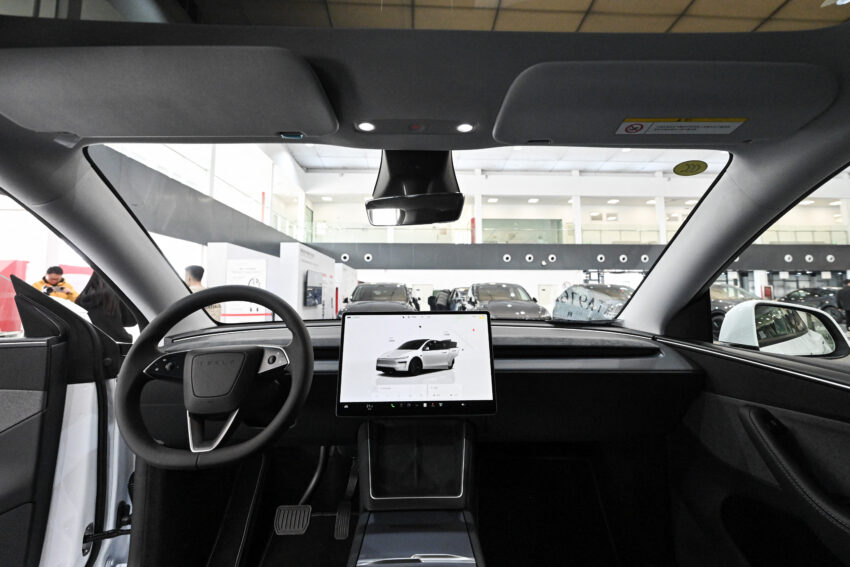
The current version of Tesla’s Full Self-Driving software, known as FSD v14.2.1, is classified as a Level 2 “supervised” system. This means that while the vehicle can perform some driving tasks, the driver must remain attentive and ready to take control at any moment. This level of automation is not equivalent to fully autonomous driving, which would require no human intervention.
Promises of Unsupervised Driving
For months, Musk has been hinting at the arrival of an “unsupervised” version of FSD, which he claims will allow drivers to engage in activities like texting while the vehicle is in operation. At Tesla’s annual shareholder meeting last month, Musk stated that the upcoming FSD update would bring the company closer to allowing drivers to text and drive. He referred to this capability as the “killer app,” suggesting that it is something many drivers desire.
However, this raises serious safety concerns. The idea that a driver could be allowed to text while the vehicle is in motion contradicts the fundamental principles of safe driving. The potential for distraction is immense, and the consequences could be dire.
Current Safety Features and Limitations
As it stands, Tesla vehicles are equipped with in-cabin cameras that monitor the driver’s eye movements. If the system detects that a driver’s attention is diverted, it will issue alerts to refocus on the road. If the driver fails to respond to these alerts, the system can disengage, and repeated infractions can lead to a suspension of FSD capabilities.
Despite these safety features, many Tesla owners have expressed frustration with the frequency of these alerts, often referred to as “nags.” Musk’s recent comments suggest that he may be considering relaxing these requirements under certain conditions, such as in stop-and-go traffic. However, this does not change the legal reality that texting while driving remains prohibited.
Public Perception and Reactions
The public reaction to Musk’s comments has been largely negative. Safety advocates and concerned citizens have taken to social media and other platforms to voice their disapproval. Many argue that Musk’s statements could encourage risky behavior among drivers, undermining years of efforts to promote safe driving practices.
Critics have pointed out that Musk’s focus on the potential for texting while driving distracts from the more pressing issue of ensuring that FSD technology is safe and reliable. The emphasis on convenience over safety raises ethical questions about the responsibilities of technology companies in promoting safe driving behaviors.
Comparative Analysis with Other Autonomous Driving Technologies
When comparing Tesla’s FSD with other autonomous driving technologies, it is essential to note that Tesla operates under a different framework. Companies like Waymo have developed fully autonomous systems that do not require human intervention. These companies take responsibility for the safety of their vehicles, whereas Tesla has consistently maintained that the driver is ultimately responsible for any incidents that occur while using Autopilot or FSD.
This distinction is crucial. While Tesla’s FSD may offer impressive capabilities, it is not a fully autonomous system. The legal and ethical implications of this difference cannot be overstated. If a Tesla driver is involved in an accident while texting, the driver will bear the legal consequences, not the company.
The Role of Regulation
As autonomous driving technology continues to evolve, regulatory frameworks must also adapt. Currently, the legal landscape surrounding autonomous vehicles is still developing. Many states have enacted laws to regulate the use of autonomous driving technologies, but these laws vary widely. The inconsistency in regulations can create confusion for drivers and manufacturers alike.
Regulators must ensure that safety is the top priority when it comes to autonomous driving technologies. This includes establishing clear guidelines for what constitutes safe driving behavior and holding companies accountable for the technologies they develop. The potential for misuse of FSD capabilities, such as texting while driving, underscores the need for robust regulatory oversight.
Conclusion: The Importance of Responsible Driving
Elon Musk’s comments about texting while driving have ignited a heated debate about the responsibilities of drivers and the implications of advanced driving technologies. While Tesla’s Full Self-Driving software may offer exciting possibilities, it is crucial to remember that safety should always come first. Texting while driving is dangerous and illegal, and drivers must remain vigilant and focused on the road.
Ultimately, the responsibility for safe driving lies with the individual. No amount of technological advancement can replace the need for attentive and responsible driving behavior. As Tesla continues to develop its FSD technology, it is imperative that both the company and its drivers prioritize safety above all else.
Source: Original report
Was this helpful?
Last Modified: December 5, 2025 at 9:40 pm
1 views