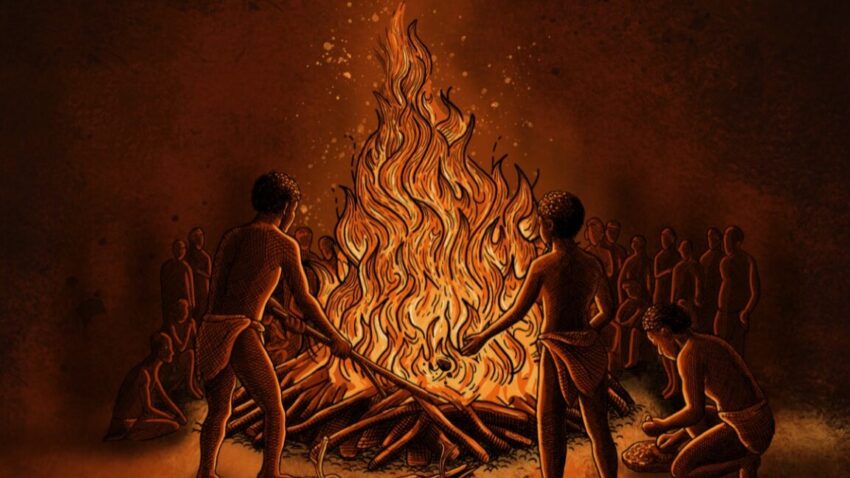
earliest african cremation was 9 500 years Archaeologists have discovered Africa’s oldest known cremation pyre at the base of Mount Hora in Malawi, a finding that challenges previous understandings of ancient burial practices.
earliest african cremation was 9 500 years
Significant Discovery in Malawi
The discovery of the cremation pyre, dated to approximately 9,500 years ago, was detailed in a recent paper published in the journal Science Advances. This finding is groundbreaking as it provides insight into the social and ritualistic behaviors of ancient hunter-gatherer communities in Africa, a region where cremation practices have been largely undocumented prior to this discovery.
Context of the Discovery
The site, located at the base of Mount Hora, has yielded evidence that suggests a complex understanding of death and burial among early human societies. The researchers utilized radiocarbon dating techniques to establish the age of the pyre, which has prompted a reevaluation of how we perceive group labor and communal rituals in these ancient communities.
Historically, cremation has been a practice observed in various cultures around the world. For instance, the Viking cremation site known as Kalvestene on the small island of Hjarnø in Denmark offers an example of how different societies have approached the treatment of their dead. In addition, a peculiar Roman burial site reported in 2023 revealed that cremated remains were left in situ, covered with brick tiles and lime, surrounded by bent and twisted nails, possibly as a means to prevent the deceased from returning to haunt the living.
The Rarity of Cremation in Hunter-Gatherer Societies
Despite the prevalence of cremation in various cultures, it has been remarkably rare among hunter-gatherer societies. The construction of a pyre is labor-intensive and requires significant communal resources, making it an unlikely practice for groups that relied heavily on mobility and subsistence hunting and gathering. The evidence for cremation prior to the mid-Holocene, which spans from approximately 5,000 to 7,000 years ago, is scarce.
Prior to this discovery, the earliest known concentration of burnt human remains was located at Lake Mungo in Australia, dating back around 40,000 years. However, the absence of a pyre at that site complicates our understanding of the specific burial practices employed by those ancient peoples. The Malawi pyre, therefore, represents a significant advancement in our knowledge of early human funerary practices.
Implications of the Findings
The implications of this discovery are profound. It suggests that early hunter-gatherer societies may have had more complex social structures and cultural practices than previously believed. The ability to organize communal labor for the construction of a cremation pyre indicates a level of social cohesion and cooperation that challenges the notion of these groups as solely focused on survival.
Furthermore, the presence of a cremation pyre may indicate that these communities had developed specific rituals associated with death, which could have served to strengthen social bonds among group members. Rituals surrounding death often play a crucial role in the cultural identity of a community, and this finding opens up new avenues for research into the social dynamics of ancient hunter-gatherer societies.
Comparative Analysis with Other Cultures
To better understand the significance of the Malawi cremation pyre, it is useful to compare it with cremation practices in other cultures. For example, the Viking practices in Scandinavia involved elaborate burial mounds and pyres, often accompanied by grave goods intended to accompany the deceased into the afterlife. Similarly, in ancient Rome, cremation was a common practice among the elite, with remains often placed in ornate urns.
In contrast, the Malawi discovery highlights a more communal approach to cremation, suggesting that the practice may have served as a collective ritual rather than an individualistic one. This difference underscores the diversity of funerary practices across cultures and time periods, reflecting varying beliefs about death and the afterlife.
Challenges in Interpreting Ancient Practices
Interpreting ancient burial practices presents numerous challenges for archaeologists. The lack of written records from these early societies means that much of what we understand is based on material evidence, which can be subject to varying interpretations. In the case of the Malawi pyre, the evidence must be carefully analyzed in the context of the broader archaeological record.
Moreover, the cultural significance of cremation can differ widely between societies. In some cultures, cremation is seen as a means of purification, while in others, it may be viewed as a way to release the spirit of the deceased. Understanding the motivations behind the construction of the pyre at Mount Hora will require further investigation into the cultural context of the people who lived there.
Future Research Directions
The discovery of the cremation pyre in Malawi opens up numerous avenues for future research. Archaeologists may seek to uncover additional evidence of communal burial practices in other regions of Africa, potentially revealing a more widespread tradition of cremation among ancient hunter-gatherer societies.
Additionally, interdisciplinary approaches that incorporate anthropology, ethnography, and comparative archaeology could provide deeper insights into the social structures and cultural beliefs of these ancient communities. By examining the relationships between burial practices and social organization, researchers can gain a more comprehensive understanding of how these early societies functioned.
Stakeholder Reactions
The academic community has responded positively to the findings presented in the Science Advances paper. Many researchers have expressed excitement about the implications of the discovery for understanding the complexities of ancient human societies. The findings have sparked discussions about the need for further exploration of burial practices in Africa, a region that has often been overlooked in archaeological studies.
Furthermore, the local community in Malawi has shown interest in the discovery, recognizing its potential to enhance cultural heritage and tourism in the area. The site may become a focal point for educational initiatives aimed at raising awareness about the region’s rich archaeological history.
Conclusion
The discovery of Africa’s oldest known cremation pyre at Mount Hora in Malawi is a significant archaeological milestone that challenges existing narratives about ancient hunter-gatherer societies. By dating the pyre to approximately 9,500 years ago, researchers have opened new avenues for understanding the social and ritualistic behaviors of early human communities.
This finding not only sheds light on the complexities of funerary practices but also prompts a reevaluation of the social structures that may have existed among these ancient peoples. As further research unfolds, it is likely that our understanding of early human societies will continue to evolve, revealing the rich tapestry of cultural practices that have shaped human history.
Source: Original report
Was this helpful?
Last Modified: January 6, 2026 at 1:38 am
12 views