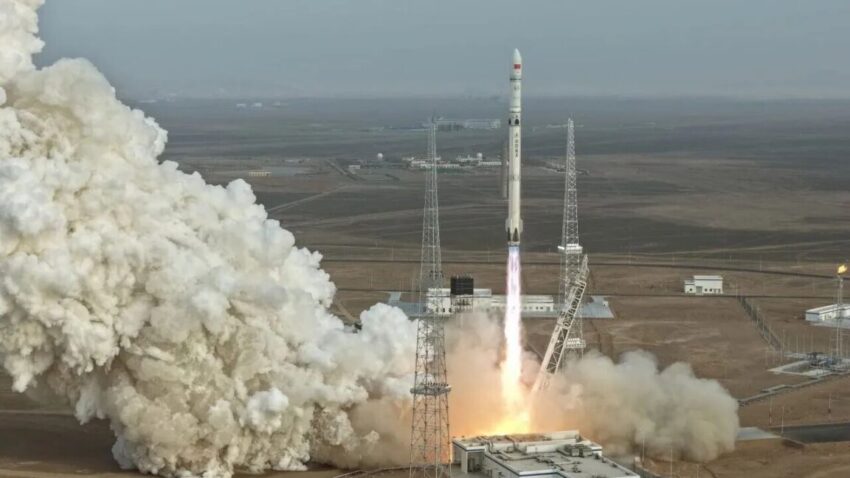
china just carried out its second reusable China has successfully executed its second reusable rocket launch attempt within a three-week period, marking a significant milestone in its space exploration efforts.
china just carried out its second reusable
Overview of the Launch
On Monday evening, the Long March 12A rocket lifted off from the Jiuquan Satellite Launch Center at 9:00 PM EST (02:00 UTC Tuesday). This launch represents a critical step for China’s ambitions in developing reusable rocket technology, which is increasingly seen as essential for reducing the costs associated with space travel.
The Long March 12A is comparable in height and diameter to SpaceX’s Falcon 9, a vehicle that has become synonymous with the modern era of spaceflight due to its successful reusability. The successful launch of the Long March 12A comes at a time when the global space industry is witnessing a shift toward more sustainable and economically viable launch systems.
Technical Specifications
The Long March 12A is designed to carry payloads into low-Earth orbit, and its first flight showcased its capabilities. The rocket is powered by a methane-fueled first stage booster, which is a departure from traditional rocket fuels. This choice of fuel not only has environmental benefits but also aligns with future plans for missions to Mars, where methane could potentially be produced on-site.
Launch Details
During the launch, the first stage booster reached supersonic speeds and successfully completed its initial mission of propelling the rocket into orbit. However, the booster encountered difficulties during its return phase. Less than 10 minutes after liftoff, it impacted a remote area approximately 200 miles downrange from the Jiuquan spaceport. Reports indicate that the booster failed to execute a braking burn that would have allowed it to land at a designated site near the Gobi Desert.
Challenges of Reusable Launch Systems
The development of reusable launch systems is fraught with challenges. Historically, the debut flights of new rockets have a high failure rate, with many vehicles not returning successfully after their initial missions. The Long March 12A’s first flight is particularly notable because it defied these odds, successfully reaching orbit despite the booster’s landing failure.
Reusability is a key factor in reducing launch costs, which have traditionally been a barrier to entry for many space endeavors. By successfully launching and attempting to recover the first stage, China is positioning itself to compete more effectively in the global space market.
Implications for China’s Space Program
This successful launch is part of a broader strategy by China to enhance its capabilities in space exploration. The country has made significant investments in its space program, aiming to establish itself as a leader in space technology. The Long March 12A is expected to play a crucial role in future missions, including satellite deployments and potential crewed missions.
International Context
China’s advancements in reusable rocket technology come at a time when other nations, particularly the United States, are also making strides in this area. SpaceX has set a high bar with its Falcon 9 and Starship programs, and China’s efforts could lead to increased competition in the commercial space sector. The successful development of reusable rockets could enable China to offer more cost-effective launch services, attracting international customers.
Stakeholder Reactions
The reaction to the successful launch has been largely positive within the Chinese space community. Experts and officials have expressed optimism about the future of the Long March 12A and its potential to support a range of missions. The Chinese National Space Administration (CNSA) has emphasized the importance of this launch in advancing the country’s space capabilities.
Internationally, reactions have been mixed. While some experts acknowledge the significance of China’s achievements, others express concerns about the implications for global space security and the potential for an arms race in space technologies. The successful launch of reusable rockets could lead to an increase in the frequency of launches, raising questions about space traffic management and the sustainability of orbital environments.
Future Prospects
Looking ahead, the success of the Long March 12A could pave the way for more ambitious projects within China’s space program. The CNSA has plans for a series of upcoming missions, including lunar exploration and the construction of a modular space station. The ability to reuse rocket components could significantly reduce the costs associated with these missions, making them more feasible.
Technological Innovations
China is also investing in research and development to enhance its rocket technologies. Innovations in materials science, propulsion systems, and autonomous landing technologies are expected to play a role in future iterations of the Long March series. These advancements could further improve the reliability and efficiency of reusable launch systems.
Conclusion
The successful launch of the Long March 12A is a significant achievement for China, demonstrating its growing capabilities in space exploration and technology. As the country continues to develop its reusable rocket systems, the implications for the global space industry could be profound. With the potential for reduced launch costs and increased access to space, China’s advancements may reshape the competitive landscape of space exploration in the years to come.
Source: Original report
Was this helpful?
Last Modified: December 24, 2025 at 3:35 am
0 views