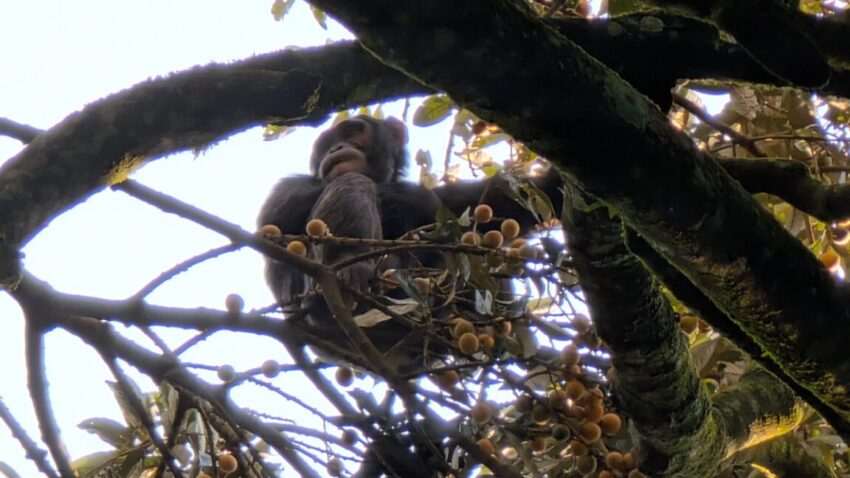
boozy chimps fail urine test confirm hotly Recent research has revealed that chimpanzees possess high levels of alcohol byproducts in their urine, suggesting a regular consumption of fermented fruit, which may provide insights into the evolutionary origins of human alcohol consumption.
boozy chimps fail urine test confirm hotly
New Findings on Chimpanzee Alcohol Consumption
A study published in the journal Biology Letters has provided compelling evidence that chimpanzees are not only consuming fermented fruit but are also experiencing physiological effects from this behavior. The research indicates that the urine of these primates contains significant levels of alcohol byproducts, pointing to a diet that includes fermented foods. This finding aligns with the “drunken monkey hypothesis” proposed by biologist Robert Dudley in 2014, which posits that the human attraction to alcohol has deep evolutionary roots.
The Drunken Monkey Hypothesis
Robert Dudley, a biologist at the University of California, Berkeley, introduced the “drunken monkey hypothesis” in his book, The Drunken Monkey: Why We Drink and Abuse Alcohol. Dudley’s theory suggests that the affinity for alcohol among humans can be traced back approximately 18 million years to the common ancestors of great apes. According to Dudley, this attraction may have evolved as a means of enhancing social communication and facilitating the sharing of food, particularly fruit, which can be identified from a distance.
Initially, Dudley’s hypothesis faced skepticism from the scientific community. Critics argued that the idea of primates consuming fermented fruit was unlikely, as many believed that chimpanzees and other primates did not engage in such behavior. However, over the past two decades, observational data has increasingly supported Dudley’s claims.
Observational Evidence of Fermented Fruit Consumption
Earlier this year, researchers captured wild chimpanzees on camera sharing fermented African breadfruit, which was found to contain measurable levels of alcohol. This groundbreaking observation marked the first documented instance of nonhuman great apes sharing alcoholic foods in the wild. The researchers utilized a portable breathalyzer to measure the alcohol content of the fallen fruit, discovering that nearly 90 percent of the sampled fruit contained ethanol. The ripest specimens exhibited the highest levels, with an alcohol by volume (ABV) of up to 0.61 percent.
Implications of Alcohol Consumption in Primates
The implications of these findings extend beyond mere curiosity about primate behavior. They challenge long-standing assumptions regarding the dietary habits of chimpanzees and other primates. The ability to consume and share fermented fruit may have played a significant role in the social dynamics and evolutionary development of these species. Furthermore, it raises questions about the evolutionary advantages that such behaviors may have conferred, particularly in relation to food sharing and social bonding.
Understanding the Evolutionary Context
The evolutionary context of alcohol consumption among primates is complex. The ability to metabolize alcohol may have provided early hominins with certain advantages, such as access to a calorie-rich food source. As fruits ferment, they become a source of energy that could have been beneficial during periods of food scarcity. Additionally, the social aspect of sharing fermented foods could have fostered stronger social bonds within groups, enhancing cooperation and communication.
Moreover, the consumption of fermented fruit may have influenced the development of social behaviors that are characteristic of modern humans. The act of sharing food, particularly alcohol-laden fruit, could have facilitated social interactions and established hierarchies within groups, contributing to the evolution of complex social structures.
Reactions from the Scientific Community
The recent findings have garnered attention from various sectors of the scientific community. Some researchers have expressed excitement over the implications of the study, viewing it as a significant step in understanding the evolutionary origins of human behavior. Others remain cautious, emphasizing the need for further research to fully comprehend the impact of alcohol consumption on primate social structures and behaviors.
Dr. Jane Goodall, a renowned primatologist, has long advocated for the study of primate behaviors in natural settings. She has noted that understanding the dietary habits of chimpanzees can provide valuable insights into their social interactions. Goodall’s work has laid the groundwork for contemporary studies, and she has expressed support for Dudley’s hypothesis, suggesting that the consumption of fermented fruit may indeed be a common behavior among primates.
Broader Implications for Human Alcohol Consumption
The findings regarding chimpanzees and their relationship with alcohol also have broader implications for understanding human alcohol consumption. The evolutionary perspective offered by the drunken monkey hypothesis suggests that the attraction to alcohol is not merely a cultural phenomenon but may be deeply rooted in our biology.
Understanding the evolutionary origins of alcohol consumption could inform discussions about alcohol use and abuse in contemporary society. If the affinity for alcohol is an inherent trait, it raises questions about how modern humans navigate their relationship with alcohol in a world where access to fermented beverages is ubiquitous.
Potential for Future Research
The recent study opens avenues for further research into the behaviors of chimpanzees and other primates. Future studies could explore the extent to which different primate species consume fermented foods and the social dynamics that arise from such behaviors. Additionally, researchers may investigate the physiological effects of alcohol consumption on primates, including how it affects their health, social interactions, and overall behavior.
Moreover, understanding the genetic and metabolic pathways that allow primates to process alcohol could provide insights into human biology and the evolutionary adaptations that have occurred over millions of years. This line of inquiry could lead to a better understanding of the risks associated with alcohol consumption and the potential for developing interventions for alcohol-related issues.
Conclusion
The recent findings regarding alcohol byproducts in chimpanzee urine underscore the complexity of primate behavior and its evolutionary significance. As researchers continue to explore the relationship between primates and alcohol, the implications for understanding human behavior and social structures become increasingly evident. The drunken monkey hypothesis, once met with skepticism, is gaining traction as a plausible explanation for the deep-seated human attraction to alcohol.
As the scientific community delves deeper into this intriguing area of study, it is clear that the consumption of fermented fruit by chimpanzees may not only shed light on their social dynamics but also provide valuable insights into the evolutionary origins of human behavior.
Source: Original report
Was this helpful?
Last Modified: February 25, 2026 at 10:36 am
1 views