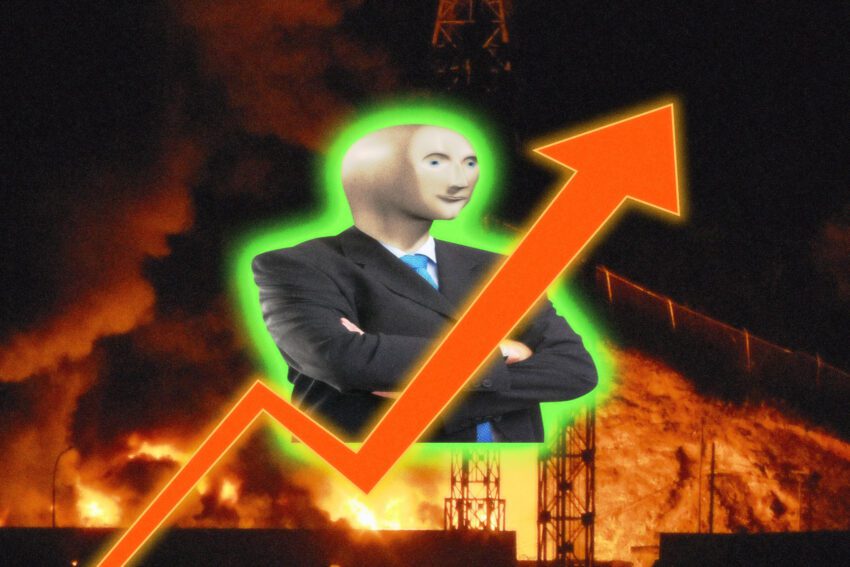
blood for stonks On December 31st, a newly created account on Polymarket placed a bet that Nicolás Maduro, the leader of Venezuela, would be out of office by the end of January. This marked the beginning of a series of escalating bets that would culminate in a significant and violent event.
blood for stonks
The Bet and the Subsequent Invasion
On January 3rd, the situation in Venezuela escalated dramatically when the United States conducted a military operation in the Venezuelan capital. This operation resulted in the kidnapping of Maduro and his wife, alongside a tragic death toll of at least 80 individuals. The account that had placed the initial bet on Polymarket cashed out with nearly half a million dollars, raising questions about the intersection of finance, politics, and military action.
The implications of this event extend far beyond the immediate financial gains of a single betting account. It reflects a troubling trend in which financial speculation intertwines with geopolitical maneuvers. The use of platforms like Polymarket, which allows users to bet on the outcomes of political events, blurs the lines between investment and ethical considerations, particularly when lives are at stake.
The Role of Speculation in Geopolitics
Speculation in financial markets is not a new phenomenon; however, the way it has been integrated into political forecasting raises ethical concerns. In traditional markets, investors often rely on data, trends, and expert analysis to make informed decisions. In contrast, betting platforms like Polymarket enable users to wager on political outcomes based on speculation rather than substantive evidence.
This shift towards speculative betting on political events can lead to a dangerous normalization of violence as a means to achieve financial gain. When individuals can profit from the destabilization of a country, it creates a perverse incentive structure that prioritizes financial outcomes over humanitarian considerations.
The Implications of the Invasion
The U.S. invasion of Venezuela has far-reaching implications for both the region and the global community. It raises questions about the ethical responsibilities of nations when engaging in military interventions. The loss of life, particularly among innocent civilians, cannot be overlooked in the pursuit of political objectives.
Furthermore, the invasion underscores the precarious nature of international relations. Countries around the world are watching closely, and the actions taken by the U.S. may set a precedent for future interventions. The idea that military force can be used to achieve political ends, especially when financial speculation is involved, poses a significant threat to global stability.
Reactions from Stakeholders
The reactions to the U.S. invasion of Venezuela have been varied and intense. Human rights organizations have condemned the military action, citing the high civilian death toll and the potential for further destabilization in the region. Critics argue that the invasion is a violation of international law and an infringement on Venezuela’s sovereignty.
On the other hand, proponents of the invasion argue that it was necessary to remove a dictator who has caused immense suffering in Venezuela. They claim that Maduro’s regime has led to widespread poverty, human rights abuses, and a humanitarian crisis that warrants intervention. This dichotomy in perspectives highlights the complexity of international relations and the challenges of addressing authoritarian regimes.
The Financial Landscape
The financial implications of the U.S. invasion extend beyond the immediate gains made by the Polymarket account. The event has the potential to influence global markets, particularly in sectors related to energy and commodities. Venezuela is rich in oil reserves, and any instability in the region can lead to fluctuations in oil prices, impacting economies worldwide.
Investors will be closely monitoring the situation, as the outcome of the invasion could have significant repercussions for oil production and exportation. A prolonged conflict in Venezuela could disrupt supply chains, leading to increased prices and economic uncertainty in other countries.
The Ethical Dilemma of Betting on Human Lives
The ethical implications of betting on political outcomes cannot be overstated. The ability to profit from the suffering of others raises profound moral questions. When individuals place bets on the fate of a nation, it reduces complex geopolitical issues to mere financial transactions. This commodification of human lives is troubling and warrants serious reflection.
Moreover, the normalization of betting on political events can desensitize individuals to the real-world consequences of their actions. As speculation becomes more prevalent, there is a risk that people may become detached from the human suffering that accompanies political upheaval. This detachment can lead to a lack of accountability and a failure to recognize the moral responsibilities that come with such actions.
Conclusion
The U.S. invasion of Venezuela, catalyzed by speculative betting on political outcomes, serves as a stark reminder of the intertwining of finance, politics, and ethics. The immediate financial gains made by individuals betting on the outcome of Maduro’s regime raise serious questions about the morality of profiting from violence and instability.
As the world grapples with the implications of this event, it is crucial to consider the broader context of international relations and the ethical responsibilities of nations. The intersection of speculation and military intervention poses a significant threat to global stability, and it is imperative that stakeholders engage in meaningful dialogue about the consequences of their actions.
Ultimately, the events in Venezuela should prompt a reevaluation of how political outcomes are perceived and the ethical considerations that must accompany financial speculation. The lives affected by such interventions are not mere statistics; they represent real human suffering that should never be reduced to a betting line.
Source: Original report
Was this helpful?
Last Modified: January 8, 2026 at 9:40 am
2 views