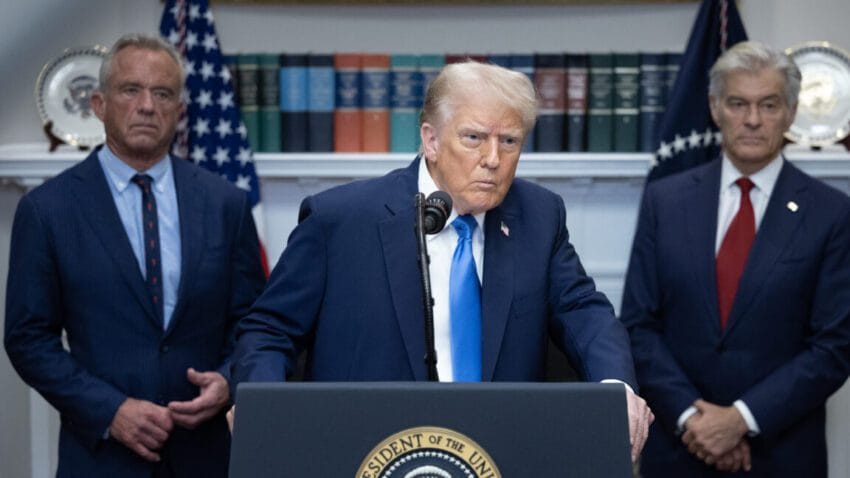
anti-vaccine allies cheer as trump claims shots Former President Donald Trump has reignited controversy surrounding vaccines, aligning himself with anti-vaccine advocates during a recent press event where he made unfounded claims about childhood vaccinations and their alleged links to autism.
anti-vaccine allies cheer as trump claims shots
Trump’s Controversial Statements
During a press event on autism held on a Monday evening, Trump shared his “strong feelings” regarding childhood vaccines, suggesting that they contain “too much liquid.” This statement, which lacks scientific backing, has been met with both cheers and criticism. The event featured health secretary and prominent anti-vaccine activist Robert F. Kennedy Jr., who has long been a vocal opponent of vaccines. Together, they attempted to link the use of Tylenol (acetaminophen) during pregnancy to autism, a claim that has been widely discredited by medical experts.
The Link to Tylenol
Trump’s assertion that Tylenol could be a contributing factor to autism is particularly concerning, as it diverts attention from the scientifically unsupported belief that vaccines are responsible for the condition. Medical professionals have consistently stated that there is no credible evidence linking vaccines to autism. The Centers for Disease Control and Prevention (CDC) and the World Health Organization (WHO) have both conducted extensive research in this area, concluding that vaccines are safe and effective.
Despite this, Trump’s comments have resonated with certain segments of the population, particularly those who are already skeptical of vaccines. The anti-vaccine movement has gained traction in recent years, fueled by misinformation and fear. Trump’s statements may further embolden these groups, leading to increased vaccine hesitancy among parents.
Reactions from the Anti-Vaccine Community
Trump’s remarks were met with enthusiasm from his anti-vaccine allies. The Children’s Health Defense (CHD), an organization founded by Kennedy, expressed support for the former president’s comments. However, the organization also voiced frustration over the focus on Tylenol rather than vaccines. In the lead-up to the press event, CHD retweeted a defense of Tylenol, emphasizing that the medication should not be blamed for autism.
Mary Holland, the president of CHD, criticized Trump’s statements during an interview with Steve Bannon, labeling the announcement a “sideshow.” This internal conflict within the anti-vaccine community underscores the complexities of their beliefs and the various narratives they promote. While they share a common goal of opposing vaccines, there are differing opinions on what alternative explanations should be highlighted.
The Impact of Misinformation
The spread of misinformation regarding vaccines and their supposed links to autism has significant public health implications. Vaccine hesitancy can lead to outbreaks of preventable diseases, as seen in recent years with measles and whooping cough. The World Health Organization has identified vaccine hesitancy as one of the top ten global health threats.
Trump’s statements could exacerbate this issue, particularly among parents who may already be on the fence about vaccinating their children. The former president’s influence is considerable, and his words carry weight among his supporters. By promoting unfounded claims, he risks undermining public trust in vaccines and public health initiatives.
Historical Context of Vaccine Skepticism
The skepticism surrounding vaccines is not a new phenomenon. The anti-vaccine movement has roots that date back to the late 18th century, when the smallpox vaccine was first introduced. Over the years, various claims have emerged, linking vaccines to a range of health issues, including autism. The most infamous of these claims originated from a now-discredited study published in 1998 by Andrew Wakefield, which falsely suggested a connection between the MMR (measles, mumps, and rubella) vaccine and autism.
Despite the study being retracted and Wakefield losing his medical license, the damage was done. The anti-vaccine movement gained momentum, fueled by fear and misinformation. High-profile figures, including celebrities and politicians, have contributed to the spread of these beliefs, further complicating the public’s understanding of vaccine safety.
Current Landscape of Vaccine Advocacy
In recent years, public health officials have intensified efforts to combat vaccine misinformation. Campaigns aimed at educating the public about the safety and efficacy of vaccines have been launched, with a focus on dispelling myths and addressing concerns. However, these efforts face significant challenges, particularly in the age of social media, where misinformation can spread rapidly.
Public health experts emphasize the importance of clear communication and transparency in addressing vaccine hesitancy. Engaging with communities and providing accurate information is crucial in rebuilding trust in vaccines. The role of healthcare providers is also vital, as they are often the most trusted source of information for parents.
Implications for Public Health
Trump’s recent comments highlight the ongoing struggle between public health advocacy and the anti-vaccine movement. The implications of his statements extend beyond mere rhetoric; they can influence public perception and behavior regarding vaccinations. As vaccine-preventable diseases continue to resurface, the need for effective communication and education becomes increasingly urgent.
Health officials are concerned that Trump’s alignment with anti-vaccine advocates may lead to a resurgence of vaccine-preventable diseases. The World Health Organization has reported a significant increase in measles cases globally, attributed in part to declining vaccination rates. This trend underscores the critical need for continued advocacy and education surrounding vaccine safety.
Future Considerations
As the landscape of vaccine advocacy continues to evolve, it is essential for public health officials, healthcare providers, and policymakers to remain vigilant. Addressing misinformation and fostering open dialogue about vaccines will be crucial in ensuring that parents feel confident in their decisions to vaccinate their children.
Furthermore, the role of social media platforms in disseminating information cannot be overlooked. Efforts to curb the spread of misinformation on these platforms are essential in protecting public health. Collaboration between tech companies, public health officials, and community leaders may help create a more informed public.
Conclusion
Trump’s recent statements regarding vaccines and Tylenol have reignited debates surrounding vaccine safety and the anti-vaccine movement. While his comments have found support among certain groups, they also highlight the internal divisions within the anti-vaccine community. The implications of such rhetoric extend beyond political discourse; they pose real challenges to public health efforts aimed at maintaining high vaccination rates and preventing outbreaks of preventable diseases.
As the conversation around vaccines continues, it is imperative for public health advocates to prioritize education, transparency, and community engagement. By addressing misinformation and fostering trust, we can work towards a healthier future for all.
Source: Original report
Was this helpful?
Last Modified: September 24, 2025 at 11:37 pm
6 views