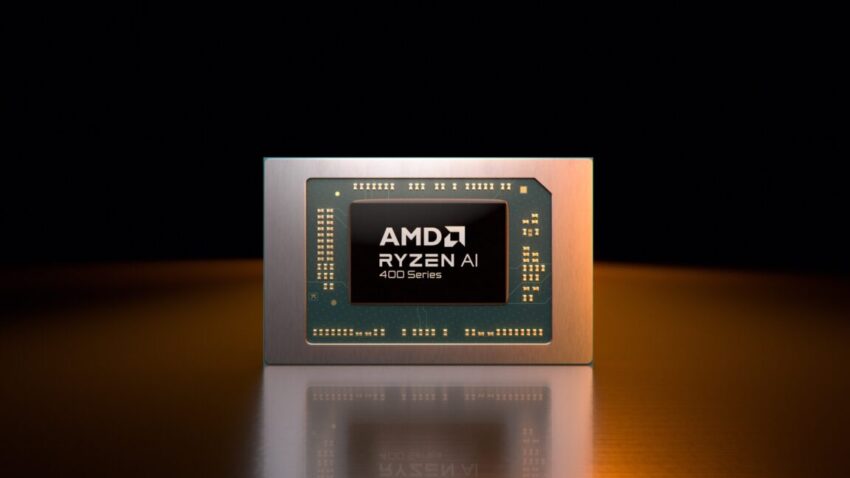
amd reheats last year s ryzen ai AMD has unveiled its latest Ryzen AI 400-series CPUs, which are incremental updates to last year’s Ryzen AI 300 series, aimed at enhancing performance in laptops and desktops for 2026.
amd reheats last year s ryzen ai
Overview of AMD’s Ryzen AI 400-Series CPUs
At the Consumer Electronics Show (CES) 2026, AMD made headlines with its announcement of the Ryzen AI 400-series processors. While the tech community often anticipates groundbreaking innovations during this annual event, AMD’s latest offerings are more of a refinement than a revolution. The Ryzen AI 400 series serves as a follow-up to the Ryzen AI 300 series, which was first introduced in June 2024. This new lineup features minor enhancements in clock speeds and memory support, rather than significant architectural changes.
Key Specifications and Features
The Ryzen AI 400-series chips are designed to provide improved performance while maintaining compatibility with existing systems. The most notable upgrades include:
- Increased Clock Speeds: The Ryzen AI 9 HX 470 boasts a peak boost clock speed of 5.2 GHz, a slight increase from the 5.1 GHz offered by its predecessor, the Ryzen AI 9 HX 370.
- Enhanced Memory Support: The new series supports LPDDR5x-8533 memory, compared to the LPDDR5x-8000 supported by the previous generation.
- Improved Neural Processing Unit (NPU): The NPU in the Ryzen AI 400 series can perform 60 trillion operations per second (TOPS), up from 50 TOPS in the Ryzen AI 300 series.
These enhancements, while modest, are aimed at providing users with a smoother experience in tasks that require high computational power, such as gaming, content creation, and AI-driven applications.
Business Applications: Ryzen Pro Chips
Alongside the consumer-focused Ryzen AI 400 series, AMD also introduced corresponding Ryzen Pro chips designed for business applications. These processors are tailored to meet the needs of enterprise environments, offering features such as enhanced security and management capabilities.
Specifications of Ryzen Pro Chips
The Ryzen Pro variants share many of the same specifications as their consumer counterparts but include additional features that make them suitable for business use:
- Security Features: Ryzen Pro chips come equipped with advanced security features, including hardware-based encryption and secure boot capabilities.
- Management Tools: These processors support various management tools that allow IT departments to monitor and manage devices more effectively.
- Reliability: Ryzen Pro chips are designed for long-term stability and reliability, making them ideal for business-critical applications.
By offering a dedicated line of processors for business, AMD aims to capture a larger share of the enterprise market, which has traditionally been dominated by Intel.
Market Context and Implications
The release of the Ryzen AI 400 series comes at a time when the competition in the CPU market is fierce. Intel and Nvidia are also making strides in their respective segments, and AMD’s incremental updates may be seen as a strategic move to maintain relevance in a rapidly evolving landscape.
Competitive Landscape
Intel has been focusing on its own advancements, particularly in the areas of AI and machine learning. The company has been rolling out new architectures that promise significant performance improvements, which puts pressure on AMD to deliver more than just minor upgrades. Meanwhile, Nvidia continues to dominate the graphics processing market, leveraging its expertise in AI and machine learning to enhance its offerings.
In this context, AMD’s decision to reintroduce slightly modified versions of existing chips may be viewed as a stopgap measure. However, it also allows the company to fill gaps in its product lineup while preparing for more substantial innovations in the future.
Stakeholder Reactions
Reactions from industry analysts and stakeholders have been mixed. Some view the Ryzen AI 400 series as a pragmatic approach, allowing AMD to maintain momentum while it develops more advanced technologies. Others, however, express concern that the lack of groundbreaking features may lead to consumer disinterest.
Analysts have pointed out that while the enhancements in clock speeds and NPU capabilities are beneficial, they may not be enough to sway consumers who are looking for significant upgrades. The tech community often expects more from major announcements, especially at a high-profile event like CES.
Future Prospects for AMD
Looking ahead, AMD faces the challenge of balancing immediate market needs with long-term innovation. The company has a history of delivering high-performance processors, and its commitment to research and development will be crucial in maintaining its competitive edge.
Potential Innovations
While the Ryzen AI 400 series may not be a game-changer, AMD is likely working on more advanced architectures that could redefine its product offerings. Future innovations may include:
- Next-Generation Architectures: AMD is expected to release new architectures that leverage advanced manufacturing processes, potentially leading to significant performance gains.
- Enhanced AI Capabilities: As AI becomes increasingly integral to computing, AMD may focus on developing chips specifically optimized for AI workloads.
- Integration with Other Technologies: Collaborations with other tech companies could lead to integrated solutions that enhance the overall user experience.
These potential innovations could position AMD favorably in the market, allowing it to compete more effectively against Intel and Nvidia.
Conclusion
In summary, AMD’s Ryzen AI 400-series CPUs represent a cautious yet strategic move in a competitive landscape. While the updates may not be revolutionary, they provide necessary enhancements that cater to both consumer and business markets. As AMD continues to refine its offerings, the tech community will be watching closely for more substantial innovations in the near future.
Source: Original report
Was this helpful?
Last Modified: January 6, 2026 at 1:36 pm
11 views